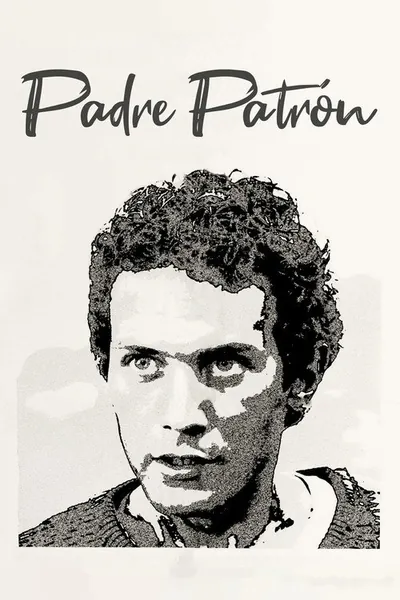
Padre Padrone
Padre
1977 · Italy · 112 min
- Director
- Paolo Taviani, Vittorio Taviani
- Screenplay
- Gavino Ledda, Paolo Taviani, Vittorio Taviani
- Producer
- Giuliani G. De Negri
- Music
- Egisto Macchi
- Cinematography
- Mario Masini
- Editing
- Roberto Perpignani
Awards: Palme d'Or
What the critics say
73 % Rotten Tomatoes positive reviewsCast
What it is about
In rural Sardinia in the 1940s, a young boy leaves school, which he has attended only for a couple of months each year, to help his father look after the livestock. The father exercises tight control over the boy's life, and he grows up isolated in the mountains, far from other people. Over time, the boy starts looking for his own way to understand the world and begins to question his father's authority, a conflict that shapes his entire youth.
How it was made
The Taviani brothers adapted the autobiographical book of the same title by Gavino Ledda, who appears as himself in the closing section, framing the fiction in a documentary style. To give the setting authenticity, they mixed professional and non-professional actors from the Sardinian countryside, including Omero Antonutti, Saverio Marconi and Nanni Moretti. The film was originally shot for Italian television. Mario Masini's cinematography makes the island's harsh landscapes central, and the soundtrack mixes classical music, such as Mozart's Clarinet Concerto, with a German folk song and an excerpt from the overture to Die Fledermaus.
Reception and legacy
Padre Padrone won the Palme d'Or at Cannes in 1977 and the FIPRESCI Prize from the international critics. In Berlin it received the Interfilm Grand Prix. In Italy it earned a special David di Donatello and the Nastro d'Argento for best director, while Saverio Marconi took the Nastro d'Argento for best new actor. In 2008 it was included on the list of 100 Italian films to be saved, covering films from 1942 to 1978. The New York Times critic Janet Maslin found it vivid and moving, though she noted that the father is never really explored.
Stills


Trailer
Clicking loads the video from YouTube (privacy-enhanced mode). Open on YouTube
Trivia
Television origins
Although it reached cinemas and the Cannes competition, the film was originally shot for Italian television.
Ledda as himself
Gavino Ledda, the author of the original book, appears playing himself near the end of the film.
More films by Paolo Taviani
 Caesar Must Die
 The Night of the Shooting Stars
 Kaos
 Allonsanfàn
 The Lark Farm
 Good Morning, Babylon
Original Cinematopedia text based on Wikipedia (es) and Wikipedia (en) and Wikidata.