
Touch Me Not
Nu mă atinge-mă
2018 · France, Germany, Czech Republic · 125 min
- Director
- Adina Pintilie
- Screenplay
- Adina Pintilie
- Producer
- Philippe Avril, Adina Pintilie, Bianca Oană, Radovan Síbrt, Alžběta Karásková
- Music
- Ivo Paunov
- Cinematography
- George Chiper-Lillemark
- Editing
- Adina Pintilie
Awards: Golden Bear · 1 nominations
What the critics say
59 % Rotten Tomatoes positive reviewsCast
What it is about
Adina Pintilie, who also wrote and edited the film, appears as the director of a mock documentary in which she invites several people to be interviewed in a setting that resembles a therapy session. Among them is Laura, a fifty-year-old woman who seeks sexual encounters with different people, and Tudor, a man whose relationship with his former lover Irmena leads him to a sex club where sadomasochistic games take place. Laura's and Tudor's stories cross with that of Christian, a man in a wheelchair who presents himself as attractive and wants to take an active role in sex, and with contact therapy sessions held in a hospital. The film does not follow a conventional narrative. It alternates interviews, intimate scenes and reflections on the limits of the body, trust and pleasure.
How it was made
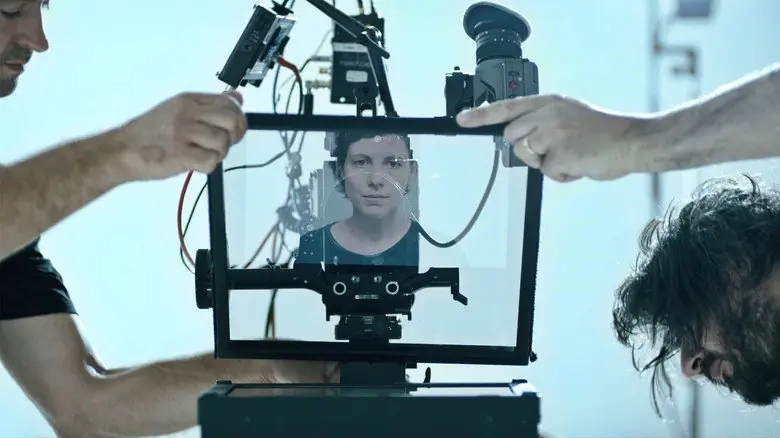
The film was co-produced by France, Germany, the Czech Republic, Romania and Bulgaria, and Pintilie handled the writing, direction and editing. George Chiper-Lillemark shot the film and Ivo Paunov composed the music. The cast mixes professional actors with non-professional participants, several of whom play versions of themselves, which reinforces the documentary feel. The explicit sexual and BDSM scenes were shot in a deliberately austere style, with some spaces stripped of colour and furniture, a choice critics have read as a metaphor for the characters' emotional emptiness. The film blends documentary forms with fictional elements and makes marked use of sound, with out-of-sync audio tracks and noises meant to unsettle the viewer.
Reception and legacy
The film premiered in the main competition of the 68th Berlin International Film Festival, where it won the Golden Bear, a result that surprised many, given how divided audiences were during the screening. On Rotten Tomatoes it holds a 43% approval rating, and on Metacritic a weighted average of 68 out of 100. Deborah Young of The Hollywood Reporter praised it as an eye-opening look at human sexuality, while Peter Bradshaw of The Guardian called it mediocre and shallow and described its Berlinale recognition as a calamity for the festival. IndieWire highlighted its portrait of the characters' relationship with their bodies, though it found some storylines forced. Variety admired its handling of space and sound but criticised the excess of noise and nonsensical audio. Its reception remains divided between those who see a brave proposal and those who find it uneven.
Stills

Trailer
Clicking loads the video from YouTube (privacy-enhanced mode). Open on YouTube
Trivia
A surprising Golden Bear
The Berlin award surprised much of the critical community. According to a Screen International list, the film averaged 1.5 out of four stars among festival critics.
Performers playing themselves
Several participants appear as themselves, including Laura Benson, Christian Bayerlein and Seani Love, which reinforces the film's documentary character.
Original Cinematopedia text based on Wikipedia (es) and Wikipedia (en) and Wikidata.