
Little Women
1933 · United States · 115 min
- Director
- George Cukor
- Screenplay
- Victor Heerman, Sarah Y. Mason
- Producer
- Merian C. Cooper
- Music
- Max Steiner
- Editing
- Jack Kitchin
- Production company
- RKO Pictures
- Based on
- Little Women
Awards: Academy Award for Best Writing, Adapted Screenplay; National Board of Review: Top Ten Films · 3 nominations
What the critics say
89 % Rotten Tomatoes positive reviewsCast
What it is about
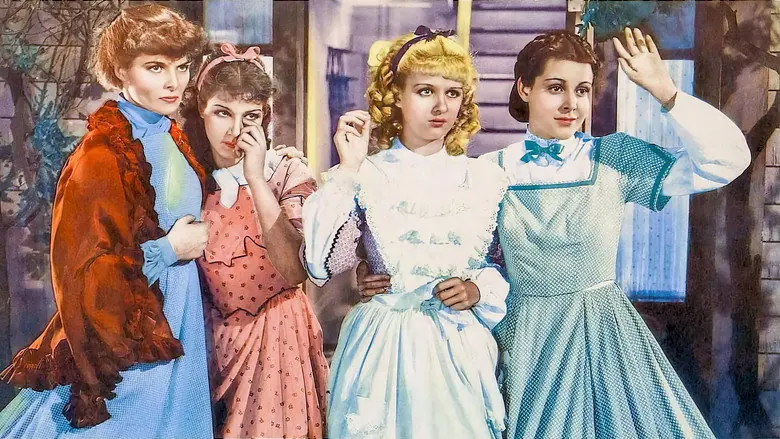
During the American Civil War, in Concord, Massachusetts, the four March sisters and their mother wait for the return of their father, a chaplain serving in the Union Army. The film moves through a series of episodes that follow each sister's struggles and ambitions: Meg, a governess who longs for comfort; Jo, a headstrong would-be writer; Amy, proud and gifted at drawing; and Beth, a shy pianist. Their lives shift with the arrival of Laurie, the grandson of their wealthy neighbor, and with new relationships that force each of them to reconsider what she wants.
How it was made
The project began with David O. Selznick, who wanted to bring Louisa May Alcott's novel to the screen, but he left the studio before filming and received no screen credit. Merian C. Cooper took over production with Kenneth MacGowan. The original director was replaced by George Cukor, who agreed to make the film as his last picture for RKO. Screenwriters Victor Heerman and Sarah Y. Mason were brought in after several unsuccessful drafts, and they added scenes not found in the novel, such as Marmee's volunteer work with the Christian Commission. The studio kept the period setting, with sets designed to resemble Alcott's house and costumes that suggested the family's poverty. Cukor did not read the book before shooting, and he chose Joan Bennett for Amy after meeting her at a party. The score is by Max Steiner.
Reception and legacy
The film was warmly received by audiences and critics, and it ranks among RKO's most liked releases of 1933. It won the Academy Award for Best Adapted Screenplay and was nominated for Best Picture and Best Director, Cukor's first Oscar nomination in that category. It was also honored by the National Board of Review and screened at the 1934 Venice Film Festival. It is the third screen adaptation of the novel and the first with sound, following two silent versions from 1917 and 1918. Over time it has been favorably compared with other film versions, and its reputation rests largely on its performances and its faithfulness to the book's spirit.
Stills


Trailer
Clicking loads the video from YouTube (privacy-enhanced mode). Open on YouTube
Trivia
An impulsive casting
Cukor chose Joan Bennett for the role of Amy after meeting her at a party, when she had been slightly drinking. He found her sweet and funny.
Cukor and the novel
Cukor did not read the novel before shooting, expecting it to be overly sentimental. After filming he read at least part of it and liked it.
More films by George Cukor
 Gone with the Wind
 My Fair Lady
 The Philadelphia Story
 Gaslight
 Born Yesterday
 Lust for Life
Original Cinematopedia text based on Wikipedia (es) and Wikipedia (en) and Wikidata.