
Marty
1955 · United States · 91 min
- Director
- Delbert Mann
- Screenplay
- Paddy Chayefsky
- Producer
- Burt Lancaster, Harold Hecht
- Music
- Roy Webb
- Cinematography
- Joseph LaShelle
- Editing
- Alan Crosland Jr.
- Production company
- Hecht-Hill-Lancaster Productions
Awards: Academy Award for Best Picture; Academy Award for Best Director; Academy Award for Best Actor; Academy Award for Best Writing, Adapted Screenplay; Palme d'Or; National Board of Review Award for Best Film… · 8 nominations
What the critics say
96 % Rotten Tomatoes positive reviewsCast
What it is about
Marty follows Marty Piletti, a good-natured butcher of Italian-American background who lives in the Bronx with his widowed mother. At thirty-four, Marty is awkward around women and hears constantly from relatives, customers and friends that he should settle down, since most of his siblings are already married and many have children. He is not opposed to marriage in principle, but he has more or less accepted that bachelorhood is his lot. One Saturday night, pushed by his mother, he goes to the Stardust Ballroom and meets Clara, a high school science teacher as shy as he is, who has been left alone on a rooftop after a blind date fell through. They spend the evening dancing, walking through the busy streets and talking in a diner. Marty talks eagerly about his life and his ambitions, and the two begin to encourage each other. The film observes the quiet awkwardness of two people who rarely feel understood, set against a neighbourhood where family expectations and social habits weigh heavily. The new romance, however, soon meets disapproval from Marty's mother and from his circle of friends.
How it was made
The film grew out of a 1953 television play written by Paddy Chayefsky for The Philco-Goodyear Television Playhouse, in which Rod Steiger had played the title role. Chayefsky expanded the material for the cinema, and the result marked the directing debut of Delbert Mann, who worked from a script built on ordinary conversation and carefully shaped dialogue. Several performers from the television version returned, including Esther Minciotti, Augusta Ciolli and Joe Mantell. The screenplay renamed the ballroom from the Waverly to the Stardust, enlarged the role of Clara, and added subplots about Marty's career, his mother and her sister. Steiger declined to reprise the part after the producers, Harold Hecht and Burt Lancaster, asked him to sign a multiple-picture commitment as a condition of keeping the role. Ernest Borgnine took over the lead. Shooting began on September 7, 1954, in the Bronx, where the crew filmed in many locations across the borough, including the Grand Concourse, Arthur Avenue, Gun Hill Road and White Plains Road, as well as several subway and elevated train lines. Interior work took place at the Samuel Goldwyn Studios from November 1, 1954. Mann shot the picture in sixteen days, with three more for retakes. The style is restrained, with modest camera movement and close-ups that give weight to silences and glances. Joseph LaShelle photographed it in black and white, and Roy Webb's score supports the action without dominating it. Nancy Marchand, who had played Clara on television, was first expected to return, but Betsy Blair was keen on the part and lobbied for it. Blair had been blacklisted over her leftist sympathies, and her husband, Gene Kelly, used his standing at Metro-Goldwyn-Mayer to pressure United Artists on her behalf. The production also had an unusual financial background: Borgnine recalled that the film was meant to be only partly completed and written off for tax purposes, but the tax authorities refused, so it had to be finished and released.
Reception and legacy
Marty premiered on April 11, 1955, and received a wide release from July 15. Critics responded with overwhelmingly positive notices. Ronald Holloway of Variety suggested that it showed how ordinary stories could be turned into strong material, while Time called it wonderful. Louella Parsons enjoyed the film but doubted it would earn Oscar nominations. Made on a budget of 343,000 dollars, it took in around three million dollars in the United States alone, which made it a box-office success. Its reviews on Rotten Tomatoes were very favourable, and the site's consensus praised Chayefsky's solid dialogue and the performances of Borgnine and Blair in a low-key character study. At the Academy Awards it won Best Picture, Best Director, Best Actor for Borgnine and Best Adapted Screenplay. It also took the Palme d'Or at Cannes, making it the second film to win both the Academy Award for Best Picture and the festival's top prize. The Lost Weekend, Parasite and Anora are the only other films to win both. A frequently cited point is that Marty received the first Palme d'Or ever awarded, a prize that replaced the Grand Prix of the International Film Festival as the top award. In 1994 it was selected for preservation in the United States National Film Registry by the Library of Congress, as culturally, historically or aesthetically significant. The American Film Institute also placed it at number 64 on its 2002 list of 100 Years... 100 Passions. Its legacy is often linked to its break with the Hollywood image of the strong, confident male lead, presenting instead a fragile and shy man, and to its place among the intimate, realistic dramas of 1950s American cinema.
Stills


Trailer
Clicking loads the video from YouTube (privacy-enhanced mode). Open on YouTube
Trivia
A role that passed from Steiger to Borgnine
Rod Steiger played Marty in the television version but declined to repeat the role when the producers required him to sign a multiple-picture commitment. Ernest Borgnine took the lead instead.
Pressure over the role of Clara
Betsy Blair wanted the role of Clara and lobbied for it, and her husband, Gene Kelly, used his influence at Metro-Goldwyn-Mayer to pressure United Artists on her behalf.
A very short shoot
Mann shot the film in sixteen days, with three more for retakes. Much of the work was done on location in the Bronx, in places such as Arthur Avenue and Gun Hill Road.
More films by Delbert Mann
 Separate Tables
 Lover Come Back
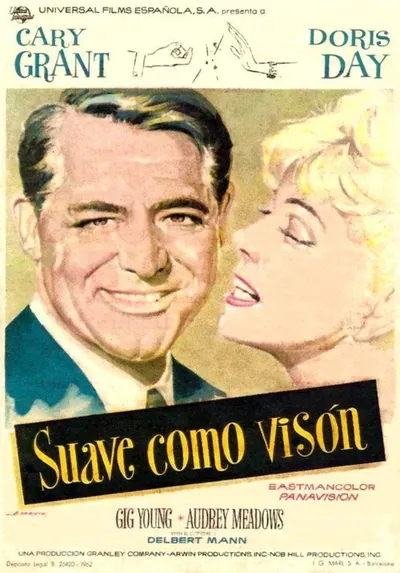 That Touch of Mink
 The Bachelor Party
 The Dark at the Top of the Stairs
 A Gathering of Eagles
Original Cinematopedia text based on Wikipedia (es) and Wikipedia (en) and Wikidata.