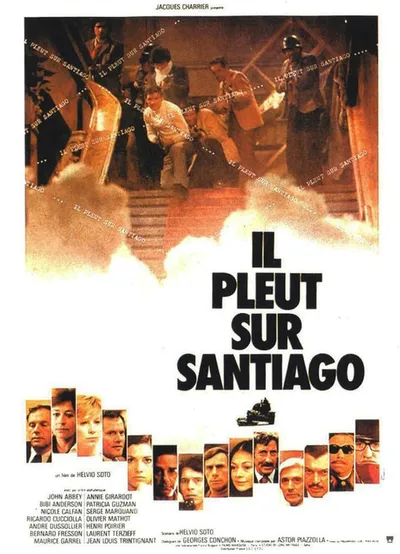
It's Raining on Santiago
Llueve sobre Santiago
1975 · France
- Director
- Helvio Soto
- Screenplay
- Georges Conchon
- Music
- Astor Piazzolla
Cast
What it is about
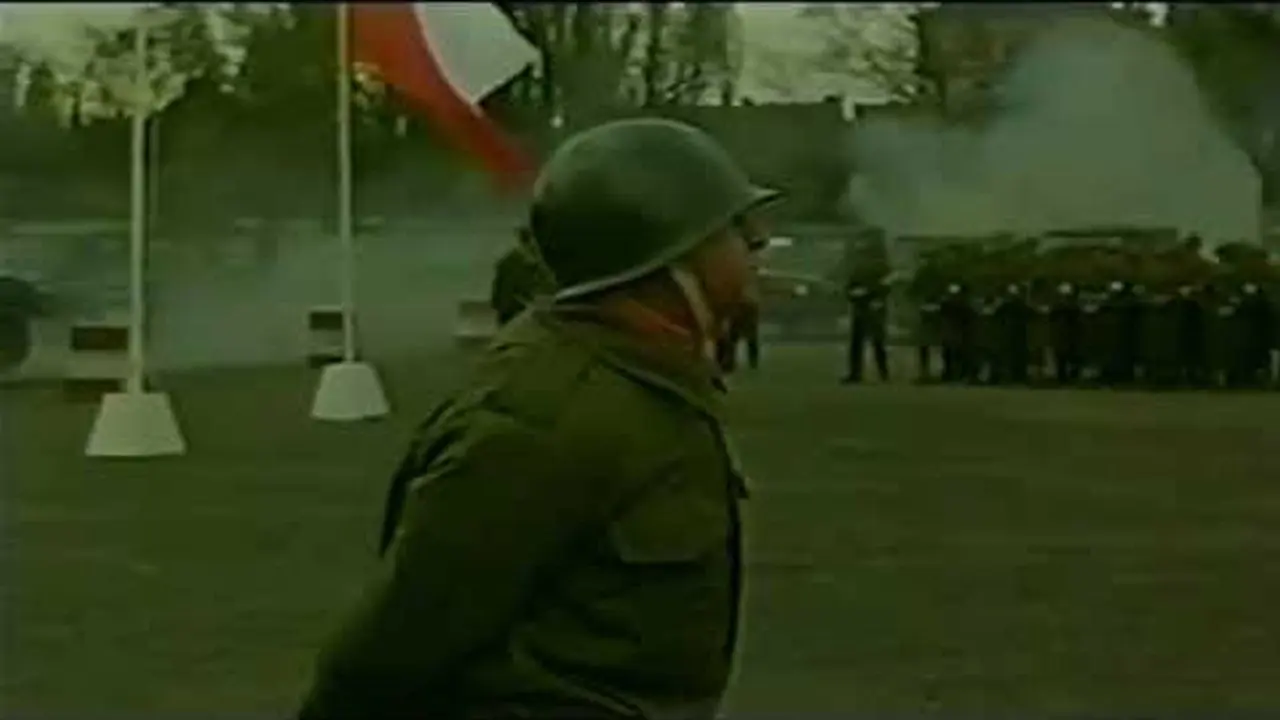
The film revisits the days leading up to the 1973 coup d'etat in Chile, as the capital, Santiago, nears armed confrontation. Tanks fill the streets, and the political crisis reaches into the lives of its characters, including journalist Augusto Olivares and his family, while the Popular Unity government faces its final hours. Several storylines intertwine around military and civilian figures who watch, negotiate or conspire over power.
How it was made
Helvio Soto directed and wrote the film, which was shot in 1975 in Paris and Bulgaria as a French-Bulgarian co-production. The cast mixes French actors such as Jean-Louis Trintignant and Annie Girardot with performers from other countries, and nearly all the crew and extras were European. Astor Piazzolla composed the original score. Soto himself called it a propaganda film, and it can be read as a tribute to the Popular Unity, Salvador Allende and the journalist Augusto Olivares.
Reception and legacy
It was the most successful film of Helvio Soto's career and was screened in about fifty countries, drawing strong audiences in places as varied as Portugal and Japan. Its openly partisan stance places it within the political cinema of its era, and its title refers to the coded broadcast the Chilean military used to signal the start of the coup.
Stills
Trivia
Tribute in anime
A poster for the film appears in a scene of Macross: Do you remember love?, inside the SDF-1 Macross space fortress. According to reports, director Noboru Ishiguro admired international political cinema and included it as a homage.
Original Cinematopedia text based on Wikipedia (es) and Wikipedia (en) and Wikidata.