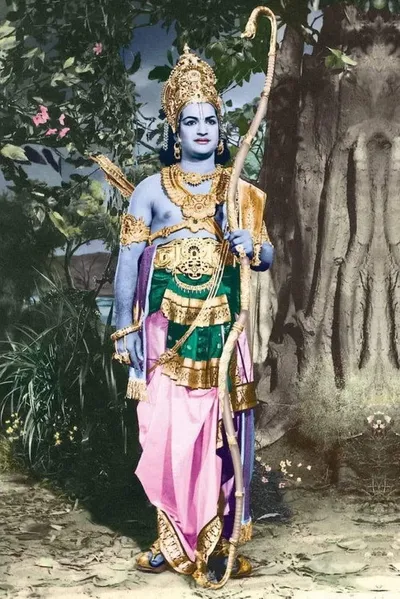
Cast
What it is about
An adaptation of the Uttara Kanda, the final part of the Ramayana traditionally attributed to Valmiki. The film follows Lava and Kusa, the twin sons of Rama and Sita, from the early years of Rama's reign and Sita's exile to the twins' arrival in Ayodhya, where they come face to face with their father and his court.
How it was made
Producer A. Sankara Reddy wanted to make a Ramayana film after seeing N. T. Rama Rao and Anjali Devi perform as Rama and Sita in a song from Charana Dasi (1956). He asked C. Pullayya, who already planned to remake his 1934 Lava Kusa, to direct. Vempati Sadasivabrahmam wrote the screenplay, staying close to the original. Shooting began in 1958 but stalled for financial reasons after a third of the material was done, and it resumed years later. As Pullayya's health declined, his son C. S. Rao took over direction. It was shot simultaneously in Telugu and Tamil with some cast differences, and the main score is by Ghantasala.
Reception and legacy
It was a major commercial success, running uninterrupted for 75 weeks and grossing over one crore rupees. It is regarded as a classic of Telugu cinema and is notable as the first full-length colour film in Telugu. The Telugu version won the National Film Award for Best Telugu Feature Film. It was dubbed into Kannada and, in 1974, Hindi, and in 2011 it was rebooted as Sri Rama Rajyam.
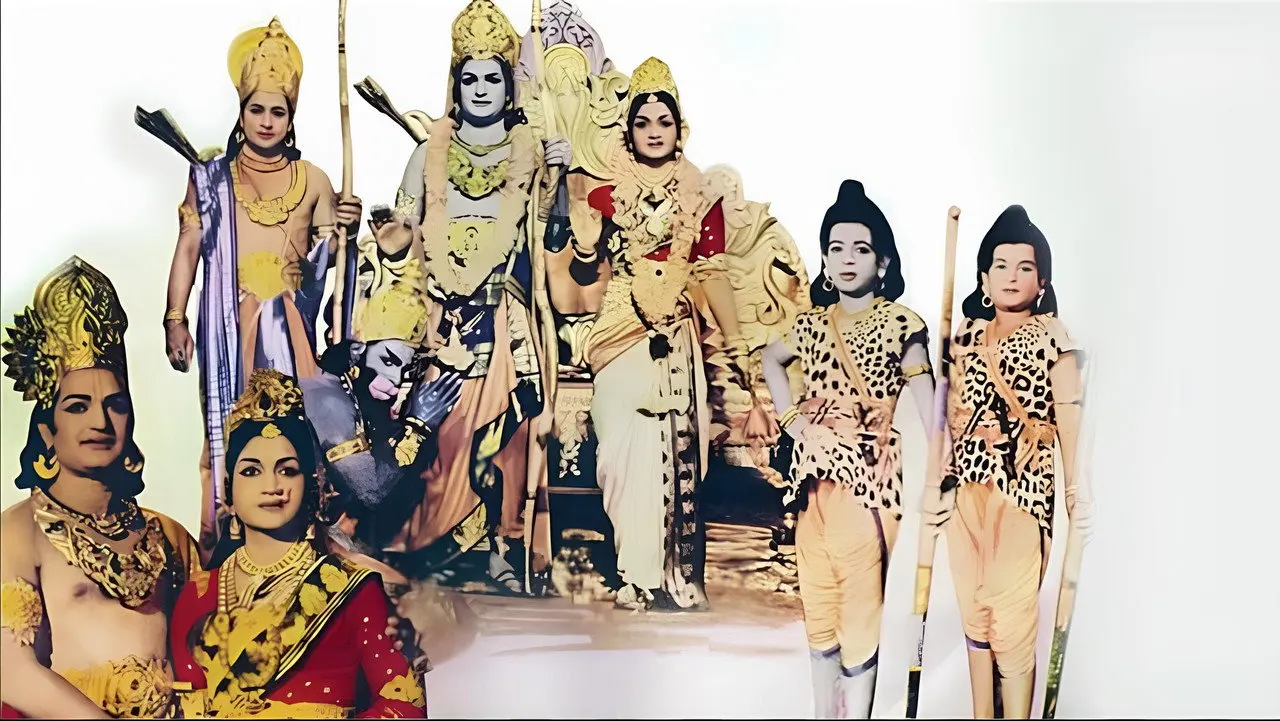
Stills
Trivia
Role swap
Kantha Rao was cast as Lakshmana, but when he gained weight during production he was considered for Satrughna. N. T. Rama Rao insisted he keep Lakshmana, and Sobhan Babu was cast as Satrughna instead.
Forced tears
When glycerin failed in a scene where Anaparthi Nagaraju had to cry, Anjali Devi slapped him to get genuine tears. She then comforted him for about fifteen minutes.
Original Cinematopedia text based on Wikipedia (en) and Wikidata.