
Lady L
1965 · Italy, France, United Kingdom · 117 min
- Director
- Peter Ustinov
- Screenplay
- Peter Ustinov
- Producer
- Carlo Ponti
- Music
- Jean Françaix
- Cinematography
- Henri Alekan
- Editing
- Roger Dwyre
- Production company
- Les Films Concordia
What the critics say
29 % Rotten Tomatoes positive reviewsCast
What it is about
For her 80th birthday, an elegant elderly English duchess known as Lady L spends a few days at her summer house with her biographer, Sir Percy, recalling the great loves of her life. Her story begins with humble origins in Corsica and a move to Paris, where she meets a thief and anarchist, and later follows her rise into British high society. The film blends romantic comedy with a distinctly dark sense of humour.
How it was made
The project, based on the novel by Romain Gary, first developed at MGM, which reportedly spent two million dollars on pre-production before cancelling it. It was later revived as an international co-production between France, Italy and the United Kingdom. Peter Ustinov wrote and directed the film and also appears as Prince Otto of Bavaria. Some scenes were shot at Castle Howard in Yorkshire, and the interiors at the Victorine Studios in Nice. The novel's grim ending was felt to be too macabre for theatre audiences, and Ustinov chose to cut it.
Reception and legacy
The film premiered at the Empire, Leicester Square, in London, on 25 November 1965. Critical response was largely lukewarm, with around 29 percent positive reviews on Rotten Tomatoes from seven reviews. In The New York Times, Eliot Fremont-Smith praised Ustinov's work and David Niven's performance, though he judged the result an imperfect entertainment, notable above all for its striking use of colour.
Stills


Trivia
A cut ending
The novel's ending was removed because it was feared that theatre audiences would laugh at its macabre moments. Ustinov proposed the solution of cutting it.
An abandoned project
Before the final version, MGM had spent about two million dollars on pre-production and cancelled the project.
British and French locations
Castle Howard in Yorkshire was used for some scenes, while the interiors were shot at the Victorine Studios in Nice.
More films by Peter Ustinov
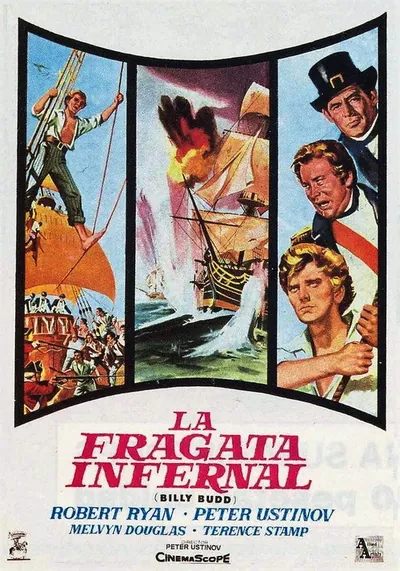 Billy Budd
 Hammersmith Is Out
 School for Secrets
 Memed, My Hawk
Original Cinematopedia text based on Wikipedia (en) and Wikidata.