
The Iron Lady
La dama de hierro
2011 · France, United Kingdom · 105 min
- Director
- Phyllida Lloyd
- Screenplay
- Abi Morgan
- Producer
- Damian Jones
- Music
- Thomas Newman
- Cinematography
- Elliot Davis
- Editing
- Justin Wright
- Production company
- UK Film Council, Pathé, Goldcrest Films
Awards: Academy Award for Best Actress; Academy Award for Best Makeup and Hairstyling · 3 nominations
Cast
What it is about
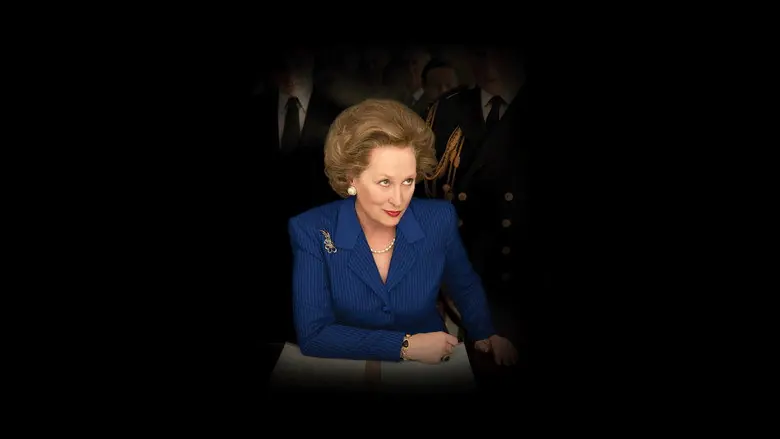
An elderly Margaret Thatcher buys milk in a shop without being recognised and walks home alone. From that present, shaped by dementia and loneliness, the film moves back and forth in time. We see the young daughter of a grocer in Grantham who admires her father's politics, her arrival at Oxford and her struggle to break into a Conservative Party dominated by men. Her marriage to Denis, her years in government and the conflicts of her premiership surface as fragments of memory, while she reflects on the personal price of power and on grief for her husband, who remains beside her as a ghost. The story focuses more on intimacy than on political chronicle, leaving the historical judgement to the viewer.
How it was made
Phyllida Lloyd directed the film from a screenplay by Abi Morgan, loosely based on John Campbell's biography of the British leader. Several British and French companies took part, including Pathé, Film4 and Goldcrest Films. Meryl Streep, who had already won two Oscars, leads the cast alongside Jim Broadbent as Denis Thatcher, with Anthony Head, Olivia Colman and Richard E. Grant in supporting roles. To prepare, Streep sat through a session in the House of Commons to watch MPs at work. She tried to meet the former prime minister but was refused; according to Thatcher's daughter Carol, in her memoirs, the former leader was suffering from dementia in her final days. Filming began in the UK in early 2011, with extensive work at the neo-Gothic Manchester Town Hall. The score is by Thomas Newman and the cinematography by Elliot Davis.
Reception and legacy
The film received mixed reviews, although Streep's performance was widely praised. It holds a 51 percent approval rating on Rotten Tomatoes and a score of 54 out of 100 on Metacritic. Thatcher's children called it a left-wing fantasy, while her biographer Charles Moore described Streep's performance as astonishingly brilliant for capturing the isolation of a woman in power, her ambition and its cost. Some critics pointed to historical inaccuracies, such as showing no other women serving in the Commons during her time, and the screenwriter and star were accused of softening Thatcher's image for American audiences. Streep won the Academy Award for Best Actress, a Golden Globe and a BAFTA, and the film also took the Oscar for Best Makeup. It grossed around 115 million dollars worldwide.
Stills


Trailer
Clicking loads the video from YouTube (privacy-enhanced mode). Open on YouTube
Trivia
A meeting that never happened
Streep tried to meet Thatcher while preparing the role, but the former prime minister refused the meeting.
Filming in Manchester
Much of the shoot took place at the neo-Gothic Manchester Town Hall, which stood in for political settings.
More films by Phyllida Lloyd
 Mamma Mia!
 Herself
Original Cinematopedia text based on Wikipedia (es) and Wikipedia (en) and Wikidata.