
Ingeborg Holm
1913 · Sweden · 108 min
- Director
- Victor Sjöström
- Screenplay
- Nils Krok
- Cinematography
- Henrik Jaenzon
Cast
What it is about
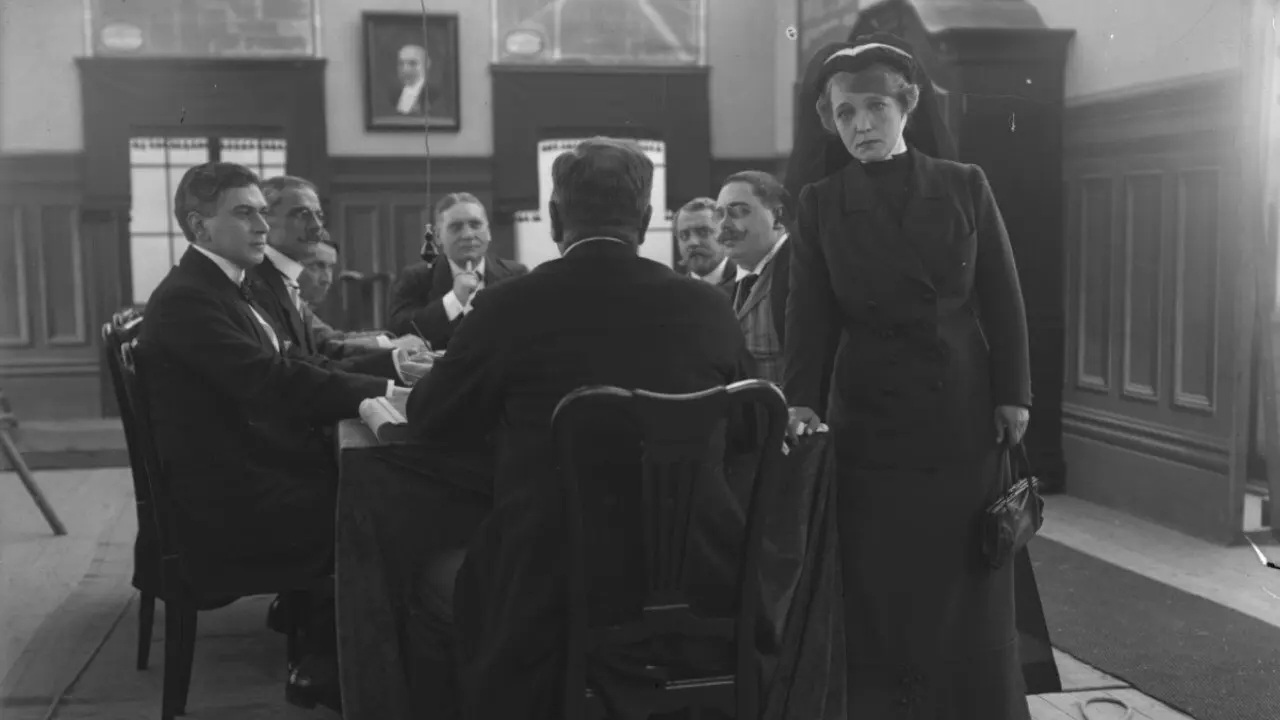
Sven and Ingeborg Holm are a happy couple in Stockholm, raising three children and preparing to open a shop. When Sven falls ill with tuberculosis, Ingeborg tries to keep the business running alone, but financial hardship forces her to seek help from the public welfare system. The aid she receives is not enough to live on, and she is pushed to part from her children, as she fights to win back what she has lost against an unyielding bureaucracy.
How it was made
Ingeborg Holm was directed by Victor Sjöström and adapts an 1906 stage play by Nils Krok, who also wrote the screenplay. Henrik Jaenzon handled the cinematography, and Hilda Borgström takes the lead, supported by Carl Barcklind, William Larsson and Richard Lund. This silent drama, running about 108 minutes, focuses on everyday life in a modest family and on the workings of the poorhouse system.
Reception and legacy
The film sparked a heated debate in Sweden about social security and care for the poor, and it is often said to have helped bring about changes to the poorhouse laws. The story is said to be based on a real case, although that claim is not fully confirmed. Today it is studied as an early example of Swedish social drama and as an illustration of Sjöström's interest in ordinary human conflicts.
Stills


Full film
Trivia
Based on real events
The story is often said to be inspired by a real case, although this has not been fully confirmed.
More films by Victor Sjöström
 The Phantom Carriage
 The Wind
 He Who Gets Slapped
 The Scarlet Letter
 The Outlaw and His Wife
 The Divine Woman
Original Cinematopedia text based on Wikipedia (en) and Wikidata.