
Incubus
1966 · United States · 78 min
- Director
- Leslie Stevens
- Screenplay
- Leslie Stevens
- Music
- Dominic Frontiere
- Cinematography
- William A. Fraker, Conrad Hall
What the critics say
63 % Rotten Tomatoes positive reviewsCast
What it is about
In the village of Nomen Tuum, an old well is believed to heal the sick and to make those who drink from it more beautiful. Drawn by this promise come the ill, the vain and the corrupt, and around the well operates a community of succubi, demons who take the form of young women and lure weak souls toward damnation. Kia, tired of her task, sets out to test her powers against a pure soul. Her chosen target is Marc, a young soldier who arrives at the well with his sister Arndis to tend to his war wounds. Amael, the more experienced of the two sisters, watches Kia's scheme with suspicion and fears it may not unfold as planned. The film is a tense, mysterious struggle between good and evil.
How it was made
The project grew out of the cancellation of the science fiction series The Outer Limits by ABC in 1965. Its producer, Leslie Stevens, wrote a horror script to make use of the team he had assembled for the show, including cinematographer Conrad Hall and composer Dominic Frontiere, aiming for art-house cinemas. To give the film a distinctive identity, Stevens and producer Anthony M. Taylor chose Esperanto as its language. The script was translated, and the actors rehearsed for ten days, learning their lines phonetically, but nobody corrected their pronunciation on set. Shooting lasted 18 days in May 1965, with location work at Big Sur beach and the Mission San Antonio de Padua. To secure permission for filming, Stevens presented the script under a false title with descriptions of monks and farmers. William Shatner, not yet famous, plays Marc. The director wanted an alien, mysterious sound, and the resulting uneven pronunciation has drawn frequent criticism from Esperanto speakers.
Reception and legacy
The film premiered at the San Francisco Film Festival in October 1966, where, according to the producer, a group of Esperanto enthusiasts greeted the performances with screams and laughter. Its Esperanto dialogue, along with a tragic incident involving actor Milos Milos, made distribution difficult, and it opened only in France that November. For many years it was considered lost until a copy with French subtitles turned up at the Cinémathèque Française, and it was later restored. Critics were sharply divided: some dismissed it as pretentious, while others praised its atmosphere and cinematography. It has since become a cult curiosity, remembered as an early and unusual example of Esperanto in film.
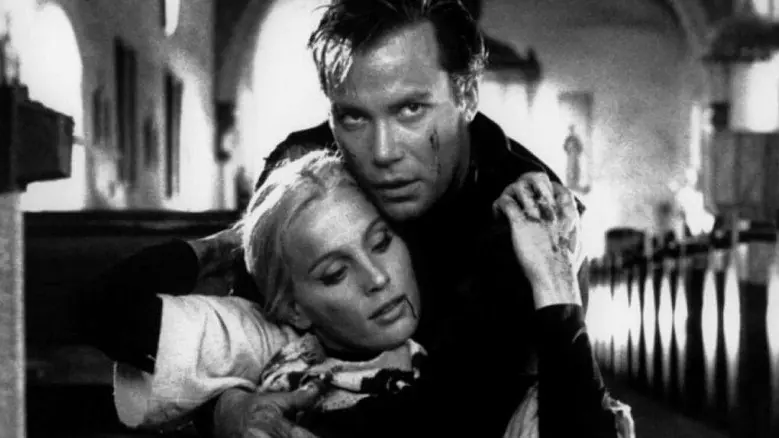
Stills


Trailer
Clicking loads the video from YouTube (privacy-enhanced mode). Open on YouTube
Trivia
An unusual language
According to the reference material, it was the second feature film with dialogue entirely in Esperanto, after Angoroj in 1964.
A rediscovered print
It was considered lost for years until a copy with French subtitles turned up at the Cinémathèque Française.
Original Cinematopedia text based on Wikipedia (es) and Wikipedia (en) and Wikidata.