
Taboo
Gohatto
1999 · Japan · 100 min
- Director
- Nagisa Ōshima
- Screenplay
- Nagisa Ōshima
- Music
- Ryuichi Sakamoto
- Cinematography
- Toyomichi Kurita
- Editing
- Tomoyo Ōshima
- Based on
- Shinsengumi Keppuroku
Cast
What it is about
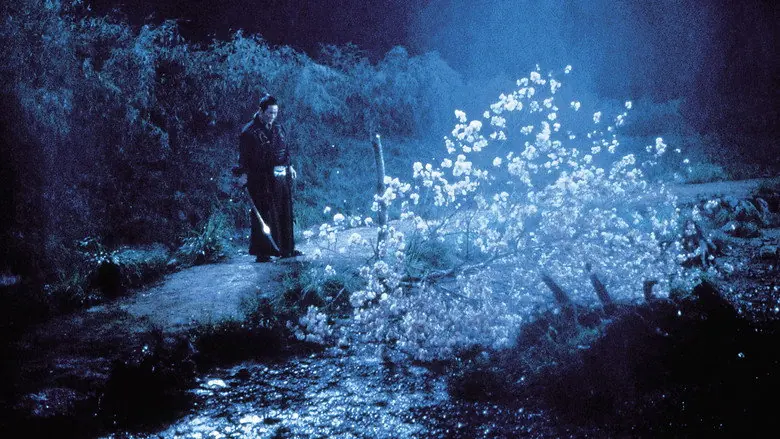
In late Bakumatsu Japan, as the samurai order nears its end, the Shinsengumi, an elite group defending the shogunate against reformist forces, recruits new members at the Nishi Hongan-ji temple. Among the candidates stands Kanō Sōzaburō, an eighteen-year-old swordsman of striking good looks whom his superiors quickly notice. His presence stirs desire among several fellow members, and the rivalry it provokes strains relations within a closed, all-male community where discipline and honour govern every choice. The film examines how desire can unsettle loyalty and order in a group living under the constant shadow of war and death.
How it was made
The film is based on short novels by Ryōtarō Shiba, collected in Shinsengumi Keppūroku, and Nagisa Ōshima wrote the screenplay from them. It keeps the real names of Japanese history and of the Shinsengumi and includes the group's code of conduct. It was Ōshima's final film as director. Ryuhei Matsuda, who plays Kanō, was sixteen during the shoot. Ryūichi Sakamoto composed the score, Toyomichi Kurita shot the film and Tomoyo Oshima edited it. A narrator, voiced by Kei Satō, frames the story, and the tone is restrained, observing desire and violence at a distance. The ending refers to The Chrysanthemum Pledge, a tale from Ueda Akinari's Ugetsu monogatari of 1776.
Reception and legacy
Roger Ebert wrote that it was not an entirely successful film but that it was not boring. Peter Bradshaw of The Guardian called it impenetrable for some, yet unmistakably the work of a master filmmaker. It was a financial success in Japan, becoming one of the year's highest-grossing films. It was nominated for the Palme d'Or at Cannes in 2000, losing to Dancer in the Dark. At the 2000 Blue Ribbon Awards it won four prizes, including Best Film and Best Director. Matsuda received the Japan Academy Prize for Newcomer of the Year and the Kinema Junpo Best New Actor award in 2001, while Asano won Best Supporting Actor at the 2000 Hochi Film Awards.
Stills


Trailer
Clicking loads the video from YouTube (privacy-enhanced mode). Open on YouTube
Trivia
An old-fashioned title
The Japanese title is an archaic term that can be rendered as "against the law". Today it is understood as "strictly forbidden" or "taboo".
A teenage lead
Ryuhei Matsuda was sixteen during filming, and his performance earned him the Japan Academy Prize for Newcomer of the Year.
More films by Nagisa Ōshima
 In the Realm of the Senses
 Merry Christmas, Mr. Lawrence
 Empire of Passion
 Max, Mon Amour
 Cruel Story of Youth
 Death by Hanging
Original Cinematopedia text based on Wikipedia (es) and Wikipedia (en) and Wikidata.