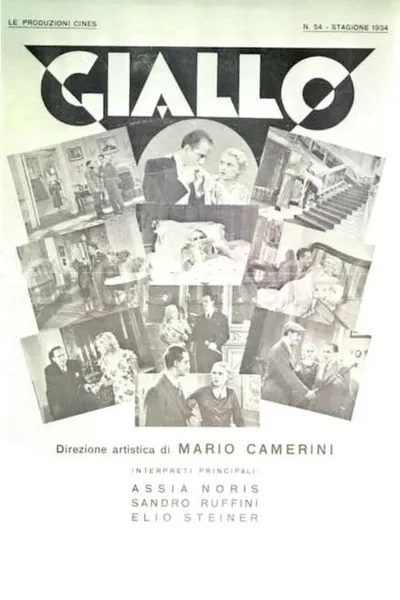
Giallo
1933 · Italy · 69 min
- Director
- Mario Camerini
- Screenplay
- Mario Camerini, Mario Soldati
- Music
- Guido Albanese
- Cinematography
- Massimo Terzano
- Production company
- Cines
Cast
What it is about
Henriette is a young wife who gradually begins to suspect that her husband, Giorgio, may be a murderer who has escaped from justice. The doubt leads her to watch his every gesture and to question what she thought she knew about their life together.
How it was made
Directed by Mario Camerini from a screenplay he wrote with Mario Soldati, the film adapts the 1928 play The Man Who Changed His Name by Edgar Wallace. It was made to take advantage of Italy's taste for gialli, mystery novels with yellow covers and melodramatic plots, many of them written by Anglo-American authors. Art director Gastone Medin designed the sets, and the production was shot at the Cines Studios in Rome. Starring Assia Noris, Sandro Ruffini and Elio Steiner, it features a score by Guido Albanese and cinematography by Massimo Terzano.
Reception and legacy
The available sources offer little information about its critical or commercial reception. It is generally regarded as an early precursor of the Italian giallo film, a genre that boomed after the Second World War, so its historical interest lies largely in that later connection.
Trivia
Literary origin
The film is based on a stage play by Edgar Wallace, the British writer closely associated with the mystery novel. Its plot revolves around a suspicion that the husband is a fugitive criminal.
Forerunner of the giallo
The title refers to the yellow-covered mystery novels that were popular in Italy. For this reason it is considered a precursor of the film genre that emerged after the war.
More films by Mario Camerini
 Ulysses
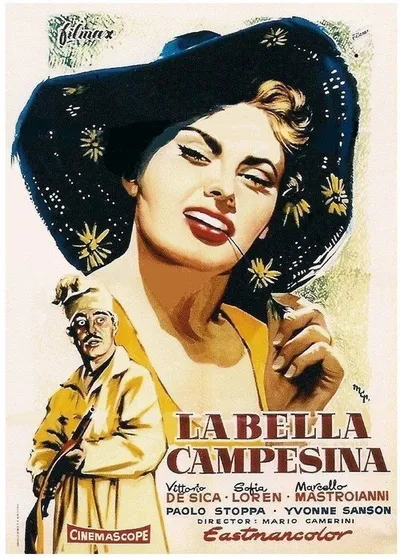 The Miller's Beautiful Wife
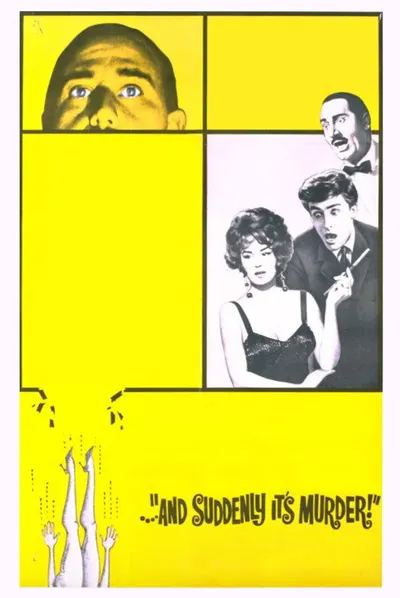 Crimen
 The Captain's Daughter
Original Cinematopedia text based on Wikipedia (en) and Wikidata.