
Gamera vs. Gyaos
1967 · Japan · 83 min
- Director
- Noriaki Yuasa
- Screenplay
- Niisan Takahashi
- Producer
- Hidemasa Nagata
- Music
- Tadashi Yamauchi
- Editing
- Tatsuji Nakashizu
- Production company
- Kadokawa Pictures
Cast
What it is about
A series of mysterious volcanic eruptions in Japan starts disrupting sea and air traffic. At Mount Fuji, the giant turtle Gamera appears before the eyes of a boy named Eiichi. Meanwhile, a company wants to build an expressway, but villagers in a nearby settlement refuse to leave, and a reporter named Okabe's investigation leads to the arrival of a winged creature with a supersonic ray, which the boy names Gyaos.
How it was made
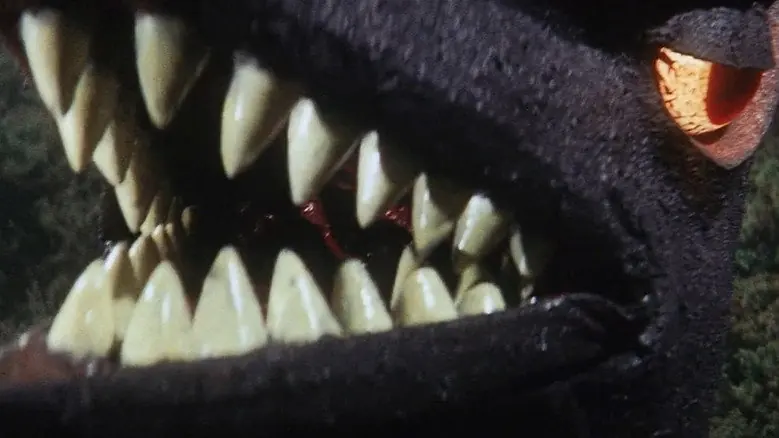
The project was planned shortly after Gamera vs. Barugon and aimed at a younger audience. Noriaki Yuasa returned as director and special effects director, and the winged monster grew out of a response to Toho's monster films, with the pitch of turning Dracula into a kaiju. The film was financed through a film association and shot at real Tokyo locations, including the Futako-Tamagawa garden in Setagaya. The closing song was performed by the Hibari Children's Choir.
Reception and legacy
It opened in Japan on March 15, 1967, paired with Chiisai Tôbôsha. That same year it reached American television as Return of the Giant Monsters. Its sequel, Gamera vs. Viras, followed in March 1968. It is part of the Gamera series and of Japan's kaiju output of the decade, though the consulted sources do not detail its critical reception or awards.
Stills


Trailer
Clicking loads the video from YouTube (privacy-enhanced mode). Open on YouTube
Trivia
An actor mistaken for the director's son
When Naoyuki Abe was cast, many people assumed he was Yuasa's son.
A dubbing studio turned into a laboratory
Daiei's dubbing studio was used as a laboratory set in the film's opening.
More films by Noriaki Yuasa
 Gamera, the Giant Monster
 Gamera vs. Jiger
 Gamera vs. Guiron
 Gamera: Super Monster
 Gamera vs. Zigra
 Gamera vs. Viras
Original Cinematopedia text based on Wikipedia (es) and Wikipedia (en) and Wikidata.