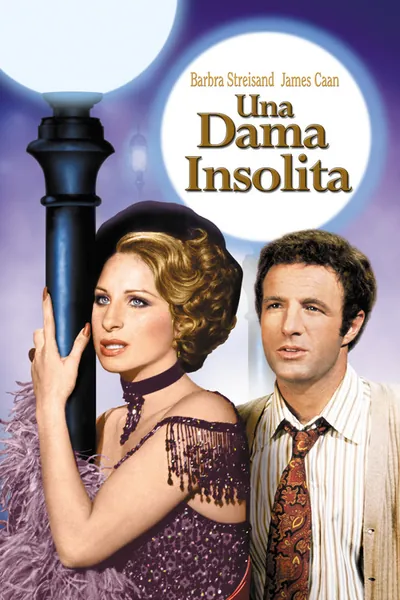
Funny Lady
1975 · United States · 136 min
- Director
- Herbert Ross
- Screenplay
- Jay Presson Allen
- Producer
- Ray Stark
- Music
- Fred Ebb
- Cinematography
- James Wong Howe
- Editing
- Marion Rothman
- Production company
- Columbia Pictures
Awards: · 4 nominations
What the critics say
30 % Rotten Tomatoes positive reviewsCast
What it is about
A sequel to Funny Girl (1968), the film picks up the career of Fanny Brice, the Broadway comedienne played by Barbra Streisand, during the Great Depression. After her show closes and her estranged husband, Nicky Arnstein, files for divorce, Fanny looks for new work with her friend Bobby Moore. She crosses paths with Billy Rose, a songwriter and impresario who tries to persuade her to join a revue he is preparing. Their relationship, shaped by work, business and affection, anchors a story that blends theatrical backstage drama with romance. The film is a highly fictionalized account of Brice's later life and her marriage to Rose.
How it was made
The project came through producer Ray Stark, who was contractually tied to Barbra Streisand. She initially resisted, but agreed after reading a script that portrayed Fanny as tougher and more mature. Jay Presson Allen and Arnold Schulman share screenplay credit, though Schulman said most of the final text was Allen's work. Robert Blake, Al Pacino and Robert De Niro were considered for Billy Rose before James Caan was cast. Vilmos Zsigmond began as director of photography but was dismissed after a few days, as Stark was unhappy with the footage. Stark then lured the ailing James Wong Howe out of semi-retirement to finish the film. Herbert Ross directed, with music by John Kander and Fred Ebb. Studio executives required cuts to bring the running time down to 136 minutes, and much of Vereen's material and a recreation of Brice's radio show were removed.
Reception and legacy
Critics gave the film mixed reviews. Several praised Streisand's musical numbers but criticized the heavier dramatic scenes and the unavoidable comparison with its predecessor. At the box office it was a moderate success, grossing about 40 million dollars in the United States and Canada, and it was one of Caan's most successful films of the period. It earned four Academy Award nominations, for cinematography, costume design, sound and original song, the last for "How Lucky Can You Get?". Streisand, Caan, Vereen and the film itself received Golden Globe nominations without winning. Its legacy rests mainly on Brice's continued presence in film musicals and on Howe's final project.
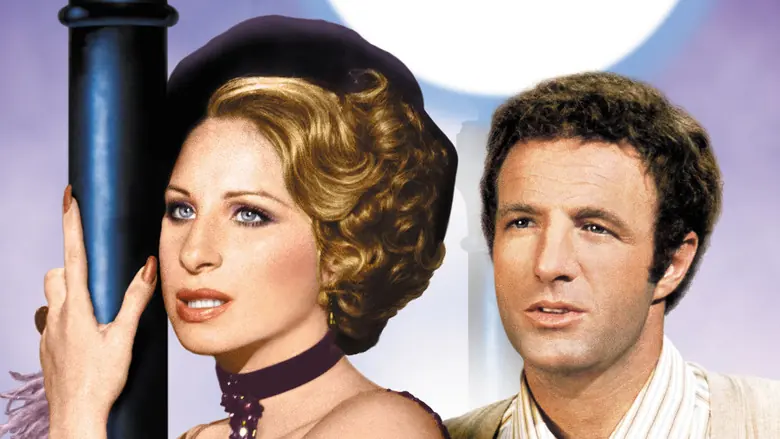
Stills


Trailer
Clicking loads the video from YouTube (privacy-enhanced mode). Open on YouTube
Trivia
A final project
James Wong Howe was brought in to finish the shoot after Vilmos Zsigmond was dismissed. This film was his last project.
A revisited soundtrack
Streisand revisited the film's soundtrack in a 2016 concert.
More films by Herbert Ross
 The Goodbye Girl
 The Turning Point
 Steel Magnolias
 California Suite
 The Sunshine Boys
 Footloose
Original Cinematopedia text based on Wikipedia (es) and Wikipedia (en) and Wikidata.