
Return of the Killer Tomatoes!
El retorno de los tomates asesinos
1988 · United States · 98 min
- Director
- John De Bello
- Screenplay
- Stephen Peace
- Producer
- Stephen Peace
What the critics say
0 % Rotten Tomatoes positive reviewsCast
What it is about
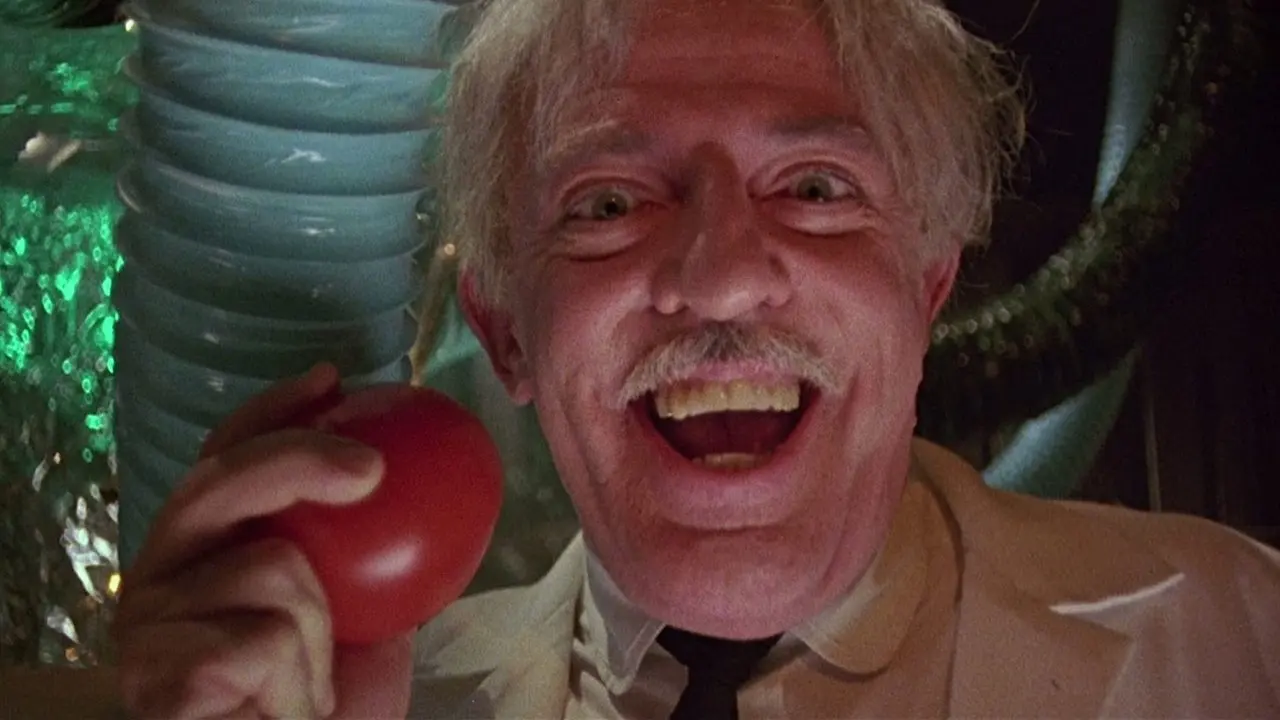
Ten years after the so-called Great Tomato War, tomatoes have been outlawed, though the authorities still hunt tomato smugglers. Wilbur Finletter, a local hero of that conflict, runs a pizzeria that serves no tomatoes, and his nephew Chad works for him and shares a flat with Matt Stevens, a smooth ladies' man. Meanwhile, the mad scientist Mortimer Gangreen and his assistant Igor prepare a new wave of vegetable terror, this time using music as their tool. The story often breaks the fourth wall, with the characters speaking to the audience and turning to product placement to keep the production going.
How it was made
Principal photography took place in the South Bay of San Diego County. The film is a sequel to Attack of the Killer Tomatoes (1978); Stephen Peace wrote and produced it and also plays Wilbur Finletter. The cast includes Anthony Starke, Karen Mistal, John Astin and a young George Clooney in a supporting role. Self-referential humour and parody structure drive the whole film. The poster art by David R. Darrow began as a design modelled on a Campbell's Soup can, which had to be dropped over branding concerns and replaced with a label glued over the original illustration.
Reception and legacy
Critics received it poorly, as they had its predecessor. TV Guide called it an unnecessary sequel, and it holds a zero score on Rotten Tomatoes from its six reviews. Retrospective reviews have been kinder, praising its relentless gags and meta humour. According to IMDb, it grossed about 5 million dollars in the United States. It is regarded as a cult film within low-budget comedy.
Stills


Trailer
Clicking loads the video from YouTube (privacy-enhanced mode). Open on YouTube
Trivia
A reworked poster
The original design imitated a Campbell's Soup can, but branding problems forced a new label to be glued over David R. Darrow's illustration.
A future congressman
The politician Gary Condit had an uncredited, non-speaking role in the film.
Original Cinematopedia text based on Wikipedia (en) and Wikidata.