
The Beast from 20,000 Fathoms
1953 · United States · 80 min
- Director
- Eugène Lourié
- Screenplay
- Ray Bradbury, Robert Smith, Eugène Lourié, Fred Freiberger, Daniel Lewis James
- Producer
- Hal E. Chester, Jack Dietz
- Music
- David Buttolph
- Cinematography
- John L. Russell
- Editing
- Bernard W. Burton
- Production company
- Warner Bros. Entertainment
- Based on
- The Fog Horn
What the critics say
91 % Rotten Tomatoes positive reviewsCast
What it is about
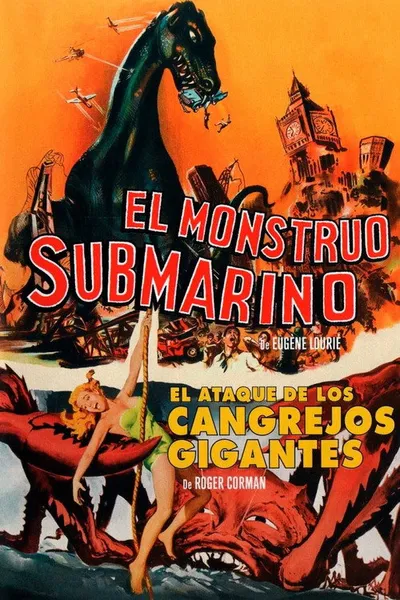
Far north of the Arctic Circle, a nuclear test called Operation Experiment awakens a dinosaur that has been frozen in ice for millions of years. Physicist Thomas Nesbitt is the only witness to the event, and his account is met with open skepticism by those in authority. As the creature heads down the east coast of North America, Nesbitt keeps insisting on what he saw until he finds allies among scientists and soldiers willing to listen. The film follows the beast's destructive journey toward New York, building suspense as the threat draws nearer to the city.
How it was made
The project began as The Monster from Beneath the Sea in 1951, when Hal E. Chester and Jack Dietz looked for a monster picture after the successful re-release of King Kong. The script grew out of a treatment by Dietz and passed through several hands, including Eugène Lourié, Fred Freiberger and Robert Smith, although the final on-screen credit went to Lou Morheim and Freiberger. Ray Bradbury pointed out similarities with one of his stories, and the producers acknowledged his influence. Filming took place in New York in the summer of 1952, and the stop-motion animation by Ray Harryhausen took roughly six months. Lourié, making his directing debut, delivered a low-budget film whose main draw is its creature.
Reception and legacy
Warner Bros. acquired the picture in 1953, gave it its final title and commissioned a new score from David Buttolph. Its United States release in June 1953 earned wide praise for its special effects and proved a commercial success, ranking among the year's top earners. It is considered a pioneer of the atomic monster genre and a direct forerunner of the kaiju trend, and it is often cited as an inspiration for Godzilla (1954). Over the years it has developed a notable cult following and remains a reference point for 1950s monster movies.
Stills


Trailer
Clicking loads the video from YouTube (privacy-enhanced mode). Open on YouTube
Trivia
A Bradbury story
Ray Bradbury visited the studio during production and, after reading the script, pointed out its similarities to his short story, prompting the producers to buy the rights.
Harryhausen's first solo feature
It was the first feature film on which Ray Harryhausen worked as the sole creator of the stop-motion animation.
More films by Eugène Lourié
 Gorgo
 The Giant Behemoth
Original Cinematopedia text based on Wikipedia (es) and Wikipedia (en) and Wikidata.