
El Dorado
1966 · United States · 121 min
- Director
- Howard Hawks
- Screenplay
- Leigh Brackett, Harry Brown
- Producer
- Howard Hawks, Paul Helmick
- Music
- Nelson Riddle
- Cinematography
- Harold Rosson
- Production company
- Paramount Pictures
Cast
What it is about
Gunfighter Cole Thornton is hired to help a wealthy landowner drive a farming family off their land. He turns the job down, but an accidental shooting leaves him with a bullet lodged near his spine. Months later, in a saloon far from town, he crosses paths with a young man called Mississippi, and the two head back to El Dorado to help Thornton's old friend, Sheriff J.P. Harrah, who has fallen into drink. The town becomes a standoff between the law and a powerful local boss.
How it was made
Howard Hawks directed and produced the film in 1966 for Paramount Pictures, with John Wayne and Robert Mitchum in the leads, Nelson Riddle composing the score and Harold Rosson shooting it. Leigh Brackett wrote the screenplay, loosely based on a novel by Harry Brown. Rosson had retired in 1958 and was coaxed back for the shoot. It was filmed in Technicolor at Old Tucson, Arizona, with location work around Kanab, Utah, from late 1965 into early 1966. It is the second of Hawks's trilogy of westerns about a sheriff under siege, following Rio Bravo and preceding Rio Lobo. Where Rio Bravo featured a song, here a Poe poem recited by James Caan gives the film its title.
Reception and legacy
The film was released in Japan in December 1966 and in the United States in June 1967. It was a commercial success despite arriving as the Western was in decline, and critics were generally favorable. It is usually seen as a companion to Rio Bravo, sharing its tone and structure, and it is remembered for its cast and its relaxed, actor-driven approach to the genre.
Stills


Trivia
A poem instead of a song
Unlike Rio Bravo, which featured two singers performing a song, James Caan's character recites an Edgar Allan Poe poem titled El Dorado.
A brief comeback
Cinematographer Harold Rosson had retired in 1958, but Hawks persuaded him to return. After this film he resumed his retirement for good.
More films by Howard Hawks
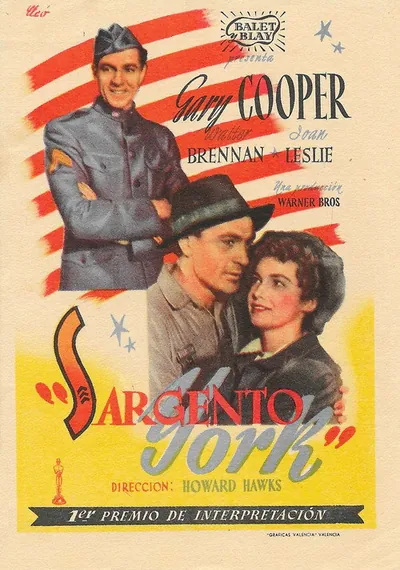 Sergeant York
 Gentlemen Prefer Blondes
 Bringing Up Baby
 The Big Sleep
 Scarface
 Red River
Original Cinematopedia text based on Wikipedia (es) and Wikipedia (en) and Wikidata.