
The Day the Earth Caught Fire
El día en que la Tierra se incendió
1961 · United Kingdom · 99 min
- Director
- Val Guest
- Screenplay
- Val Guest, Wolf Mankowitz
- Producer
- Val Guest
- Music
- Stanley Black
- Cinematography
- Harry Waxman
- Editing
- Bill Lenny
What the critics say
86 % Rotten Tomatoes positive reviewsCast
What it is about
A lone man walks through the deserted, sweltering streets of an abandoned London, and the film then rewinds several months. Peter Stenning, a promising Daily Express journalist, is in a downward spiral after a divorce: he drinks heavily, his work suffers, and his editor gives him dull assignments. His only real friend, veteran Fleet Street reporter Bill Maguire, encourages him and sometimes writes his copy. Meanwhile, after simultaneous nuclear tests by the United States and the Soviet Union, strange weather begins to afflict the planet. Stenning is sent to the British Met Office for temperature data and meets Jeannie, a young typist temporarily working as a telephonist.
How it was made
Val Guest worked from a twenty-page treatment and spent around eight years struggling to find backing, as studios balked at a film about the bomb. Success with Expresso Bongo (1959) finally opened the door; the film was made for Pax, a company set up for the project, with Guest using his earlier profits as collateral. Location shooting took place in London and Brighton, while abandoned cityscapes were created with matte paintings. The production used the real Daily Express, shooting in its Fleet Street headquarters, with editor Arthur Christiansen playing a supporting role. Michael Caine appears uncredited as a police constable.
Reception and legacy
The film opened in London in November 1961 and is regarded as one of the classic apocalyptic films of its era. Guest said its open ending was intentional, though the American release added church bells that suggest a happy resolution. A restored version was screened at the British Museum's open-air cinema in 2014. Its mix of science fiction, disaster and newspaper realism makes it a reference point in British nuclear-themed cinema.
Stills


Trailer
Clicking loads the video from YouTube (privacy-enhanced mode). Open on YouTube
Trivia
A real newspaper
The Daily Express lent its own Fleet Street headquarters for filming, and its editor Arthur Christiansen plays the paper's editor in the film.
Added church bells
The American version includes church bells absent from the British cut; Guest maintained that he intended an ambiguous ending.
More films by Val Guest
 Casino Royale
 When Dinosaurs Ruled the Earth
 The Quatermass Xperiment
 The Abominable Snowman
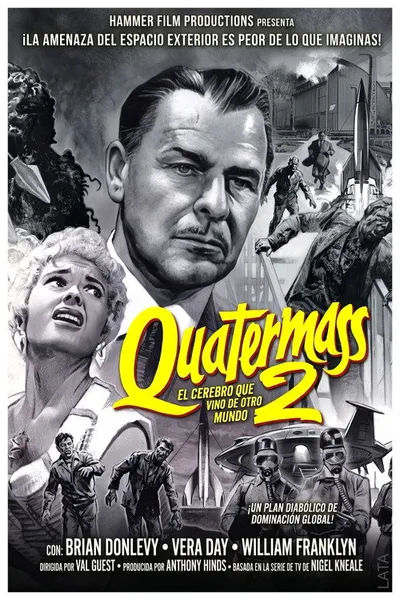 Quatermass II
 Yesterday's Enemy
Original Cinematopedia text based on Wikipedia (en) and Wikidata.