
The Mad Ghoul
El buitre humano
1943 · United States · 65 min
- Director
- James P. Hogan
- Screenplay
- Hanns Kräly
- Cinematography
- Milton Krasner
- Production company
- Universal Pictures
Cast
What it is about
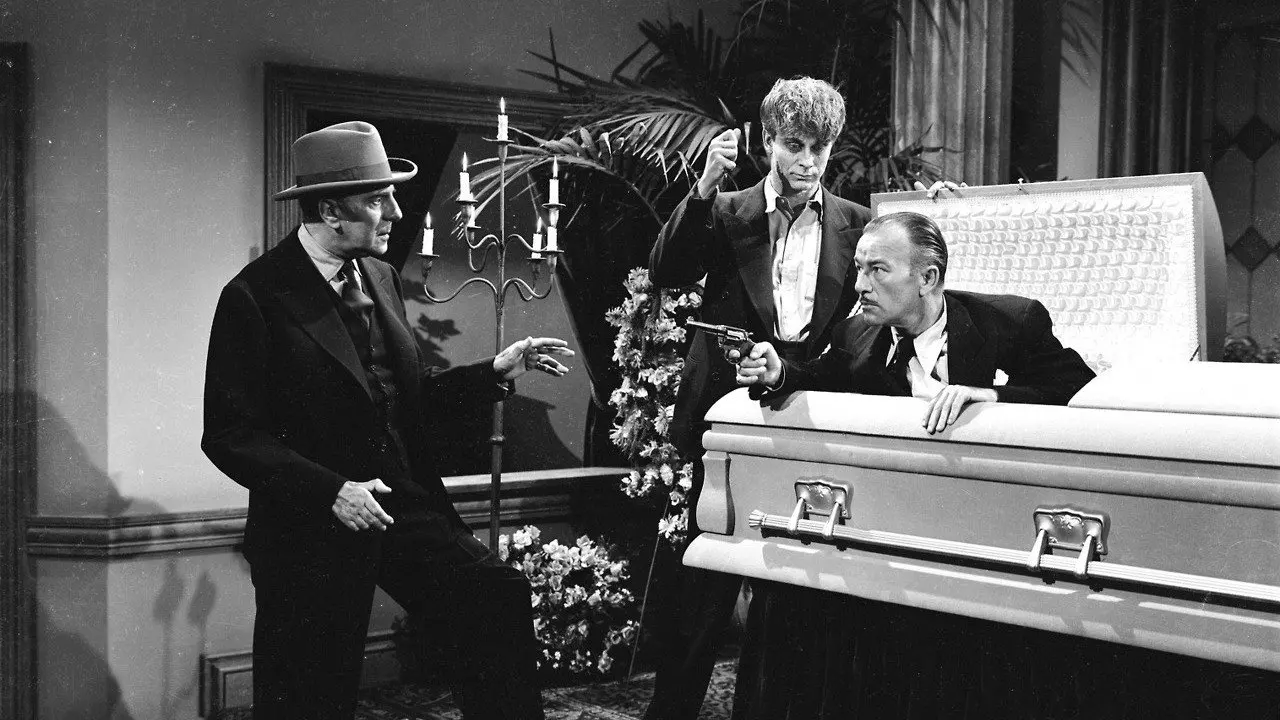
In the United States, Dr. Alfred Morris, obsessed with an ancient Mayan process for preserving life, takes medical student Ted Allison under his wing to help with experiments involving a gas the Mayans once used. Morris has also fallen for Isabel Lewis, Ted's girlfriend and a concert singer. When the doctor decides to use Ted in his experiments, the young man becomes a mindless creature who needs human hearts to survive, unaware of what has happened to him. The story follows a chain of killings that coincides with Isabel's concert tour through several cities.
How it was made
The film was developed at Universal Pictures in February 1943 under the title The Mystery of the Mad Ghoul and was intended to support Son of Dracula as a double feature. The script drew on a story by Hanns Kräly and was written by Paul Gangelin and Brenda Weisberg. James Hogan, who had just signed with the studio, directed it on a B-picture budget. David Bruce played Ted under a make-up design by Jack Pierce that imitated a decomposing corpse, an experience Bruce later described as very painful. Filming began on May 13, 1943 and wrapped before the end of that month. Evelyn Ankers's planned singing was replaced by recordings of Lillian Cornell.
Reception and legacy
The film opened on November 12, 1943, about a week after Hogan died of a heart attack. It belongs to Universal's horror output of the early 1940s, when low-budget titles often filled out double bills. Its present-day reputation rests mainly on George Zucco's performance and Pierce's make-up, and it is remembered as a representative example of B-movie horror of the period.
Stills


Trivia
Harsh make-up
David Bruce said the make-up he wore for three days was painful, and removing it made him bleed.
Replaced voice
Universal planned for Evelyn Ankers to sing her own songs, but the idea was dropped at the last moment and recordings by Lillian Cornell were used instead.
Original Cinematopedia text based on Wikipedia (en) and Wikidata.