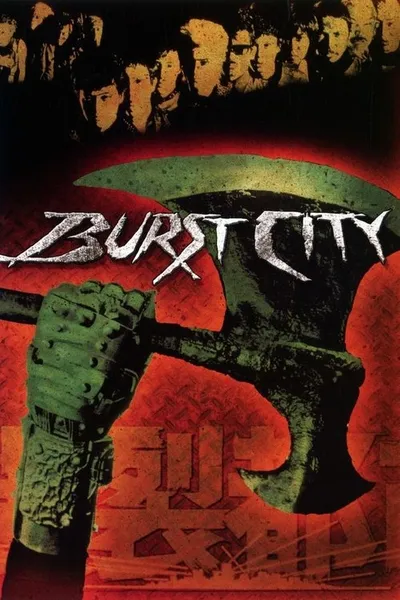
Cast
What it is about
Set in a dystopian future, the film follows two storylines that eventually converge. In one, residents of a part of Tokyo rebel against the construction of a nuclear power plant, answering with street races, parties and brawls to the music of The Rockers and The Stalin. In the other, a young mute and his loyal friend cycle across the city in search of the killer of the mute's brother. The threads meet when bikers, construction workers and punks discover that the businessman running the plant is the man they have been hunting. The plot is simple; music, character interaction and commentary on class take centre stage.
How it was made
Ishii made Burst City in the middle of Japan's punk movement, and several contemporary punk musicians took leading roles and performed songs in the film. He wanted musicians from the three main punk hubs: The Stalin from Tokyo, Machizo Machida from Kansai, and The Roosters and The Rockers from Kyushu. Cast and crew lived on the post-apocalyptic set built for the shoot. To give the film a fresh, revolutionary feel, Ishii tried many techniques: frantic, chaotic editing, mixes of undercranked and normal-speed shots, documentary-style musical numbers and backstage scenes, and thousands of extras in eccentric costumes and hairstyles captured on grainy 16mm film. Toei distributed the film.
Reception and legacy
The film is highly regarded by critics and audiences for its hyperkinetic style, wildly different from other films of its era. It is considered a defining document of Japan's punk subculture and one of the starting points of contemporary Japanese cinema, alongside other works by Ishii. Its lasting value as a film is debated: Todd Brown of ScreenAnarchy considered it stronger as a cultural document than as a film in itself, while Simon Abrams, writing for RogerEbert.com, praised its defiant attitude and its relevance as a reaction to nuclear proliferation. Its soundtrack was released by SEE SAW in 1982.
Stills

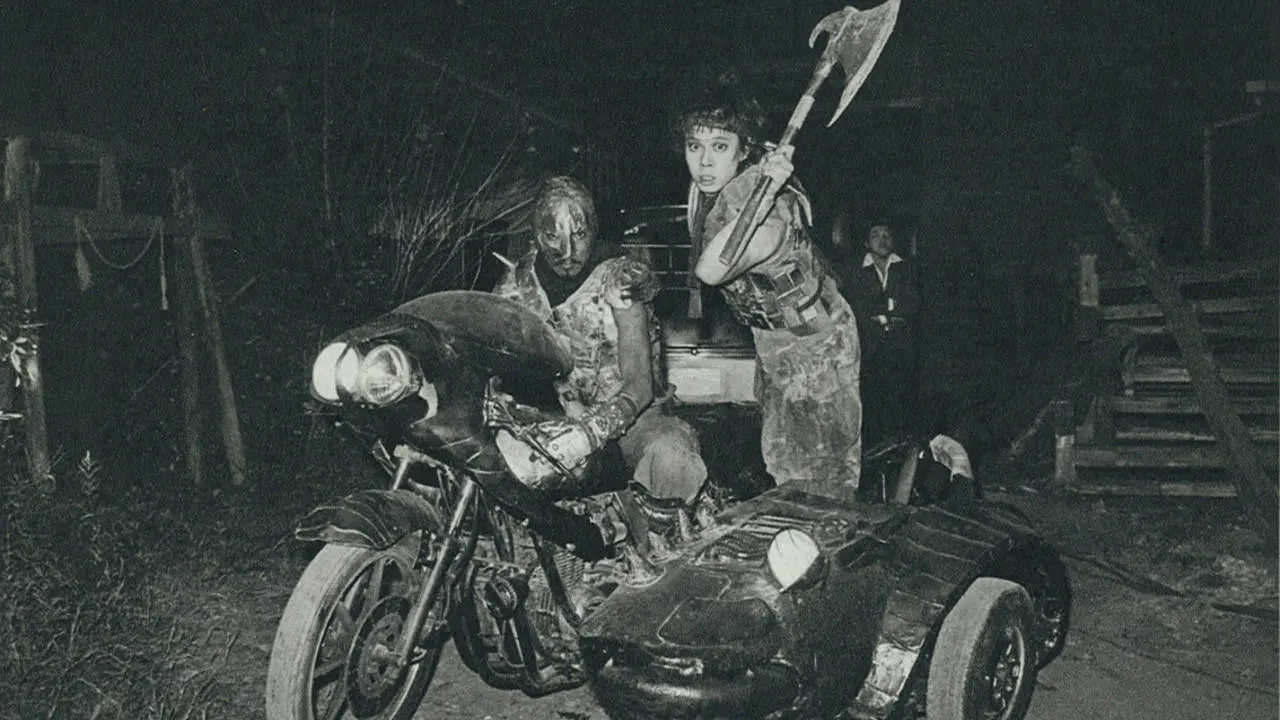
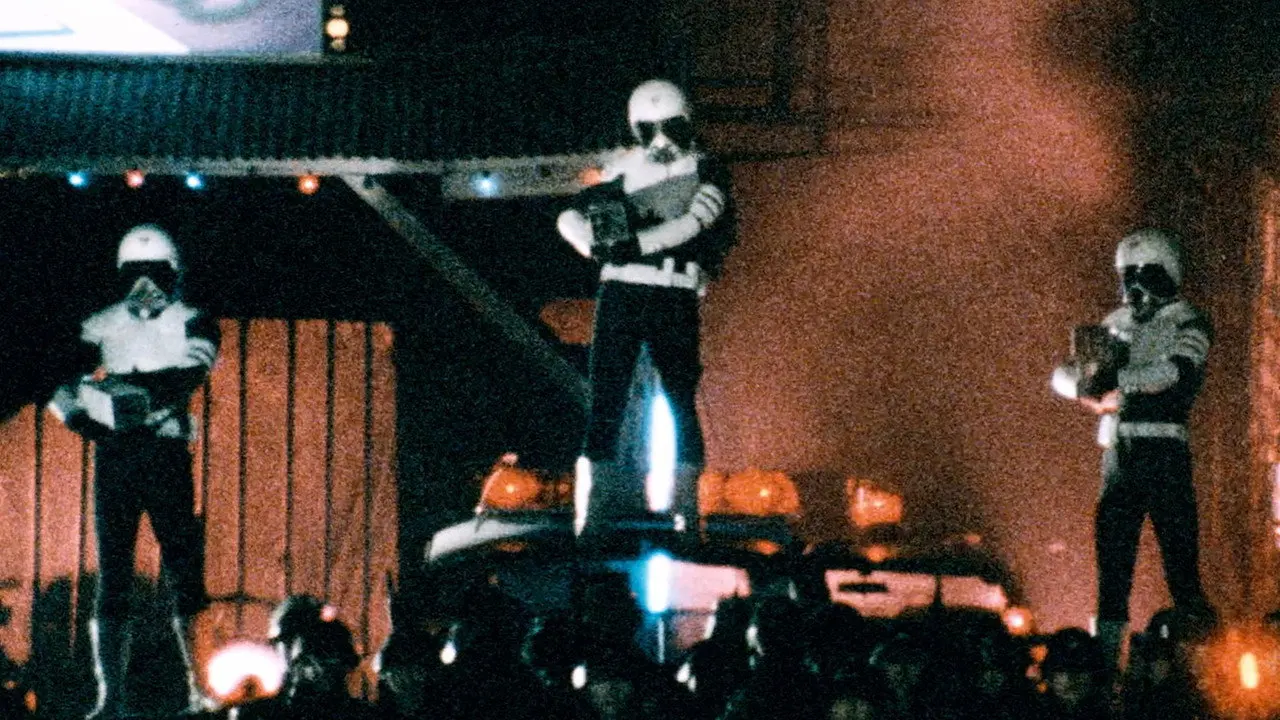
Trivia
Real musicians in the cast
Several members of the period's punk bands took leading roles and also performed songs in the film.
Three punk hubs
Ishii wanted artists from Tokyo, Kansai and Kyushu, the three main centres of Japanese punk.
Original Cinematopedia text based on Wikipedia (es) and Wikipedia (en) and Wikidata.