
Bandidos
- Director
- Massimo Dallamano
- Music
- Egisto Macchi
- Cinematography
- Emilio Foriscot
Cast
What it is about
Richard Martin, a renowned gunman, is travelling by train when the carriage is held up by Billy Kane, one of his former students. Kane spares his life but shoots his hands first. Years later, Martin crosses paths with an escaped convict who was wrongly convicted for that robbery, and decides to train him. Together they set out to hunt down Kane, in a story built around revenge and an unsettled debt between teacher and pupil.
How it was made
It was Massimo Dallamano's first feature as a director, after a career as a cinematographer. The Italian-Spanish co-production brought together E.P.I.C. Film of Rome and Hesperia Films of Madrid, and producer Solly V. Bianco had previously worked with Dallamano on Buffalo Bill, Hero of the Far West. Shooting took place in Italy, in Lazio, where the gorge at Tolfa and a riverside stretch served as locations, and in Spain near Madrid. Although Emilio Foriscot received the credited cinematography, camera operator Sergio D'Offizi recalled that Dallamano handled the lighting and shooting himself.
Reception and legacy
The film premiered in October 1967 through Euro International and was released as Bandidos in most territories, occasionally under the alternative title Crepa tu... che vivo io.... Butcher's Film Service distributed it in the United Kingdom. The Monthly Film Bulletin found it marked by largely gratuitous violence and a strident soundtrack, though it singled out one original touch: a playing card tied to a metronome as a moving target for marksmanship practice. Today it is mainly noted as Dallamano's directing debut and for its 2021 Blu-ray release in a box set of westerns.
Stills


Trivia
Behind the camera
Although Emilio Foriscot receives the credited cinematography, camera operator Sergio D'Offizi stated that Dallamano lit and shot the film almost entirely himself.
An unusual target
A playing card tied to a metronome serves as a moving target for shooting practice, a detail contemporary critics singled out.
More films by Massimo Dallamano
 What Have You Done to Solange?
 Dorian Gray
 Venus in Furs
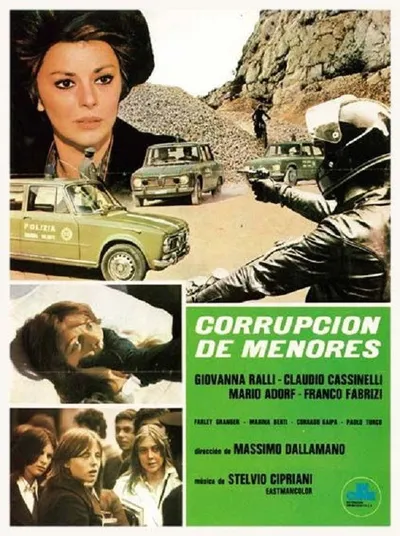 What Have They Done to Your Daughters?
 A Black Veil for Lisa
Original Cinematopedia text based on Wikipedia (en) and Wikidata.