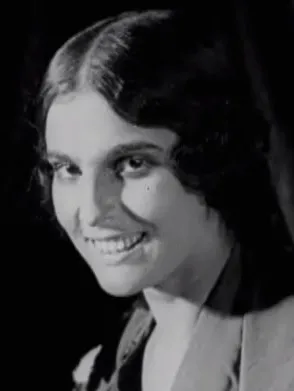
Yuliya Solntseva
1901–1989 · Soviet actress and film director
Biography
Yuliya Solntseva (Moscow, 1901 – 1989) was a Soviet actress and film director. She began in the theatre before turning to silent cinema, where she became known for the science fiction classic Aelita (1924). Her career is often discussed alongside that of her husband, the Ukrainian filmmaker Aleksandr Dovzhenko, but her own work as a director has come to be seen as distinct in its own right.
After graduating in 1922 she joined Alexander Tairov's Kamerny Theatre in Moscow, but soon left the stage for film. In 1924 she appeared in two films: Aelita, directed by Yakov Protazanov, and the comedy The Cigarette Girl from Mosselprom, directed by Yuri Zhelyabuzhsky. In 1928 she met Dovzhenko in Odesa, and they married a year later. From 1929 she worked as an assistant director at several studios, and she assisted him on Ivan (1932).
Her directing career began in 1939 with Shchors, first alongside her husband and, after his death in 1956, on her own. She completed projects he had written but never filmed, among them Poem of the Sea (1958), a lyrical and philosophical work about a hydroelectric dam on the Dnieper. With Chronicle of Flaming Years (1961), a war drama about Soviet resistance to the Nazi occupation, she won the Best Director prize at Cannes, the first woman to do so. She sat on the Cannes jury in 1975.
For many years her work stood in the shadow of Dovzhenko's. Later critics have reassessed it, noting experimental sound and imagery and a use of melodrama that pushed the conventions of socialist realism. In 2017 the Museum of the Moving Image screened her Ukrainian trilogy.
Key films
- Aelita (1924): starred as the Queen of Mars in one of the first Soviet films to blend science fiction with praise for the new society.
- Earth (1930): acted in this silent film by Dovzhenko, on which she also worked as assistant director.
- Shchors (1939): her first feature as a director, made together with her husband.
- Poem of the Sea (1958): completed after Dovzhenko's death, a lyrical film about the Dnieper dam.
- Chronicle of Flaming Years (1961): won the Best Director prize at Cannes and remains her best-known work.
Trivia
Music for silent films
On a trip to America she noticed that silent films were often screened with music only loosely connected to their subject. She therefore commissioned original scores from the composer Ouvchinikov, who had written the music for War and Peace.
A trilogy revisited in 2017
The Museum of the Moving Image in New York screened her Ukrainian Trilogy on August 26 and 27, 2017.
On Cinematopedia
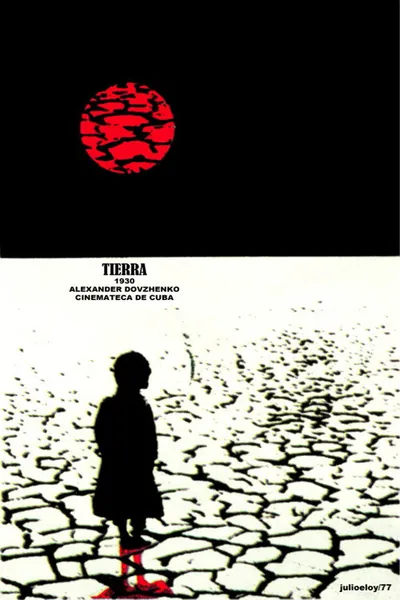 Earth
 Aelita
 Chronicle of Flaming Years
 Ukraine in Flames
 Farewell, America
Original Cinematopedia text based on Wikipedia (es) and Wikipedia (en) and Wikidata.