
Willis Bouchey
1907–1977 · American character actor
Biography
Willis Bouchey (born in Clare, Michigan, in 1907; died in Burbank, California, in 1977) was an American character actor who turned up regularly in film and television from the 1950s through the 1970s. He usually played judges, army officers, sheriffs and officials, supporting roles that gave many stories their weight.
After his father died when he was still a baby, he grew up in Seattle. He began acting as a high school student in Bakersfield and joined a local community theatre group. He enrolled at the University of California to study dentistry but left after two years, judging that acting could pay better. He also worked in radio, where he took lead roles in several serials.
On screen he appeared in From Here to Eternity and The Bridges at Toko-Ri, but his best-known work is with John Ford, who used him in twelve productions as one of his regular players. In The Man Who Shot Liberty Valance he delivers the film's closing line. On television he was part of the Dragnet company and appeared in 23 episodes of Perry Mason.
His legacy is that of a dependable working actor, especially familiar from westerns and from 1950s and 1960s studio films, whose supporting performances added solidity to many pictures.
Key films
- From Here to Eternity (1953): an army lieutenant colonel, uncredited.
- The Bridges at Toko-Ri (1954): Captain Evans, in the Korean War aviation drama.
- The Man Who Shot Liberty Valance (1962): a train conductor who delivers the film's final line.
- How the West Was Won (1962): a surgeon, uncredited, in the multi-director epic western.
Trivia
Closing line in Liberty Valance
In The Man Who Shot Liberty Valance he gets the film's final line, a remark about the man who shot Liberty Valance.
A pardon for Billy the Kid
In the Colt .45 episode "Amnesty" he played Lew Wallace, governor of New Mexico Territory, who offers a pardon to the outlaw Billy the Kid, played by Robert Conrad.
On Cinematopedia
 From Here to Eternity1953
 How the West Was Won1962
 A Star Is Born1954
 The Man Who Shot Liberty Valance1962
 The Big Heat1953
 Pocketful of Miracles1961
 The Horse Soldiers1959
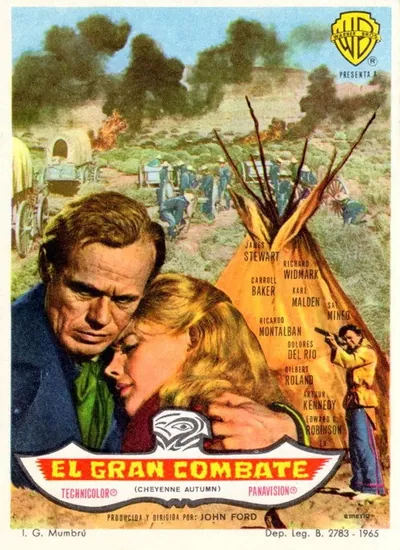 Cheyenne Autumn1964
 The Bridges at Toko-Ri1954
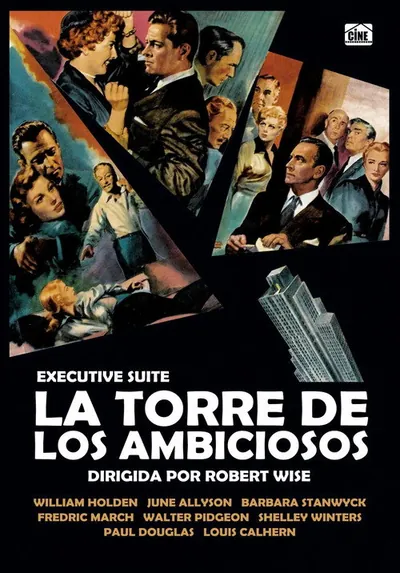 Executive Suite1954
 Two Rode Together1961
 Them!1954
- Don't Bother to Knock 1952 · cast
- Deadline – U.S.A. 1952 · cast
- Million Dollar Mermaid 1952 · cast
- Carbine Williams 1952 · cast
- From Here to Eternity 1953 · cast
- The Big Heat 1953 · cast
- Pickup on South Street 1953 · cast
- A Star Is Born 1954 · cast
- The Bridges at Toko-Ri 1954 · cast
- Executive Suite 1954 · cast
- Them! 1954 · cast
- Suddenly 1954 · cast
- The Long Gray Line 1955 · cast
- The Violent Men 1955 · cast
- Battle Cry 1955 · cast
- The Wings of Eagles 1957 · cast
- Mister Cory 1957 · cast
- The Last Hurrah 1958 · cast
- The Sheepman 1958 · cast
- Darby's Rangers 1958 · cast
- The Horse Soldiers 1959 · cast
- No Name on the Bullet 1959 · cast
- Sergeant Rutledge 1960 · cast
- Pocketful of Miracles 1961 · cast
- Two Rode Together 1961 · cast
- How the West Was Won 1962 · cast
- The Man Who Shot Liberty Valance 1962 · cast
- Panic in Year Zero! 1962 · cast
- Cheyenne Autumn 1964 · cast
- Where Love Has Gone 1964 · cast
- Support Your Local Sheriff! 1969 · cast
- Young Billy Young 1969 · cast
- Shoot Out 1971 · cast
- Support Your Local Gunfighter 1971 · cast
Original Cinematopedia text based on Wikipedia (en) and Wikidata.