
William Faulkner
1897–1962 · American novelist and screenwriter
Biography
William Faulkner (New Albany, 1897 – Byhalia, 1962) was an American novelist and screenwriter, winner of the 1949 Nobel Prize in Literature and one of the central figures of twentieth-century Southern literature. Most of his best-known work is set in the fictional Yoknapatawpha County, a stand-in for Lafayette County in Mississippi. In Hollywood he worked as a screenwriter during the 1940s and 1950s, while continuing to write novels and stories, and his name is linked to several notable films of the classic American studio era.
He spent his childhood in Oxford, where his family moved in 1902. His mother, Maud Butler, and his Black nursemaid, Caroline Barr, shaped his imagination in decisive ways, and the stories he heard about the Civil War and his great-grandfather, a Confederate colonel, fed much of his later fiction. He attended the University of Mississippi but left in 1920 after three semesters without a degree. During the First World War he tried to enlist in the American army and eventually joined a Canadian air force unit in Toronto, though he never saw combat. After returning to Oxford, he told acquaintances war stories that do not match his actual service.
In 1925 he lived in New Orleans, where he wrote his first novel, Soldiers' Pay, with encouragement from Sherwood Anderson. He followed it with Mosquitoes and Sartoris, the first book set in Yoknapatawpha, and in 1929 came The Sound and the Fury, known for its interior monologue and shifting narrators. Further novels such as As I Lay Dying and Light in August explored the history of the South, race, and the decline of old families. His reputation grew after Malcolm Cowley's The Portable Faulkner appeared in 1946, and the Nobel followed in 1949.
In Hollywood he wrote scripts for Howard Hawks, including To Have and Have Not, and he worked on the adaptation of Raymond Chandler's novel The Big Sleep. Screenwriting brought him income and kept him close to the film industry, although his most lasting work remained literary. He won two Pulitzer Prizes for fiction, for A Fable and The Reivers.
Faulkner died in 1962 from a heart attack, after a fall from his horse the previous month. His influence reaches Spanish-speaking novelists such as García Márquez and Vargas Llosa, both of whom have acknowledged it. Ralph Ellison called him the greatest artist the South had produced. He is remembered mainly as a novelist today, and his work in film forms part of a career that moved between literature and the Hollywood studio system.
Key films
- To Have and Have Not (1944)
- The Big Sleep (1946)
- Mildred Pierce (1945)
- Land of the Pharaohs (1955)
Trivia
A typo that stuck
He was born Falkner. According to a widely repeated story, a careless typesetter changed the spelling on the title page of his first book, and when asked whether he wanted the change, Faulkner reportedly said either way suited him.
Invented war wounds
Back in Oxford in late 1918, Faulkner told acquaintances false war stories and reportedly pretended to have a war wound, although he never saw combat overseas.
A tiny house in New Orleans
At 624 Pirate's Alley, near St. Louis Cathedral, a small house is now home to Faulkner House Books and the headquarters of the Pirate's Alley Faulkner Society.
On Cinematopedia
 Mildred Pierce1945
 The Big Sleep1946
 To Have and Have Not1944
 Air Force1943
 The Long, Hot Summer1958
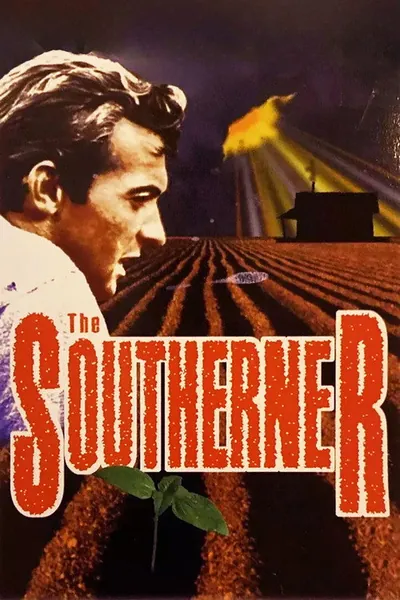 The Southerner1945
 Land of the Pharaohs1955
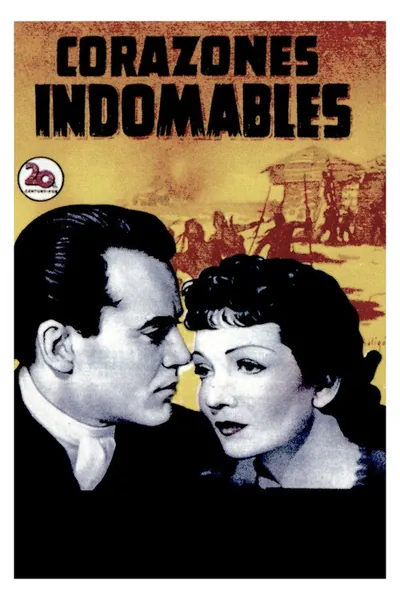 Drums Along the Mohawk1939
 The Tarnished Angels1958
 Intruder in the Dust1949
 Today We Live1933
 The Road to Glory1936
- Flesh 1932 · screenplay
- Today We Live 1933 · screenplay
- The Story of Temple Drake 1933 · screenplay
- The Road to Glory 1936 · screenplay
- Slave Ship 1937 · screenplay
- Four Men and a Prayer 1938 · screenplay
- Submarine Patrol 1938 · screenplay
- Drums Along the Mohawk 1939 · screenplay
- Air Force 1943 · screenplay
- Northern Pursuit 1943 · screenplay
- To Have and Have Not 1944 · screenplay
- Mildred Pierce 1945 · screenplay
- The Southerner 1945 · screenplay
- The Big Sleep 1946 · screenplay
- Intruder in the Dust 1949 · screenplay
- Land of the Pharaohs 1955 · screenplay
- The Long, Hot Summer 1958 · screenplay
- The Tarnished Angels 1958 · screenplay
Original Cinematopedia text based on Wikipedia (es) and Wikipedia (en) and Wikidata.