
Wes Craven
1939–2015 · American film director, screenwriter and producer, creator of A Nightmare on Elm Street and Scream
Biography
Wesley Earl Craven (Cleveland, August 2, 1939 – Los Angeles, August 30, 2015) was an American director, screenwriter, producer and novelist, and one of the most recognised names in horror cinema. He worked mainly in the genre, especially in slasher films, where he mixed familiar scares with a wry sense of humour. He is best known for creating Freddy Krueger in A Nightmare on Elm Street and the masked killer of the Scream series. Alongside David Cronenberg and John Carpenter, he is often cited as one of the essential filmmakers for understanding contemporary horror.
Craven was born in Cleveland into a family of English, Scottish and German descent, and he was raised in a strict Baptist household that he later left behind. He studied English and psychology at Wheaton College in Illinois, graduating in 1963 after a bout of Guillain-Barré Syndrome in his final year delayed his degree by a few months. He then earned a master's degree in philosophy and writing at Johns Hopkins University. Before entering the film business he taught English at Westminster College and humanities at Clarkson College of Technology in Potsdam, New York. In those years he bought a used 16 mm camera and began making short films. Through a friend, Steve Chapin, he found work with a New York production firm, where his first job was as a sound editor.
His early career took an unusual path. For several years he worked in the pornographic film industry, which was booming at the time. He has a crew credit on Deep Throat (1972) and directed The Fireworks Woman (1975) under the pseudonym Abe Snake, a film that already carried some of his recurring preoccupations, such as the blurred line between dream and reality and a critique of family and religion. His official directing debut came with The Last House on the Left (1972), a low-budget and very harsh film loosely inspired by Ingmar Bergman's The Virgin Spring (1960). It was meant for a limited release but was screened far more widely than he had expected. Its brutality brought censorship trouble and a period of ostracism that forced him to reinvent himself, and the film later became a cult title.
After that experience he tried to move away from horror with his partner Sean S. Cunningham, but they could not secure financing. On a friend's advice he wrote and directed The Hills Have Eyes (1977), a desert-set survival story pitting a conventional family against a degenerate one, which cemented his reputation in the genre. He then made a brief foray into television with the TV movie Stranger in Our House (1978) and directed Deadly Blessing (1981), in which Sharon Stone made her big-screen debut. By the early 1980s he had a distinct style but still no mainstream hit.
That hit arrived with A Nightmare on Elm Street (1984). Craven wrote and directed it, but first had to knock on the doors of many studios and producers, who found the story too surreal and not credible enough. New Line Cinema agreed to finance it, and the film, which launched Johnny Depp's career, became an international success. Several sequels followed featuring Freddy Krueger, in which Craven had little involvement, and he later criticised them for betraying the spirit of his original idea. He worked as a producer on A Nightmare on Elm Street 3: Dream Warriors (1987), hoping it would be the last of the series, and as director of Wes Craven's New Nightmare (1994), a metafictional twist in which Heather Langenkamp plays herself and Craven appears as himself. Around the same time he directed The Serpent and the Rainbow (1988), about a man unable to tell his nightmares from reality, and Shocker (1989). The People Under the Stairs (1991) mixed horror with social satire.
His partnership with producer Marianne Maddalena was decisive. Maddalena began as his assistant during the shoot of Deadly Friend (1986), and he gave her her first producer credit on Shocker. In 1996 they founded Craven/Maddalena Films. Their company produced Scream (1996), which Craven directed from a script by Kevin Williamson, a film that revived the slasher with a self-aware, youthful tone. It was a major hit and led to Scream 2 (1997), Scream 3 (2000) and Scream 4 (2011), which he also directed. During a location scout, Maddalena found the Ghostface mask that became the franchise's icon. Craven also directed the drama Music of the Heart (1999), which earned two Academy Award nominations, and the thriller Red Eye (2005), starring Rachel McAdams and Cillian Murphy. He contributed a segment to the anthology Paris, je t'aime (2006).
His films keep returning to fractured families, the violence hidden inside the home and the boundary between dreams and waking life. He admired Bergman, Buñuel, Hitchcock and Fellini, and his work carries homages, such as the goat in the opening dream of A Nightmare on Elm Street, included as a nod to Buñuel. He repeatedly worked with the composer Marco Beltrami and with actors such as Neve Campbell, Courteney Cox, David Arquette and Robert Englund. He collected numerous prizes at genre festivals and received the Life Career Award from the Academy of Science Fiction, Fantasy and Horror Films in 1995. His work is now the subject of academic study.
He married three times. His first marriage, to Bonnie Broecker, produced two children: Jonathan, a writer and director, and Jessica, a singer in the duo The Chapin Sisters. In 2004 he married Iya Labunka, who had often worked as a producer on his films. In 2010 he directed My Soul to Take with a team different from his usual collaborators, and the film received overwhelmingly negative reviews. Craven died at his home in Los Angeles in 2015, aged 76, of a brain tumour. His legacy lives on in modern horror, which still draws on his stories about domestic fear and his ironic take on the genre itself.
Key films
- The Last House on the Left (1972), his directing debut and a cult title about a father's revenge.
- The Hills Have Eyes (1977), a desert survival story that made his name in horror.
- A Nightmare on Elm Street (1984), the film that created Freddy Krueger and launched Johnny Depp's career.
- Wes Craven's New Nightmare (1994), a metafictional reflection on the series he had created.
- Scream (1996), the film that revived the slasher with humour and genre awareness.
- Red Eye (2005), a tight, tense thriller starring Rachel McAdams.
Trivia
A goat as homage
The goat in the opening dream of A Nightmare on Elm Street was included as a homage to Luis Buñuel, one of the filmmakers Craven cited as an influence.
A mask found on location
While location scouting for Scream, Marianne Maddalena came across the Ghostface mask that became the franchise's emblem.
A television cameo
In 2013 Craven made a cameo appearance in the police series Castle.
On Cinematopedia
 Scream1996
 A Nightmare on Elm Street1984
 Scream 21997
 Scream 42011
 Scream 32000
 A Nightmare on Elm Street 3: Dream Warriors1987
 A Nightmare on Elm Street 4: The Dream Master1988
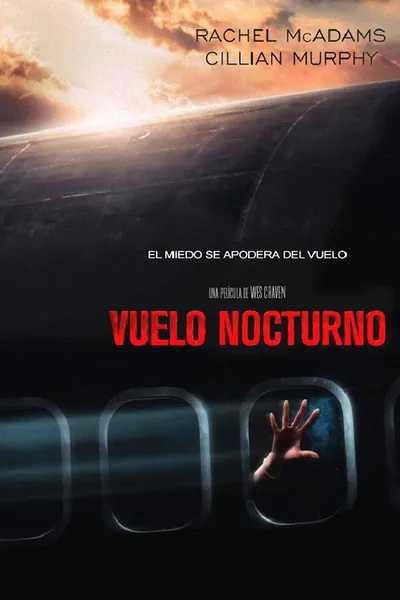 Red Eye2005
 The Last House on the Left1972
 Jay and Silent Bob Strike Back2001
 Paris, je t'aime2006
 Wes Craven's New Nightmare1994
- The Last House on the Left 1972 · director, screenplay, editing
- The Hills Have Eyes 1977 · director, screenplay, editing
- Deadly Blessing 1981 · director, screenplay
- Swamp Thing 1982 · director, screenplay
- A Nightmare on Elm Street 1984 · director, screenplay
- The Hills Have Eyes Part II 1984 · director, screenplay
- Deadly Friend 1986 · director
- A Nightmare on Elm Street 3: Dream Warriors 1987 · screenplay, producer
- A Nightmare on Elm Street 4: The Dream Master 1988 · screenplay
- The Serpent and the Rainbow 1988 · director
- Shocker 1989 · director, screenplay, cast
- The People Under the Stairs 1991 · director, screenplay
- Wes Craven's New Nightmare 1994 · director, screenplay, producer, cast
- Vampire in Brooklyn 1995 · director
- Scream 1996 · director
- Scream 2 1997 · director, producer
- Wishmaster 1997 · producer
- Music of the Heart 1999 · director
- Scream 3 2000 · director
- Dracula 2000 2000 · producer
- Jay and Silent Bob Strike Back 2001 · cast
- Red Eye 2005 · director
- Cursed 2005 · director
- Paris, je t'aime 2006 · director, screenplay, cast
- The Hills Have Eyes 2006 · producer
- Pulse 2006 · screenplay
- The Breed 2006 · producer
- The Hills Have Eyes 2 2007 · screenplay, producer
- Diary of the Dead 2007 · cast
- The Last House on the Left 2009 · producer
- My Soul to Take 2010 · director, screenplay, producer
- Scream 4 2011 · director, producer
Original Cinematopedia text based on Wikipedia (es) and Wikipedia (en) and Wikidata.