
Walter Slezak
1902–1983 · Austrian-born film, stage and television actor
Biography
Walter Slezak (Vienna, 1902 – Bavaria, 1983) was an Austrian-born actor known for film, stage and television work. He started out in German cinema and built most of his career in the United States after emigrating in 1930, moving between Hollywood films and Broadway musicals.
The son of the celebrated opera tenor Leo Slezak, he briefly studied medicine and then worked as a bank teller before turning to acting. His film debut came in the 1922 Austrian production Sodom und Gomorrah, directed by his friend Michael Curtiz. Early on, while still slim, he was cast in leading roles in silent pictures, and in 1924 he played the title role in Carl Theodor Dreyer's Michael.
His first American film was Once Upon a Honeymoon (1942), opposite Ginger Rogers and Cary Grant. Over the following years he appeared in more than a hundred films, mostly adventures, comedies and crime pictures. His scheming U-boat captain in Alfred Hitchcock's Lifeboat (1944) remains his best-known role, though he also played witty, philosophical private detectives, as in Born to Kill (1947). He made his Broadway debut in 1931 and won a Tony Award for Fanny. He also worked in radio and television, and in 1966 played the Clock King in Batman.
His legacy rests on a versatile character actor, best remembered for shrewd villains and supporting roles in Hollywood's 1940s and 1950s output. His daughter Erika Slezak became a well-known soap actress on One Life to Live. Slezak died in 1983 and was buried in Bavaria, beside his parents.
Key films
- Lifeboat (1944), in which he plays a crafty U-boat captain for Alfred Hitchcock.
- This Land Is Mine (1943), directed by Jean Renoir, with a major ensemble cast.
- Sinbad the Sailor (1947), a swashbuckling fantasy adventure.
- Come September (1961), as a charming, two-timing majordomo to a tycoon.
Trivia
Tony Award
He won the Tony Award for Best Actor in a Musical in 1955 for his role in the Broadway production of Fanny.
A stage mishap
His 1962 autobiography, What Time's the Next Swan?, takes its title from an alleged incident in his father Leo Slezak's career during a performance of Lohengrin.
On Cinematopedia
 Lifeboat1944
 This Land Is Mine1943
 Abbott and Costello in the Foreign Legion1950
 The Pirate1948
 Come September1961
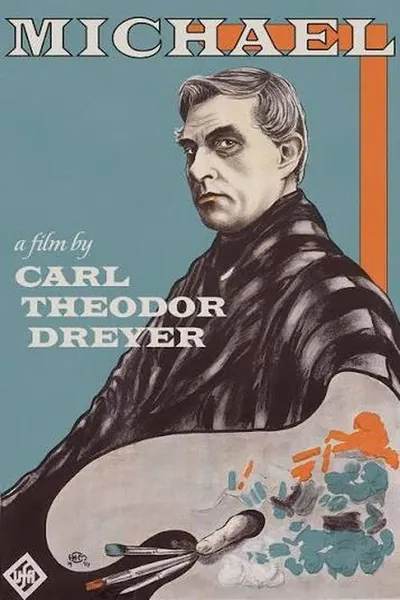 Michael1924
 Once Upon a Honeymoon1942
 Sinbad the Sailor1947
 Born to Kill1947
 The Princess and the Pirate1944
 The Inspector General1950
 People Will Talk1951
- Sodom and Gomorrah 1922 · cast
- Michael 1924 · cast
- My Leopold 1924 · cast
- Goodbye Youth 1927 · cast
- Once Upon a Honeymoon 1942 · cast
- This Land Is Mine 1943 · cast
- The Fallen Sparrow 1943 · cast
- Lifeboat 1944 · cast
- The Princess and the Pirate 1944 · cast
- Step Lively 1944 · cast
- The Spanish Main 1945 · cast
- Cornered 1945 · cast
- Salome, Where She Danced 1945 · cast
- Sinbad the Sailor 1947 · cast
- Born to Kill 1947 · cast
- The Pirate 1948 · cast
- Abbott and Costello in the Foreign Legion 1950 · cast
- The Inspector General 1950 · cast
- People Will Talk 1951 · cast
- Bedtime for Bonzo 1951 · cast
- Call Me Madam 1953 · cast
- White Witch Doctor 1953 · cast
- Ten Thousand Bedrooms 1957 · cast
- The Miracle 1959 · cast
- Come September 1961 · cast
- The Wonderful World of the Brothers Grimm 1962 · cast
- 24 Hours to Kill 1965 · cast
- Congress of Love 1966 · cast
- Black Beauty 1971 · cast
- Treasure Island 1972 · cast
Original Cinematopedia text based on Wikipedia (es) and Wikipedia (en) and Wikidata.