
Wallace Beery
1885–1949 · American film actor
Biography
Wallace Beery (1885-1949) was an American actor whose career moved from the circus and vaudeville stage to silent and sound cinema. He won the Academy Award for Best Actor for The Champ, and in the 1930s he was one of the most bankable stars at Metro-Goldwyn-Mayer. His heavy build and rough voice made him instantly recognizable in an era when studios valued strong character faces.
His early years were restless. The son of Noah W. Beery, he ran away from home as a boy and, at sixteen, joined the Ringling Brothers Circus as an assistant elephant trainer. He left the circus after a leopard attacked him. He then tried his luck in New York, in variety shows and Broadway musicals, where he worked in supporting roles. His brother Noah, also an actor, remained a constant point of reference in his career.
In 1913 he joined Essanay Studios, first in Chicago and later in California. He starred in a long run of comedy shorts as Sweedie, a Swedish maid, opposite Gloria Swanson, whom he married; the marriage ended badly amid drinking and domestic violence. From about 1919 he moved into villain roles in dramas and adventure films, and by the early 1920s he was regarded as one of Hollywood's most popular screen villains. He had already played Pancho Villa in Patria in 1917, a role he would return to almost two decades later.
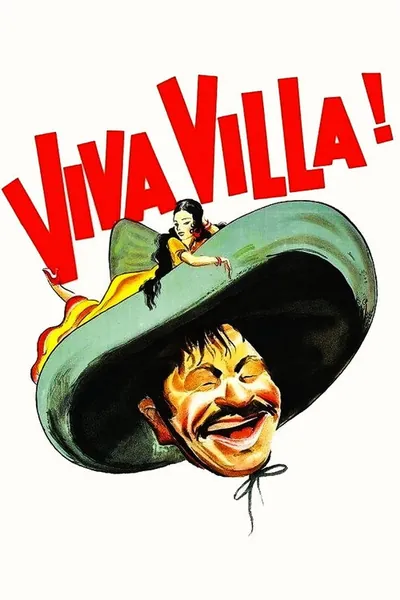
The arrival of sound left his future uncertain until Irving Thalberg saw his gravelly voice as an asset for character parts and helped secure him a contract with MGM. The Big House (1930) earned him an Oscar nomination, and Min and Bill, alongside Marie Dressler, confirmed his box-office appeal. The Champ brought him the Academy Award. In 1934 he played Long John Silver in Treasure Island and Pancho Villa again in Viva Villa!, shot in Mexico, which earned him a gold medal at the Venice Film Festival. He worked with Clark Gable, Jean Harlow and Joan Crawford, and in Grand Hotel he played the general director Preysing. His comedies with Dressler and Marjorie Main rounded out a decade of wide popularity.
His career lost momentum in the 1940s, with smaller roles and less prominent films. His legacy rests mainly on the villains of his early years and on the gruff but warm-hearted tough guys who defined much of his later work. He died of a heart attack in 1949 at his Beverly Hills home and was buried at Forest Lawn in Glendale. He was posthumously honored with a star on the Hollywood Walk of Fame in 1960. He was married three times and adopted one child.
Key films
- Grand Hotel (1932), as General Director Preysing
- The Big House (1930), his major sound-era hit and first Oscar nomination
- The Champ (1931), for which he won the Academy Award for Best Actor
- Robin Hood (1922), as King Richard the Lion-Hearted
- Treasure Island (1934), as Long John Silver
- Viva Villa! (1934), as Pancho Villa
Trivia
An unusual contract clause
His MGM contract stipulated in 1932 that he be paid one dollar more than any other contract player at the studio, making him one of the highest-paid film actors in the world in the early 1930s.
A leopard ended his circus stint
After working as an assistant elephant trainer with the Ringling Brothers Circus, he left the company after being clawed by a leopard.
A film shot in Mexico
Viva Villa! (1934), in which he played Pancho Villa again, was shot in Mexico, with Fay Wray as his co-star.
On Cinematopedia
 Grand Hotel1932
 The Big House1930
 Viva Villa!1934
 The Champ1931
 The Four Horsemen of the Apocalypse1921
 The Lost World1925
 Min and Bill1930
 Robin Hood1922
 Three Ages1923
 China Seas1935
 The Last of the Mohicans1920
 Dinner at Eight1933
- The Slim Princess 1915 · cast
- The Little American 1917 · cast
- Johanna Enlists 1918 · cast
- Victory 1919 · cast
- The Life Line 1919 · cast
- The Unpardonable Sin 1919 · cast
- Behind the Door 1919 · cast
- The Last of the Mohicans 1920 · cast
- The Mollycoddle 1920 · cast
- The Four Horsemen of the Apocalypse 1921 · cast
- A Tale of Two Worlds 1921 · cast
- Robin Hood 1922 · cast
- The Man from Hell's River 1922 · cast
- I Am the Law 1922 · cast
- Three Ages 1923 · cast
- Ashes of Vengeance 1923 · cast
- The Spanish Dancer 1923 · cast
- Drifting 1923 · cast
- The Flame of Life 1923 · cast
- Bavu 1923 · cast
- Richard the Lion-Hearted 1923 · cast
- The Eternal Struggle 1923 · cast
- The Sea Hawk 1924 · cast
- The Red Lily 1924 · cast
- Dynamite Smith 1924 · cast
- The Lost World 1925 · cast
- The Devil's Cargo 1925 · cast
- The Wanderer 1925 · cast
- Adventure 1925 · cast
- Old Ironsides 1926 · cast
- Now We're in the Air 1927 · cast
- Beggars of Life 1928 · cast
- The Big House 1930 · cast
- Min and Bill 1930 · cast
- Billy the Kid 1930 · cast
- A Lady's Morals 1930 · cast
- The Champ 1931 · cast
- The Secret Six 1931 · cast
- Hell Divers 1931 · cast
- Grand Hotel 1932 · cast
- Flesh 1932 · cast
- Dinner at Eight 1933 · cast
- The Bowery 1933 · cast
- Going Hollywood 1933 · cast
- Tugboat Annie 1933 · cast
- Viva Villa! 1934 · cast
- Treasure Island 1934 · cast
- China Seas 1935 · cast
- Ah, Wilderness! 1935 · cast
- West Point of the Air 1935 · cast
- Slave Ship 1937 · cast
- Port of Seven Seas 1938 · cast
- Bad Bascomb 1945 · cast
- A Date with Judy 1948 · cast
Original Cinematopedia text based on Wikipedia (es) and Wikipedia (en) and Wikidata.