
Theodore Bikel
1924–2015 · Austrian-born American actor and folk singer
Biography
Theodore Bikel (Vienna, 1924 - Los Angeles, 2015) was an Austrian-born American actor, singer and political activist. Best known for his versatility in playing characters of many nationalities, he worked across stage, film and television for more than six decades, and became one of the most recognised figures in American folk music.
Born into a Jewish family in Vienna, he was taken to Palestine after the German annexation of Austria in 1938. He began acting as a teenager with the Habimah company and helped found the Cameri Theatre. In 1945 he moved to London to train at the Royal Academy of Dramatic Art, and he found steady work there in the British films of the late 1940s and 1950s, often as villains of assorted European backgrounds. He settled in the United States in 1954.
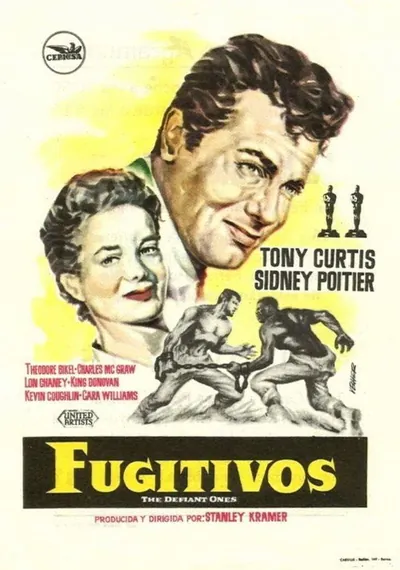
His first notable screen role came in The African Queen (1951), opposite Humphrey Bogart and Katharine Hepburn, where he played a German naval officer. Further credits included Moulin Rouge (1952), The Enemy Below (1957), The Pride and the Passion (1957) and The Defiant Ones (1958), for which he received an Academy Award nomination for Best Supporting Actor. He also played Zoltan Karpathy in My Fair Lady (1964) and a Soviet submarine captain in The Russians Are Coming, the Russians Are Coming (1966). On television he guest-starred in a long list of series, including Columbo and Star Trek: The Next Generation.
On stage he created the role of Captain von Trapp in the original Broadway production of The Sound of Music, and from 1967 he became associated with Tevye in Fiddler on the Roof, a part he played more than two thousand times. He also co-founded the Newport Folk Festival in 1959 and led actors' unions in the United States and Britain. His legacy rests on a long career of character work and on his role in popularising folk song and Jewish culture.
Key films
- The African Queen (1951): a German naval officer in a supporting role opposite Bogart and Hepburn.
- The Defiant Ones (1958): a Southern sheriff pursuing two escaped convicts, earning an Oscar nomination.
- The Pride and the Passion (1957): the sadistic General Jouvet in a large-scale production shot in Spain.
- The Enemy Below (1957): a German U-boat officer in the Second World War.
- My Fair Lady (1964): the Hungarian linguist Zoltan Karpathy.
- The Russians Are Coming, the Russians Are Coming (1966): captain of a Soviet submarine grounded off a New England island.
Trivia
A part opposite Vivien Leigh
In 1948 he unexpectedly stepped into a role in the London production of A Streetcar Named Desire when a co-star fell ill. Vivien Leigh, who was married to the director Laurence Olivier, told him to go on without further rehearsal.
A name with a purpose
His father, an active Zionist, named him after Theodor Herzl, the founder of modern Zionism.
On Cinematopedia
 My Fair Lady1964
 The African Queen1951
 The Defiant Ones1958
 The Russians Are Coming, the Russians Are Coming1966
 I Want to Live!1958
 Moulin Rouge1952
 The Enemy Below1957
 The Pride and the Passion1957
 Shadow Conspiracy1997
 Shattered1991
 200 Motels1971
 See You in the Morning1989
- The African Queen 1951 · cast
- Moulin Rouge 1952 · cast
- The Kidnappers 1953 · cast
- Melba 1953 · cast
- The Young Lovers 1954 · cast
- The Colditz Story 1955 · cast
- Above Us the Waves 1955 · cast
- The Enemy Below 1957 · cast
- The Pride and the Passion 1957 · cast
- The Defiant Ones 1958 · cast
- I Want to Live! 1958 · cast
- The Blue Angel 1959 · cast
- The Angry Hills 1959 · cast
- My Fair Lady 1964 · cast
- The Russians Are Coming, the Russians Are Coming 1966 · cast
- 200 Motels 1971 · cast
- Victory at Entebbe 1976 · cast
- See You in the Morning 1989 · cast
- Shattered 1991 · cast
- Shadow Conspiracy 1997 · cast
Original Cinematopedia text based on Wikipedia (es) and Wikipedia (en) and Wikidata.