
Sylvia Sidney
1910–1999 · American stage and film actress
Biography
Sylvia Sidney (born Sophia Kosow; August 8, 1910 – July 1, 1999) was an American actress whose career on stage and screen spanned more than seventy years. She was nominated for an Academy Award for Best Supporting Actress and won a Golden Globe, but she is best remembered for the leading roles she played in the 1930s, when she became one of the most recognizable women in Hollywood.
Born in the Bronx, she was the daughter of a Romanian-born Jewish mother and a Russian-Jewish immigrant who sold clothing. After her parents divorced by 1915, she was adopted by her stepfather, a dentist named Sigmund Sidney, and took his surname for her stage name. She began acting at fifteen, partly as a way to overcome her shyness. As a student at the Theater Guild's School for Acting, she appeared in several productions during the 1920s and earned praise from critics. In 1926 a Hollywood talent scout spotted her, and she made her screen debut as an extra in D. W. Griffith's The Sorrows of Satan.
During the Depression she appeared in a long run of films, often as a working-class heroine or as the girlfriend or sister of a gangster. She worked alongside Gary Cooper, Spencer Tracy, Henry Fonda, Joel McCrea, Fredric March, George Raft, who was a frequent co-star, and Cary Grant. Her role as a wrongly convicted woman in City Streets made her a star in 1931. Later in the decade she worked with Alfred Hitchcock and Fritz Lang. Her career slowed during the 1940s, but in 1952 she played Fantine in Les Misérables, a performance critics praised and that pushed her toward character parts. In 1973 she earned an Oscar nomination for Summer Wishes, Winter Dreams, though the award went to Tatum O'Neal.
In later years she kept working in supporting roles, and her husky voice, a result of years of smoking, became her trademark. She was the intimidating Miss Coral in I Never Promised You a Rose Garden and, on television, Aidan Quinn's grandmother in An Early Frost, a role that won her a Golden Globe. Her work in Tim Burton's Beetlejuice brought her renewed attention, and her final film role came in Burton's Mars Attacks! in 1996. She received a star on the Hollywood Walk of Fame and the George Eastman Award in 1982. She died in New York at the age of eighty-eight.
Key films
- City Streets (1931): the role that made her a star, as a wrongly convicted woman.
- Sabotage (1936): her work with Alfred Hitchcock, one of the key titles of her 1930s period.
- Fury (1936): directed by Fritz Lang, a drama in which she played a woman at the centre of a social story.
- Les Misérables (1952): her Fantine, a widely praised performance that marked her move toward character roles.
- Beetlejuice (1988): an important role in Tim Burton's fantasy comedy, which earned her a Saturn Award.
Trivia
A record salary in the 1930s
While making Sabotage with Alfred Hitchcock, Sidney was among the highest-paid actresses in the industry, earning about $10,000 a week.
A memorable line on television
In the television film An Early Frost, her character delivers the line "AIDS is a disease, not a disgrace!", a moment remembered for its message.
On Cinematopedia
 Beetlejuice1988
 Mars Attacks!1996
 Fury1936
 Dead End1937
 Sabotage1936
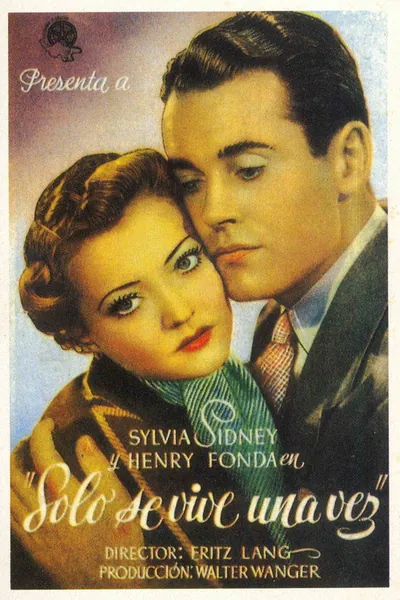 You Only Live Once1937
 Blood on the Sun1945
 Damien: Omen II1978
 City Streets1931
 The Trail of the Lonesome Pine1936
 I Never Promised You a Rose Garden1977
 Hammett1982
- City Streets 1931 · cast
- An American Tragedy 1931 · cast
- Street Scene 1931 · cast
- The Miracle Man 1932 · cast
- Fury 1936 · cast
- Sabotage 1936 · cast
- The Trail of the Lonesome Pine 1936 · cast
- Dead End 1937 · cast
- You Only Live Once 1937 · cast
- You and Me 1938 · cast
- The Wagons Roll at Night 1941 · cast
- Blood on the Sun 1945 · cast
- Les Misérables 1952 · cast
- Summer Wishes, Winter Dreams 1973 · cast
- Raid on Entebbe 1976 · cast
- I Never Promised You a Rose Garden 1977 · cast
- Damien: Omen II 1978 · cast
- Hammett 1982 · cast
- Copkiller 1983 · cast
- Beetlejuice 1988 · cast
- Used People 1992 · cast
- Mars Attacks! 1996 · cast
Original Cinematopedia text based on Wikipedia (es) and Wikipedia (en) and Wikidata.