
Steven Spielberg
b. 1946 · American film director, screenwriter and producer
Biography
Steven Spielberg (born in Cincinnati, Ohio, in 1946) is an American director, screenwriter and producer. Associated with the New Hollywood generation, he helped shape the modern blockbuster and, at the same time, has returned again and again to the painful history of the twentieth century. His films often balance spectacle and emotion, and many of them have become touchstones of popular cinema. His influence also extends to production, through studios and companies he helped found.
He grew up in a Jewish family of Ashkenazi origin. His mother, Leah Adler, was a pianist, and his father, Arnold, was an electrical engineer who worked on the development of computers. The family moved between New Jersey and Arizona, and during those years the young Steven discovered that home movies could be a way to tell stories. As a teenager he shot 8 mm films with friends. One was a nine-minute western he made to earn a merit badge in scouting; another was a forty-minute war film that won a prize in a statewide competition. In 1964 he wrote and directed Firelight, a science fiction feature mostly funded by his father, which was shown in a local cinema on a budget of 500 dollars.
After his parents divorced, he moved to California with his father. He applied to the film school at the University of Southern California and was turned down, so he enrolled at California State University, Long Beach instead. In the meantime he obtained an unpaid position at Universal Studios, where he worked in the editing department and spent much of his time watching other people work. In 1968 he made Amblin, a 26-minute short that impressed studio executives. Years later, the title of that film gave its name to his company, Amblin Entertainment.
His professional career began in television. He directed episodes of series such as Marcus Welby, M.D. and Columbo, work he later described as an apprenticeship. The TV movie Duel (1971), about a salesman chased by a tanker truck on an empty highway, was received so well that the studio asked him to shoot additional scenes for a cinema release. His first theatrical feature was The Sugarland Express (1974), based on a true story, which began a long partnership with the composer John Williams. The film won a prize for its screenplay at Cannes but was not a commercial success.
The breakthrough came with Jaws (1975). Shooting was very difficult: the mechanical shark kept malfunctioning and the schedule ran more than a hundred days over. Even so, the film broke box-office records and helped set the template for the summer blockbuster, with large marketing campaigns and ambitious effects. Spielberg later explained that the breakdowns forced him to suggest the monster rather than show it, and he considered the result an improvement. Close Encounters of the Third Kind (1977), which he wrote and directed, was a more personal project about UFOs and made him one of Hollywood's leading names. Not everything worked: 1941 (1979), his venture into comedy, was a failure with both critics and audiences.
In the 1980s he reached the height of his popularity. With George Lucas, who proposed the initial idea, he made Raiders of the Lost Ark (1981), with Harrison Ford as Indiana Jones, a tribute to the old adventure serials that revitalized the genre. Then came E.T. the Extra-Terrestrial (1982), which became the highest-grossing film of all time until Jurassic Park overtook it in 1993. Several collaborators stayed with him for decades: the editor Michael Kahn, the cinematographer Janusz Kaminski from Schindler's List onward, and the producer Kathleen Kennedy, who had worked on every film since E.T.
At the same time he moved toward drama. The Color Purple (1985), an adaptation of Alice Walker's novel about African-American women in the South during the Depression, was his first work with such a dramatic subject. It earned him the Directors Guild of America award for Best Director, and critics began to take his authorial side seriously. Empire of the Sun (1987), based on J. G. Ballard's autobiographical novel about a British boy interned in a Japanese camp during the Second World War, confirmed that interest. Its reception was mixed at the time, yet it is now among his most admired works. Indiana Jones and the Last Crusade (1989), with Sean Connery as Indy's father, closed the original trilogy with strong box-office results.
The nineties opened with Hook (1991), a reworking of Peter Pan starring Robin Williams, which was a moderate hit. The decade was defined by two films. Jurassic Park (1993) transformed visual effects through digital animation and became a commercial phenomenon. Schindler's List (1993), largely shot in black and white, tells the story of a German industrialist who saved hundreds of Jews during the Holocaust. It won the Oscar for Best Picture and for Best Director, and Spielberg received it with deep personal significance. In 1998 he returned to war with Saving Private Ryan, which earned him a second Best Director Oscar.
In the following decades he alternated adventure films with historical and political dramas. A.I. Artificial Intelligence (2001), based on a project originally developed by Stanley Kubrick, was met with reservations. Catch Me If You Can (2002), with Leonardo DiCaprio and Tom Hanks, showed his skill for chase comedy. Munich (2005), about the 1972 Munich Olympics attack, provoked controversy in several quarters. Lincoln (2012), with Daniel Day-Lewis, and Bridge of Spies (2015), with Tom Hanks, allowed him to explore political power and negotiation. The Adventures of Tintin (2011), an animated film built with motion capture, revealed his interest in other forms of storytelling.
As a producer, his credits include Poltergeist, Back to the Future, Men in Black, Jurassic Park and Transformers, among others. In the early nineties he also produced animated series such as Animaniacs. In 1994 he co-founded DreamWorks SKG with Jeffrey Katzenberg and David Geffen, a studio responsible for films such as Gladiator and for computer-animated hits such as Shrek.
Spielberg has maintained a lasting engagement with the memory of the Holocaust, supporting philanthropic work linked to the Second World War and to Jewish organizations devoted to remembering its victims. He has received the Order of the British Empire and the National Humanities Medal. His legacy combines the invention of modern spectacle with a sustained interest in history and in the responsibility of storytelling. He remains active, but his work from the seventies and eighties is still the starting point for understanding contemporary commercial cinema.
Key films
- Jaws (1975): the film that set the template for the summer blockbuster.
- Raiders of the Lost Ark (1981): the opening chapter of the Indiana Jones series, starring Harrison Ford.
- E.T. the Extra-Terrestrial (1982): a story about the friendship between a boy and a visitor from space.
- Schindler's List (1993): the Holocaust drama that earned him Best Picture and Best Director Oscars.
- Saving Private Ryan (1998): a wartime drama built around the Normandy landings and his second Best Director Oscar.
Trivia
A minimal profit
Firelight, his first independent film, cost 500 dollars and took in 501 during its screening at a local cinema. The one-dollar profit was the difference between income and budget.
A shark that would not work
The shoot of Jaws ran more than a hundred days over schedule because the mechanical shark kept failing. Spielberg explained that the limitation forced him to suggest the monster's presence, which he considered an improvement to the film.
On Cinematopedia
 Schindler's List1993
 Saving Private Ryan1998
 Jurassic Park1993
 Raiders of the Lost Ark1981
 E.T. the Extra-Terrestrial1982
 Jaws1975
 Lincoln2012
 Catch Me If You Can2002
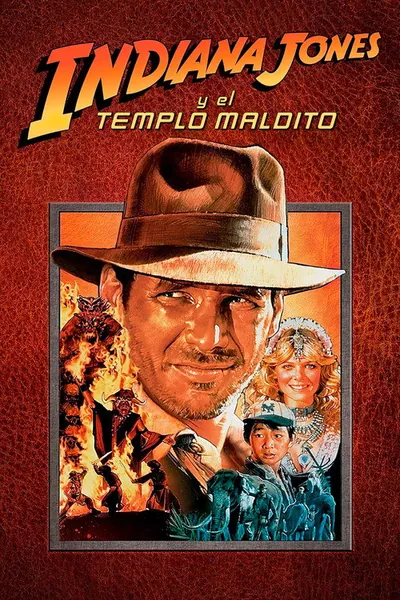 Indiana Jones and the Temple of Doom1984
 Indiana Jones and the Last Crusade1989
 Memoirs of a Geisha2005
 Bridge of Spies2015
- Firelight 1964 · director, cinematography, screenplay
- Duel 1971 · director
- The Sugarland Express 1974 · director, screenplay
- Jaws 1975 · director, cast
- Close Encounters of the Third Kind 1977 · director, screenplay
- 1941 1979 · director
- The Blues Brothers 1980 · cast
- Raiders of the Lost Ark 1981 · director
- E.T. the Extra-Terrestrial 1982 · director, producer
- Poltergeist 1982 · screenplay, producer
- Room 666 1982 · cast
- Twilight Zone: The Movie 1983 · director, producer
- Indiana Jones and the Temple of Doom 1984 · director, cast
- Gremlins 1984 · cast
- The Color Purple 1985 · director, producer
- The Goonies 1985 · screenplay
- The Money Pit 1986 · producer
- Empire of the Sun 1987 · director, producer
- Batteries Not Included 1987 · producer
- Indiana Jones and the Last Crusade 1989 · director
- Always 1989 · director
- Dreams 1990 · producer
- Gremlins 2: The New Batch 1990 · producer
- Joe Versus the Volcano 1990 · producer
- Arachnophobia 1990 · producer
- Hook 1991 · director
- Schindler's List 1993 · director, producer
- Jurassic Park 1993 · director, producer
- The Flintstones 1994 · producer
- Lost in Transit 1994 · producer
- Casper 1995 · producer
- Men in Black 1997 · producer, cast
- The Lost World: Jurassic Park 1997 · director, cast
- Amistad 1997 · director, producer
- Saving Private Ryan 1998 · director, producer
- A.I. Artificial Intelligence 2001 · director, screenplay
- Jurassic Park III 2001 · producer
- Vanilla Sky 2001 · cast
- Stanley Kubrick: A Life in Pictures 2001 · cast
- Catch Me If You Can 2002 · director
- Minority Report 2002 · director
- Austin Powers in Goldmember 2002 · cast
- The Terminal 2004 · director, producer
- Memoirs of a Geisha 2005 · producer
- Munich 2005 · director, producer
- War of the Worlds 2005 · director
- The Legend of Zorro 2005 · producer
- Letters from Iwo Jima 2006 · producer
- Flags of Our Fathers 2006 · producer
- Indiana Jones and the Kingdom of the Crystal Skull 2008 · director
- True Grit 2010 · producer
- Hereafter 2010 · producer
- War Horse 2011 · director, producer
- Super 8 2011 · producer
- Paul 2011 · cast
- Lincoln 2012 · director, producer
- The Hundred-Foot Journey 2014 · producer
- Bridge of Spies 2015 · director, producer
- Jurassic World 2015 · producer
- The BFG 2016 · director, producer
- The Post 2017 · director
- Ready Player One 2018 · director, producer
- The Turning 2020 · producer
- West Side Story 2021 · director, producer
- The Fabelmans 2022 · director, screenplay, producer
- Indiana Jones and the Dial of Destiny 2023 · producer
- Maestro 2023 · producer
- The Color Purple 2023 · producer
- Hamnet 2025 · producer
- The Thursday Murder Club 2025 · producer
- Disclosure Day 2026 · director, producer
Original Cinematopedia text based on Wikipedia (es) and Wikipedia (en) and Wikidata.