
Stephen King
b. 1947 · American novelist, screenwriter and director, known as the King of Horror
Biography
Stephen King (born in Portland, Maine, in 1947) is an American writer best known for horror fiction, though he has also worked in suspense, science fiction, fantasy and mystery. For years literary critics dismissed him as a merely commercial author, yet his influence on popular culture is considerable and many of his books have become films and television series. In cinema his presence is felt above all as a source of stories, although he has also written screenplays, appeared on screen and directed a feature.
He grew up in a modest household. His father left when he was two, and his mother raised him and his older brother through financial hardship and repeated moves across several states before the family settled in Durham, Maine. As a boy he read voraciously and began writing by copying comic book panels and imitating the films he watched. At the University of Maine in Orono he studied English and met Tabitha, whom he married in 1971 and who would prove vital to his career. While teaching high school he struggled with alcohol for nearly a decade, a problem that later surfaced in some of his characters.
His breakthrough came with Carrie (1974), a novel that Tabitha urged him to finish after he had thrown away its first pages. Salem's Lot, The Shining, The Dead Zone and later The Stand followed, establishing a recognisable style: ordinary people, small New England towns, and horror used as a way of writing about family, childhood, racism and war. In those years he also published under the pseudonym Richard Bachman, partly because publishing norms discouraged more than one book a year and partly to escape the pressure of his growing fame.
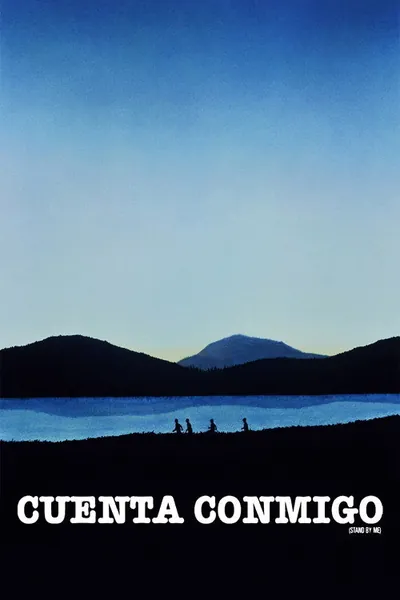
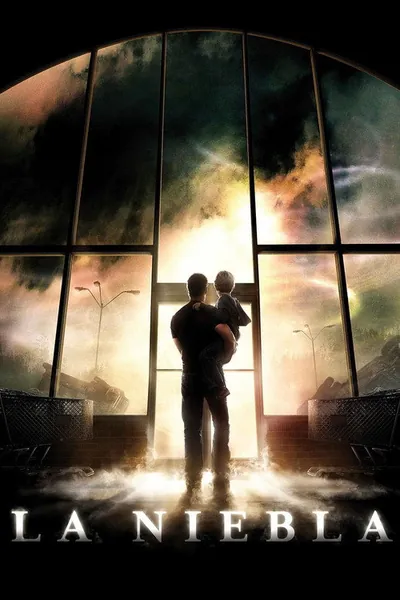
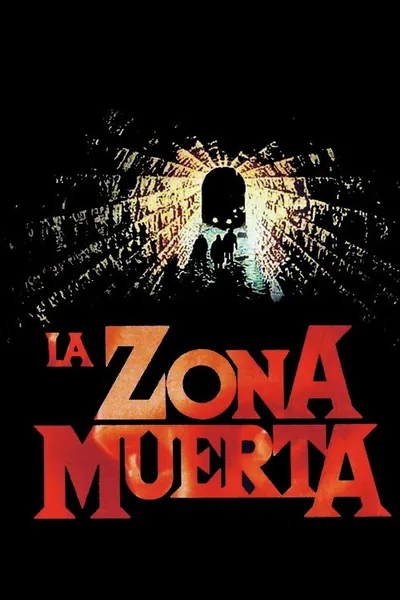
On screen, his adaptations have been numerous and uneven in quality. Brian De Palma's Carrie (1976) was a hit with critics and audiences, and Stanley Kubrick's The Shining became one of the most influential titles in the genre, although the author himself disliked how far it departed from his novel. Rob Reiner's Stand by Me and David Cronenberg's The Dead Zone kept his name on cinema screens, and his partnership with Frank Darabont produced The Green Mile and The Mist. King has also written screenplays, appeared in series and films, and directed Maximum Overdrive in 1986, a project he has often recalled with wry humour.
His legacy is twofold: he has sold hundreds of millions of copies and earned numerous genre awards, and he has helped persuade critics to take popular fiction seriously. He continues to publish, and his name remains a recognisable brand for screen adaptations of his books.
Key films
- Carrie (1976), directed by Brian De Palma, adapted from his first published novel.
- The Shining (1980), directed by Stanley Kubrick, one of the most influential versions of his work.
- Stand by Me (1986), directed by Rob Reiner, a coming-of-age story based on one of his novellas.
- The Dead Zone (1983), directed by David Cronenberg, about a man with psychic powers.
- The Green Mile (1999), directed by Frank Darabont, a prison drama drawn from his novel.
- The Mist (2007), directed by Frank Darabont, a claustrophobic horror story set in a supermarket under siege.
Trivia
Maximum Overdrive
King directed this 1986 film, a broadly comic and over-the-top horror picture, and it is one of the few occasions on which he has worked behind the camera.
Fictional towns in Maine
Many of his stories are set in imaginary towns in Maine, such as Castle Rock, Jerusalem's Lot and Derry.
On Cinematopedia
 Stand by Me1986
 Carrie1976
 The Running Man1987
 The Mist2007
 Secret Window2004
 The Dead Zone1983
 Cujo1983
 Pet Sematary1989
 Firestarter1984
 Creepshow1982
 Diary of the Dead2007
 Hearts in Atlantis2001
- Carrie 1976 · screenplay
- Knightriders 1981 · cast
- Creepshow 1982 · screenplay, cast
- The Dead Zone 1983 · screenplay
- Cujo 1983 · screenplay
- Firestarter 1984 · screenplay
- Silver Bullet 1985 · screenplay
- Cat's Eye 1985 · screenplay
- Stand by Me 1986 · screenplay
- Maximum Overdrive 1986 · director, screenplay, cast
- The Running Man 1987 · screenplay
- Creepshow 2 1987 · cast
- Pet Sematary 1989 · screenplay, cast
- Graveyard Shift 1990 · screenplay
- The Lawnmower Man 1992 · screenplay
- Sleepwalkers 1992 · screenplay
- Thinner 1996 · screenplay, cast
- Hearts in Atlantis 2001 · screenplay
- Children of the Corn: Revelation 2001 · screenplay
- Secret Window 2004 · screenplay
- The Mist 2007 · screenplay
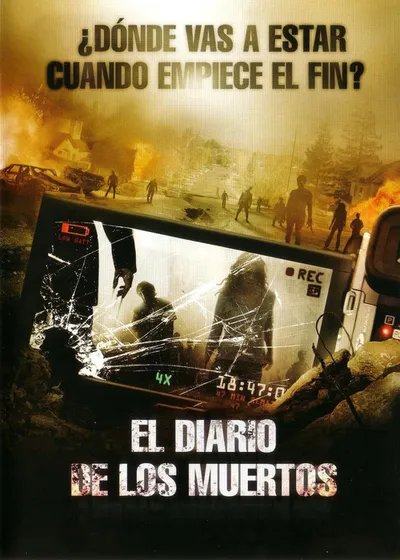
- Diary of the Dead 2007 · cast
- Cell 2015 · screenplay
Original Cinematopedia text based on Wikipedia (es) and Wikipedia (en) and Wikidata.