
Stan Lee
1922–2018 · American comic book writer, editor and producer
Biography
Stan Lee (born Stanley Martin Lieber; New York, December 28, 1922 – Los Angeles, November 12, 2018) was an American writer, editor and producer whose name is inseparable from Marvel Comics. For decades he led the company's creative side, and in the 1960s he helped reshape superhero comics around flawed, believable characters. Later, as Marvel moved into film and television, he became one of the most visible faces of the brand. He also acted occasionally and worked on animation, and he made cameo appearances in many Marvel films.
Stanley Martin Lieber was born in Manhattan to Romanian-born Jewish immigrants, Celia and Jack Lieber. His father was a tailor who found steady work hard to come by after the Great Depression, and the family moved several times, eventually settling in the Bronx. Stan had a younger brother, Larry Lieber. As a boy he loved adventure novels and films, especially those starring Errol Flynn, a fondness he described publicly in 2006. He attended DeWitt Clinton High School while holding a string of modest jobs: delivering sandwiches, writing obituaries and press releases, ushering in a cinema and selling newspaper subscriptions. He later claimed to have won a high school writing contest several weeks in a row, though the more likely story is that he took a minor prize. Either way, the experience pushed him toward writing as a career.
In late 1939 or early 1940 he joined Timely Comics, the company run by Martin Goodman that would later become Marvel, thanks to a family connection. At first his work was mostly support: filling inkwells, proofreading and running errands for the artists. In May 1941 he published his first contribution, a two-page story starring Captain America in Captain America Comics. He signed it with the pen name Stan Lee, a play on his first name. He wanted to keep his real name free for a novel he hoped to write, and he was also aware that comics carried little social prestige. Years afterward he made the name his legal one.
Shortly after that debut, Joe Simon and Jack Kirby left the company following a dispute with Goodman, and Lee, still not nineteen, was named interim editor. He stayed in that role for decades and succeeded Goodman as publisher in 1972. During the Second World War he served in the United States Army, first with the Signal Corps, repairing telegraph lines, and then in the Training Film Division, where he wrote manuals, training films and slogans. His unit included people who would later become famous, among them director Frank Capra and Theodor Geisel, the future Dr. Seuss. When he returned to the company in 1945, it was still on its way to becoming Atlas Comics, and through the 1950s he wrote stories in nearly every genre, from romance and westerns to science fiction and horror. He also worked with Dan DeCarlo on the newspaper strip My Friend Irma, based on a radio comedy. By the end of the decade he was discouraged and thought about leaving the field.
The turning point came in the early 1960s. DC's revival of superheroes, with a new Flash and the Justice League, led publisher Goodman to ask Lee for a new team. According to a familiar account, his wife, Joan, suggested he write the kind of stories he actually cared about, since he was planning to change careers anyway. He did exactly that. With Jack Kirby he created the Fantastic Four in 1961, and the team's popularity opened the door to a wave of new titles. Working with Kirby, he developed the Hulk, Thor, Iron Man and the X-Men; with Bill Everett he made Daredevil; and with Steve Ditko he created Doctor Strange and Spider-Man, the company's most successful character. All these heroes shared a single universe. Unlike the flawless heroes of earlier comics, they had bad tempers, doubts, money problems and romantic troubles. That shift in tone is often linked to what fans call the Silver Age of comics.
Lee also changed the relationship between publisher and readers. He printed creator credits on the first pages of stories, encouraged letters from fans and wrote columns such as Stan's Soapbox, where he signed off with his catchphrase, Excelsior! His working method, later known as the Marvel Method, became famous. Lee would brainstorm a story with an artist and prepare a short synopsis. The artist then laid out the pages, and Lee wrote the dialogue and captions after seeing the finished drawings. The system gave artists a lot of creative freedom, and it has fueled long debates over who deserves credit for many stories. Lee himself insisted on a rich vocabulary, hoping young readers would learn new words, and he gave his characters full names that began with the same letter, such as Peter Parker and Matt Murdock.
When Steve Ditko left Marvel in 1966, John Romita Sr. became Lee's main collaborator on The Amazing Spider-Man, which soon outsold The Fantastic Four. The stories began to deal with college life and topical subjects such as the Vietnam War, elections and student activism. In The Fantastic Four, the long run by Lee and Kirby produced acclaimed material, including the Galactus trilogy that begins with issue 48 and introduces the Silver Surfer. In 1969 Lee and Gene Colan created the Falcon, generally recognized as comics' first African-American superhero. In 1971 Lee pushed for an anti-drug Spider-Man storyline that the Comics Code Authority refused to approve. Marvel published it anyway, it sold well, and the Code was soon loosened. His willingness to tackle racism and prejudice in his stories became another trademark.
In 1972 he stopped writing monthly comics to take over as publisher, and he became the company's public face. He toured comic conventions, lectured at colleges and took part in panels. In 1981 he moved to California to develop Marvel's television and film projects, working as an executive producer and appearing in several adaptations. During the 1990s he stepped back from daily duties while remaining chairman emeritus. In 1998 he co-founded Stan Lee Media, an internet company that collapsed in 2001 after investigators uncovered stock manipulation by his partners. Lee was never implicated in that scheme. In 2002 he sued Marvel over his share of the profits from films based on characters he had co-created, and the two sides settled in 2005 for an undisclosed sum.
His later years were busy. In 2001 DC published Just Imagine, a series in which he reimagined Superman, Batman and Wonder Woman, and that same year he formed POW! Entertainment with partners. He hosted and co-created the reality competition Who Wants to Be a Superhero? from 2006 to 2007, and later fronted Stan Lee's Superhumans on the History channel, which travelled the world in search of people with extraordinary abilities. He also worked in manga, including Heroman and Karakuri Dôji Ultimo. From 2008, with the launch of the Marvel Cinematic Universe, he made cameo appearances in most of the studio's films, though not all of them. His absence from a few titles, such as X-Men 2 and the 2015 Fantastic Four, was sometimes unexplained, and in other cases it was due to the distance of shoots or to his health.
In his personal life, he married Joan Clayton Boocock on December 5, 1947. Their daughter Joan Celia J. C. Lee was born in 1950, and another daughter, Jan, died a few days after her birth in 1953. Joan died in July 2017, after nearly seventy years of marriage. Stan Lee died in Los Angeles on November 12, 2018, at the age of 95, from pneumonia that led to cardiac and respiratory arrest. His honors included induction into the Jack Kirby Hall of Fame in 1995, a star on the Hollywood Walk of Fame in 2011, and local days named after him in Los Angeles County and Long Beach in 2009. The Stan Lee Foundation, founded in 2010, focused on literacy and education. After his death, his name remained tied to legal disputes over his intellectual property and the control of his image, which complicated the picture of his legacy.
Lee's legacy is twofold. His characters remain the foundation of some of the most successful franchises in cinema. His style, with vulnerable heroes, conversational dialogue and a direct bond with readers, influenced several generations of writers and artists. Critics have pointed out that he overstated his role as a sole creator, and the debate over his exact contribution to the characters is still ongoing. Even so, few dispute that he turned a small publishing operation into a major entertainment corporation, and that his public persona, with its grin and its Excelsior, is now inseparable from the modern superhero story.
Key films
- Spider-Man (2002): an early major film adaptation of his best-known character, starring Tobey Maguire.
- Spider-Man 2 (2004): a sequel to the Tobey Maguire film series.
- Iron Man (2008): the film that launched the Marvel Cinematic Universe, with Lee as a recurring presence across the studio's productions.
- The Avengers (2012): the team-up of heroes that Lee and Kirby helped create in the 1960s, with Lee in a cameo.
- Captain America: The Winter Soldier (2014): a film Lee praised as one of the best Marvel had made.
Trivia
A cameo on The Simpsons
In 2002 Lee lent his voice and likeness to an episode of The Simpsons, playing himself as a regular visitor to the comic shop. The appearance turned him into an animated character voiced by himself.
A double cameo in a DC film
In Teen Titans Go! To the Movies (2018), a DC production, Lee made two brief appearances, voicing himself both times. It was his only cameo in a DC Comics film, and he closed it with his familiar catchphrase, Excelsior!
On Cinematopedia
 The Avengers2012
 Avengers: Endgame2019
 Spider-Man2002
 Iron Man2008
 Avengers: Infinity War2018
 Black Panther2018
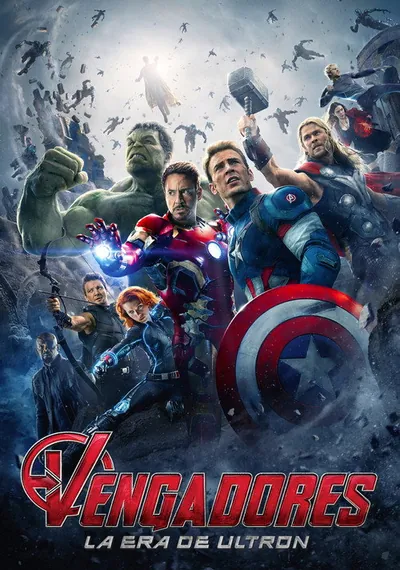 Avengers: Age of Ultron2015
 Spider-Man 22004
 Captain America: The First Avenger2011
 Thor2011
 Iron Man 22010
 Guardians of the Galaxy2014
- The Year 01 1973 · cast
- The Punisher 1989 · producer
- Captain America 1990 · producer
- The Ambulance 1990 · cast
- Mallrats 1995 · cast
- X-Men 2000 · cast
- Spider-Man 2002 · cast
- Hulk 2003 · cast
- Daredevil 2003 · cast
- Spider-Man 2 2004 · cast
- Fantastic Four 2005 · cast
- X-Men: The Last Stand 2006 · cast
- Spider-Man 3 2007 · cast
- Fantastic Four: Rise of the Silver Surfer 2007 · cast
- Iron Man 2008 · cast
- The Incredible Hulk 2008 · cast
- Iron Man 2 2010 · cast
- Captain America: The First Avenger 2011 · cast
- Thor 2011 · screenplay, cast
- The Avengers 2012 · cast
- The Amazing Spider-Man 2012 · screenplay, producer, cast
- Iron Man 3 2013 · screenplay, cast
- Thor: The Dark World 2013 · cast
- Guardians of the Galaxy 2014 · cast
- Captain America: The Winter Soldier 2014 · cast
- The Amazing Spider-Man 2 2014 · cast
- Avengers: Age of Ultron 2015 · screenplay, cast
- Ant-Man 2015 · cast
- Doctor Strange 2016 · cast
- Deadpool 2016 · cast
- Captain America: Civil War 2016 · cast
- X-Men: Apocalypse 2016 · cast
- Spider-Man: Homecoming 2017 · cast
- Thor: Ragnarok 2017 · cast
- Guardians of the Galaxy Vol. 2 2017 · cast
- Avengers: Infinity War 2018 · cast
- Black Panther 2018 · cast
- Ant-Man and the Wasp 2018 · cast
- Venom 2018 · cast
- Avengers: Endgame 2019 · screenplay, cast
- Captain Marvel 2019 · cast
Original Cinematopedia text based on Wikipedia (es) and Wikipedia (en) and Wikidata.