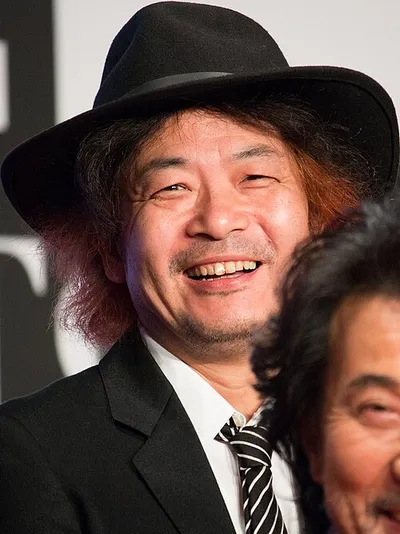
Sion Sono
b. 1961 · Japanese filmmaker, writer and poet
Biography
Sion Sono (born 1961 in Aichi Prefecture) is a Japanese filmmaker, writer and poet, known for the provocative and controversial themes of his work. A central figure of Japanese independent cinema, he moves between poetry, experimental film and genre cinema, and his international reputation grew with films such as Love Exposure.
He began publishing poetry in the late 1970s, and after leaving his university studies he started making films on Super 8. In 1985 his experimental short Ore wa Sion Sono da! was selected for the PIA Film Festival, and two years later Otoko no Hanamichi won that festival's Grand Prix. His first feature in 16 mm, Bicycle Sights (1990), was a hit in Japan and travelled to festivals across Europe and Asia. The Room (1992), which screened at Sundance, followed, and he was also interviewed for the documentary Otaku.
His later work mixes horror, drama and provocation. Suicide Club (2001) introduced him to audiences abroad and built a lasting cult following, later joined by a novel and a manga. After Noriko's Dinner Table and Strange Circus (2005), he made Love Exposure (2008), an epic of nearly four hours that is often considered his most acclaimed work. He followed it with Cold Fish and Guilty of Romance, completing the thematic trilogy that began with that film. Himizu (2011) and The Land of Hope (2012) addressed the Fukushima disaster in a more restrained tone. In 2013 he directed Why Don't You Play in Hell?, and in 2015 Tag, which was named best film of the year at the Fantasia Festival.
Sono has also worked in television, including the Netflix series The Forest of Love (2019). That year he suffered a heart attack that halted pre-production of Prisoners of the Ghostland, his English-language debut starring Nicolas Cage. His legacy is that of an uneven and divisive author whose work remains a reference point for Japanese cult cinema.
Key films
- Suicide Club (2001): the film that brought him to international attention and launched a lasting cult following.
- Love Exposure (2008): a long epic about guilt and religion, widely considered his most acclaimed work.
- Cold Fish (2010): an unsettling thriller and the second part of his thematic trilogy.
- Guilty of Romance (2011): the third film of the trilogy, a provocative look at desire.
- Why Don't You Play in Hell? (2013): an action drama with strong international success.
- Tag (2015): a horror action film named best film of the year at Fantasia.
Trivia
A signature hat
He usually wears a black fedora at public appearances, which has become part of his public image.
From circle to club
The film was originally titled Jisatsu Saakuru. At festivals it was presented as Suicide Club, a literal rendering of the word saakuru, meaning circle, in reference to school clubs in Japan.
On Cinematopedia
 Suicide Club2001
 Love Exposure2008
 Prisoners of the Ghostland2021
 Tag2015
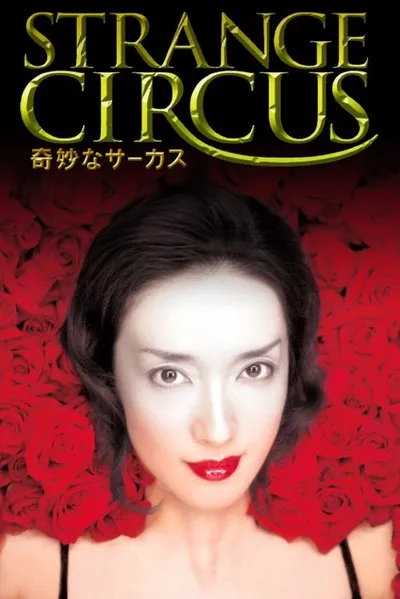 Strange Circus2005
 Cold Fish2010
 Guilty of Romance2011
 The Forest of Love2019
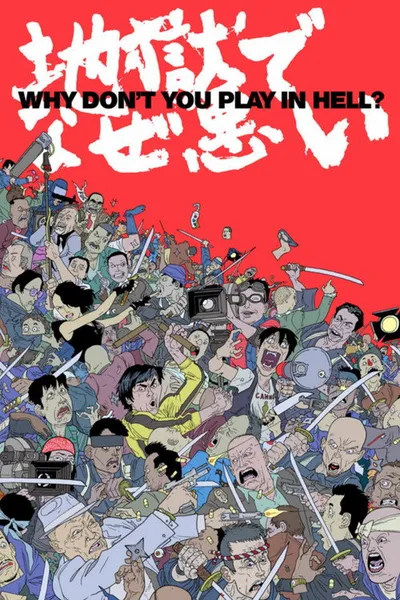 Why Don't You Play in Hell?2013
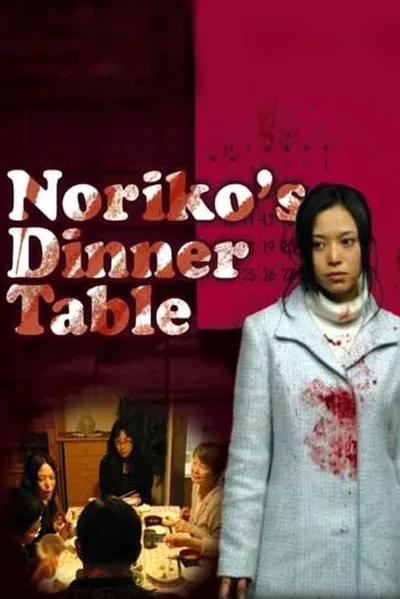 Noriko's Dinner Table2005
 Exte: Hair Extensions2007
 Himizu2011
- Suicide Club 2001 · director, screenplay
- Strange Circus 2005 · director, screenplay, music
- Noriko's Dinner Table 2005 · director, screenplay
- Hazard 2005 · director, screenplay
- Exte: Hair Extensions 2007 · director, screenplay
- Love Exposure 2008 · director, screenplay
- Cold Fish 2010 · director, screenplay
- Guilty of Romance 2011 · director, screenplay
- Himizu 2011 · director, screenplay
- Land of Hope 2012 · director
- Why Don't You Play in Hell? 2013 · director, screenplay, music
- Tag 2015 · director, screenplay
- Love & Peace 2015 · director
- Antiporno 2016 · director, screenplay
- The Forest of Love 2019 · director
- Prisoners of the Ghostland 2021 · director
Original Cinematopedia text based on Wikipedia (es) and Wikipedia (en) and Wikidata.