
Signe Hasso
1915–2002 · Swedish actress
Biography
Signe Hasso (Stockholm, 1915 – Los Angeles, 2002) was a Swedish actress whose career moved between the film industries of Sweden and Hollywood, with stage and television work along the way. Her story is a useful case study of how European performers were recruited by American studios in the late 1930s and 1940s.
Born in the Kungsholmen district of Stockholm, she grew up in a crowded household after her father died when she was four. Her acting career started almost by chance at the age of twelve, when a young actress fell ill and her mother was asked to find a girl who could perform. From 1927 she appeared with the Royal Dramatic Theatre, enrolling there at sixteen as the youngest acting student in its history. In 1933 she made her first film, Tystnadens hus, directed by the cinematographer Harry Hasso, whom she married that year. They divorced in 1942.
Howard Hughes approached her in Sweden about moving to the United States, and she signed with RKO, which promoted her as a possible successor to Greta Garbo. With few roles forthcoming, she turned to the stage and appeared in five Broadway productions, beginning with Golden Wings in 1941. In the mid-1940s she joined Metro-Goldwyn-Mayer, appearing in Heaven Can Wait, The Seventh Cross and A Scandal in Paris. She later named her role as the ex-wife of a troubled actor, played by Ronald Colman, in A Double Life as her favourite.
Her Hollywood career slowed in the 1950s, and she divided her time between Swedish films and New York theatre before returning to Los Angeles in the 1960s, when she became a guest performer on many series, including Bonanza, Route 66 and Magnum, P.I. She also wrote lyrics and songs, translated Swedish folk songs into English, published the novel Momo in 1977 about her childhood in interwar Stockholm, and released an album in 1979. In a 1995 interview she said she wanted to be remembered for her writing rather than her acting. Her last film was One Hell of a Guy (1998). She died in Los Angeles in 2002, aged 86, of pneumonia and cancer. She has a star on the Hollywood Walk of Fame.
Key films
- A Double Life (1947): as the ex-wife of an actor driven to madness, a role she named as her favourite.
- Heaven Can Wait (1943): one of her first significant parts after signing with MGM, as Mademoiselle.
- The Seventh Cross (1944): as Toni in this drama about anti-Nazi resistance in Germany.
- A Scandal in Paris (1946): as Therese De Pierremont in a period comedy starring George Sanders.
- This Can't Happen Here (1950): as Vera Irmelin in a politically charged film made during a period when her Hollywood career had slowed.
- I Never Promised You a Rose Garden (1977): as Helene, one of her best-remembered later roles in the United States.
Trivia
A coin toss
She later recalled that her mother flipped a coin to decide which of the two sisters would go to the audition, and she lost. That chance moment led to a stage career that reached the Royal Dramatic Theatre by the age of twelve.
The youngest student
She enrolled at the Royal Dramatic Theatre's acting school at sixteen, becoming the youngest acting student in the institution's history.
On Cinematopedia
 A Double Life
 Heaven Can Wait
 The House on 92nd Street
 This Can't Happen Here
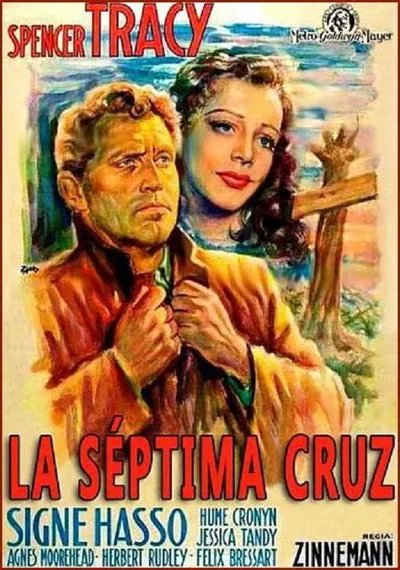 The Seventh Cross
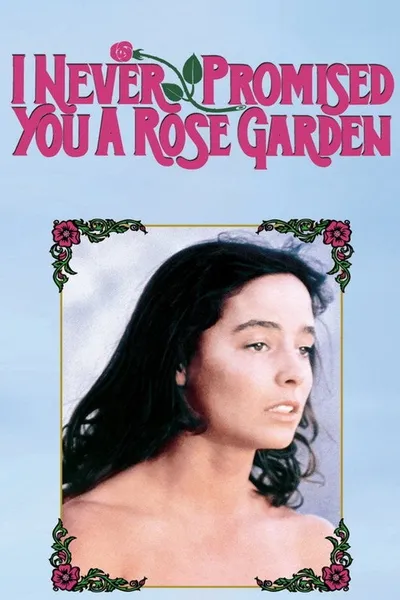 I Never Promised You a Rose Garden
 The Story of Dr. Wassell
 Crisis
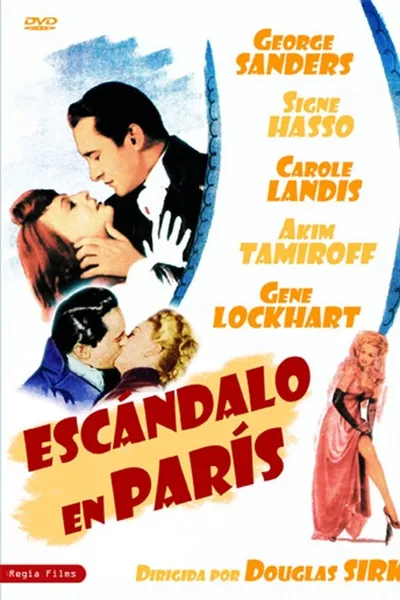 A Scandal in Paris
 To the Ends of the Earth
 Emilie Högquist
Original Cinematopedia text based on Wikipedia (es) and Wikipedia (en) and Wikidata.