
Shohei Imamura
1926–2006 · Japanese film director
Biography
Shōhei Imamura (Tokyo, 1926 - 2006) was one of the most prominent Japanese directors of the second half of the twentieth century and a leading figure of the Japanese New Wave of the 1960s. After the death of Akira Kurosawa, critics regarded him as the country's most important filmmaker. He also taught at the film school in Yokohama, which he founded, and his name is tied to a humanist view of Japanese society.
Born into an upper-middle-class family of doctors, he studied Western history at Waseda University but spent more time on theatre and political activity than in lectures. After the war he took part in black market trade for a short time, and seeing Akira Kurosawa's Rashomon in 1950 showed him the new freedom of expression in postwar Japan. On leaving Waseda in 1951 he became an assistant to Yasujirō Ozu at Shochiku. He was uneasy with the image of Japanese society in Ozu's films and with Ozu's rigid way of directing actors, though he later admitted the apprenticeship gave him valuable technical knowledge.
In 1954 he moved to Nikkatsu, where he worked under Yūzō Kawashima and co-wrote the screenplay for Sun in the Last Days of the Shogunate. He made his directing debut there in 1958 with Stolen Desire. His early studio work was largely assigned, but Pigs and Battleships (1961), a satire on black market dealings between the U.S. military and the Yokosuka underworld, was a turning point that cost him a two-year ban from directing. The Insect Woman (1963) followed, and in 1965 he set up his own production company. The Pornographers (1966) brought him lasting international recognition.
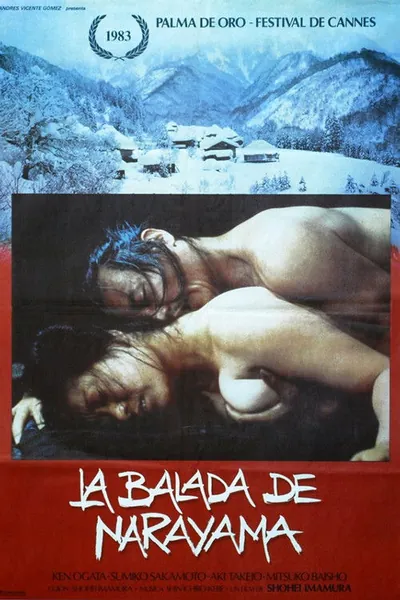
His central interest was the lower strata of Japanese society, especially strong women who survive on the margins. After the commercial disappointment of Profound Desires of the Gods (1968), he turned for a decade to documentaries, many made for Japanese television. He returned to fiction with Vengeance Is Mine in 1979, and in the 1980s produced two major remakes, Eijanaika and The Ballad of Narayama, which won him his first Palme d'Or at Cannes in 1983. Black Rain (1989) later examined the effects of the Hiroshima bombing on a family years afterwards.
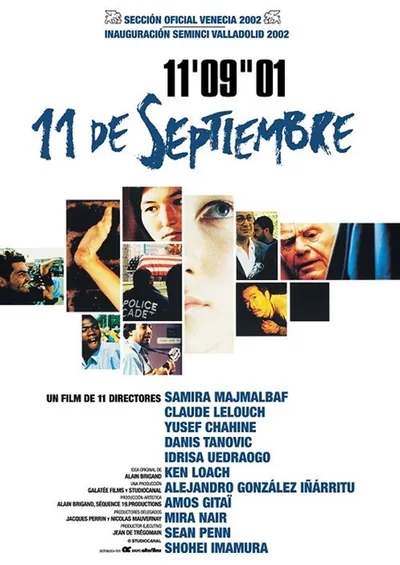
He won his second Palme d'Or in 1997 with The Eel, shared with Abbas Kiarostami. He remains the only Japanese director to win that prize twice. His eldest son, Daisuke Tengan, worked on his screenplays from that film onward. Imamura made his last directorial contribution to 11'09"01 September 11 (2002) and died in 2006 at the age of 79. His legacy includes the Yokohama film school he founded, where Takashi Miike received his first credit as assistant director on Zegen (1987).
Key films
- The Ballad of Narayama (1983): Palme d'Or winner and a remake of Keisuke Kinoshita's film about a village that abandons its elderly.
- The Eel (1997): second Palme d'Or, about a man released from prison who rebuilds his life with a single companion, an eel.
- The Insect Woman (1963): portrait of a woman who endures hardship with an unusual determination for the period.
- The Pornographers (1966): satire on the publishing world and the erotic film trade, one of his best-known works abroad.
- Warm Water Under a Red Bridge (2001): drama about a man drawn into a love story and a fishing village's rhythms.
Trivia
Two Palmes d'Or
Imamura is the only Japanese director to have won the Palme d'Or twice, with The Ballad of Narayama in 1983 and The Eel in 1997.
A student at Yokohama
Takashi Miike received his first film credit as assistant director on Zegen (1987) while studying at the Yokohama film school Imamura had founded.
On Cinematopedia
 The Ballad of Narayama1983
 The Eel1997
 2009: Lost Memories2002
 11'09"01 September 112002
 The Insect Woman1963
 Dr. Akagi1998
 Warm Water Under a Red Bridge2001
 Black Rain1989
 Pigs and Battleships1961
 Unholy Desire1964
 Vengeance Is Mine1979
 Zegen1987
- Sun in the Last Days of the Shogunate 1957 · screenplay
- Endless Desire 1958 · director, screenplay
- Stolen Desire 1958 · director
- Pigs and Battleships 1961 · director
- Foundry Town 1962 · screenplay
- The Insect Woman 1963 · director, screenplay
- Unholy Desire 1964 · director, screenplay
- The Pornographers 1966 · director, screenplay
- A Man Vanishes 1967 · director, screenplay, producer, cast
- The Profound Desire of the Gods 1968 · director, screenplay
- History of Postwar Japan as Told by a Bar Hostess 1970 · director, screenplay
- Vengeance Is Mine 1979 · director
- Eijanaika 1981 · director, screenplay, producer
- The Ballad of Narayama 1983 · director, screenplay
- Zegen 1987 · director, screenplay
- Black Rain 1989 · director, screenplay
- The Eel 1997 · director, screenplay
- Dr. Akagi 1998 · director, screenplay
- Warm Water Under a Red Bridge 2001 · director, screenplay
- 2009: Lost Memories 2002 · cast
- 11'09"01 September 11 2002 · director
Original Cinematopedia text based on Wikipedia (es) and Wikipedia (en) and Wikidata.