
Serge Silberman
1917–2003 · French film producer of Polish birth
Biography
Serge Silberman (1917–2003) was a French film producer of Polish birth, best known for his work with European and Japanese filmmakers. Born in Łódź to a Jewish family, he survived the Nazi concentration camps during the Second World War and later settled in Paris.
His first notable credit as a producer was Jean-Pierre Melville's Bob le Flambeur (1955), an early work linked to the French New Wave. He went on to work with René Clément, Jacques Becker, Nagisa Oshima and Akira Kurosawa, but his closest partnership was with Luis Buñuel. Silberman introduced Buñuel to screenwriter Jean-Claude Carrière and produced most of the director's late films, including The Discreet Charm of the Bourgeoisie and That Obscure Object of Desire.
In 1966 he founded Greenwich Film Productions, which went on to make more than fifteen films. His most financially successful production was Jean-Jacques Beineix's Diva (1981), which was poorly received in France but became a box-office hit abroad. The profits helped fund Kurosawa's Ran (1985), at the time the most expensive Japanese film ever made. In 1988 he received an honorary César.
His legacy lies in keeping personal, uncompromising projects alive when financing was hard. He died in Paris in 2003, aged 86.
Key films
- Bob le Flambeur (1955), directed by Jean-Pierre Melville: Silberman's first major producing credit and a precursor of the French New Wave.
- Diary of a Chambermaid (1964): the first film in his long run of collaborations with Buñuel.
- The Discreet Charm of the Bourgeoisie (1972): Buñuel's Oscar-winning film for Best Foreign Language Film.
- That Obscure Object of Desire (1977): Buñuel's last feature, produced by Silberman.
- Diva (1981): Beineix's film, Silberman's most financially successful production.
- Ran (1985): Kurosawa's epic, partly funded by the profits of Diva.
Trivia
Success abroad
Diva was poorly received in France, where it was made, but became a box-office hit in other countries.
Funding Kurosawa
Profits from Diva allowed Silberman to fund Ran, which at the time was the most expensive Japanese film ever made.
On Cinematopedia
 The Discreet Charm of the Bourgeoisie1972
 Ran1985
 That Obscure Object of Desire1977
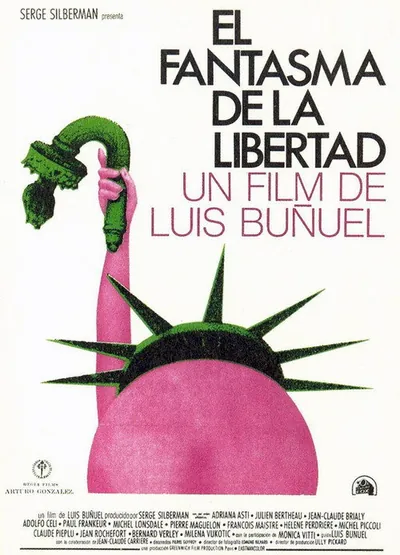 The Phantom of Liberty1974
 Diva1981
 The Hole1960
 Rider on the Rain1970
 Diary of a Chambermaid1964
 The Milky Way1969
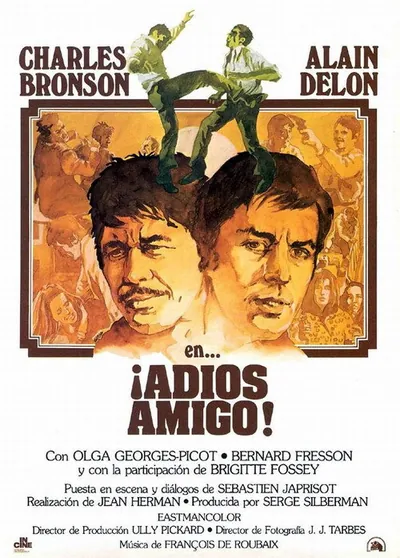 Farewell, Friend1968
 Bob le Flambeur1956
 Max, Mon Amour1986
- Bob le Flambeur 1956 · producer
- The Hole 1960 · producer
- Shéhérazade 1963 · producer
- Diary of a Chambermaid 1964 · producer
- The Diabolical Dr. Z 1966 · producer
- Farewell, Friend 1968 · producer
- The Milky Way 1969 · producer
- Rider on the Rain 1970 · producer
- The Discreet Charm of the Bourgeoisie 1972 · producer
- And Hope to Die 1972 · producer
- The Phantom of Liberty 1974 · producer
- That Obscure Object of Desire 1977 · producer
- Diva 1981 · producer
- Ran 1985 · producer
- Max, Mon Amour 1986 · producer
- Anna Karamazoff 1991 · producer
Original Cinematopedia text based on Wikipedia (en) and Wikidata.