
Samuel Goldwyn
1879–1974 · Polish-born American film producer
Biography
Samuel Goldwyn (born Szmuel Gelbfisz in Warsaw, 1879 or 1882 - Los Angeles, January 31, 1974) was a Polish-born American film producer and one of the central figures of the Hollywood studio era. He co-founded Goldwyn Pictures and, later, Metro-Goldwyn-Mayer, although he had no role in running the latter. Across a career of nearly half a century, he became one of the most influential independent producers in the business.
He emigrated young, passing through Hamburg and Birmingham before reaching New York in 1899, where he sold gloves for a living. In 1913 he joined the partnership that would grow into Paramount, alongside his brother-in-law Jesse L. Lasky and Cecil B. DeMille. After clashes with Adolph Zukor, he gave up his role in the company's management in 1916. That same year he set up Goldwyn Pictures with the Selwyn brothers, whose lion logo is still tied to his name. In 1923 he founded Samuel Goldwyn Productions, a production company without its own distribution arm.
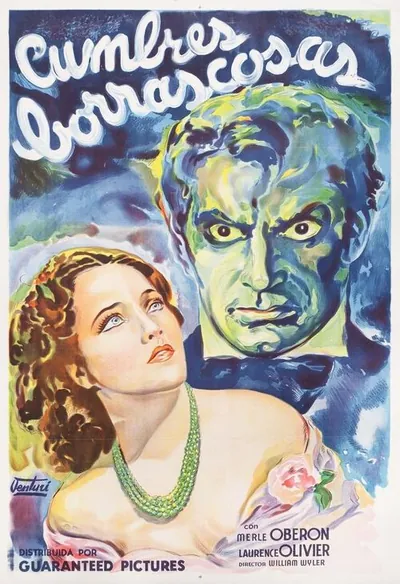
In the 1930s and 1940s he worked closely with William Wyler, giving him wide latitude, and hired writers such as Ben Hecht, Sidney Howard, Dorothy Parker and Lillian Hellman. Their films earned several Best Picture Oscar nominations: Dodsworth (1936), Dead End (1937), Wuthering Heights (1939), The Little Foxes (1941) and The Best Years of Our Lives (1946), which won the award. With John Ford he made Arrowsmith, nominated for Best Picture in 1933. His films were released first through United Artists and, from 1941, through RKO.
In the 1950s he turned to musicals, working with Danny Kaye on Hans Christian Andersen and producing Guys and Dolls, based on a Broadway hit. His last film, Porgy and Bess (1959), failed at the box office and with critics. It earned three Oscar nominations but won only one, for Best Original Score. Goldwyn considered it a major achievement, but the Gershwin family disliked it and eventually withdrew it from distribution.
He received the Irving G. Thalberg Memorial Award in 1947, the Jean Hersholt Humanitarian Award in 1958 and the Golden Globe Cecil B. DeMille Award in 1973. He died in Los Angeles in January 1974. His legacy lies in the quality films he produced, his talent for finding new filmmakers, and the studios bearing his name, which were later sold to Warner Bros. in the 1980s.
Key films
- The Best Years of Our Lives (1946). William Wyler's drama that won the Academy Award for Best Picture.
- Wuthering Heights (1939). Wyler's adaptation of Emily Bronte's novel, nominated for Best Picture.
- The Little Foxes (1941). Wyler's Southern family drama, nominated for Best Picture.
- Arrowsmith (1931). Directed by John Ford, nominated for Best Picture.
- Guys and Dolls (1955). Musical starring Marlon Brando and Frank Sinatra, based on a Broadway hit.
- Porgy and Bess (1959). Goldwyn's final film, a screen version of George Gershwin's opera.
Trivia
The thimble
A widely repeated story has Dorothy Parker reminding him, during a heated story meeting, that he had once been a glove maker. The anecdote is often told, though its accuracy is not confirmed.
The MGM lion
Goldwyn Pictures is remembered mainly for its lion trademark, which later became the emblem of Metro-Goldwyn-Mayer after the company merged into it in 1924.
A name without power
Although his name was part of the company that merged into MGM, Goldwyn had no connection with its ownership, management or production.
On Cinematopedia
 The Best Years of Our Lives1946
 Wuthering Heights1939
 The Little Foxes1941
 The Pride of the Yankees1942
 Dodsworth1936
 The Bishop's Wife1947
 The Westerner1940
 Come and Get It1936
 Dead End1937
 Ball of Fire1941
 Arrowsmith1931
 Ben-Hur: A Tale of the Christ1925
- The Floor Below 1918 · producer
- Jinx 1919 · producer
- Flame of the Desert 1919 · producer
- The Loves of Letty 1919 · producer
- The World and Its Woman 1919 · producer
- The Penalty 1920 · producer
- The Revenge of Tarzan 1920 · producer
- The Slim Princess 1920 · producer
- The Paliser Case 1920 · producer
- The Woman in Room 13 1920 · producer
- Cupid the Cowpuncher 1920 · producer
- The Great Lover 1920 · producer
- Jes' Call Me Jim 1920 · producer
- The Great Accident 1920 · producer
- A Tale of Two Worlds 1921 · producer
- The Ace of Hearts 1921 · producer
- Roads of Destiny 1921 · producer
- A Voice in the Dark 1921 · producer
- A Blind Bargain 1922 · producer
- The Sin Flood 1922 · producer
- Mr. Barnes of New York 1922 · producer
- Head over Heels 1922 · producer
- Three Wise Fools 1923 · producer
- The Eternal Three 1923 · producer
- The Christian 1923 · producer
- The Day of Faith 1923 · producer
- Lost and Found on a South Sea Island 1923 · producer
- Slave of Desire 1923 · producer
- Potash and Perlmutter 1923 · producer
- The Eternal City 1924 · producer
- Name the Man 1924 · producer
- Cytherea 1924 · producer
- Three Weeks 1924 · producer
- Ben-Hur: A Tale of the Christ 1925 · cast
- Stella Dallas 1925 · producer
- The Dark Angel 1925 · producer
- The Winning of Barbara Worth 1926 · producer
- The Magic Flame 1927 · producer
- The Devil Dancer 1927 · producer
- The Awakening 1928 · producer
- Bulldog Drummond 1929 · producer
- Condemned 1929 · producer
- Whoopee! 1930 · producer
- Raffles 1930 · producer
- Arrowsmith 1931 · producer
- Street Scene 1931 · producer
- The Kid from Spain 1932 · producer
- Roman Scandals 1933 · producer
- We Live Again 1934 · producer
- Nana 1934 · producer
- The Dark Angel 1935 · producer
- Barbary Coast 1935 · producer
- The Wedding Night 1935 · producer
- Dodsworth 1936 · producer
- Come and Get It 1936 · producer
- These Three 1936 · producer
- Dead End 1937 · producer
- The Hurricane 1937 · producer
- Stella Dallas 1937 · producer
- The Cowboy and the Lady 1938 · producer
- The Adventures of Marco Polo 1938 · producer
- The Goldwyn Follies 1938 · producer
- Wuthering Heights 1939 · producer
- The Real Glory 1939 · producer
- They Shall Have Music 1939 · producer
- The Westerner 1940 · producer
- The Little Foxes 1941 · producer
- Ball of Fire 1941 · producer
- The Pride of the Yankees 1942 · producer
- The North Star 1943 · producer
- The Princess and the Pirate 1944 · director, producer
- Up in Arms 1944 · producer
- Wonder Man 1945 · producer
- The Best Years of Our Lives 1946 · producer
- The Kid from Brooklyn 1946 · producer
- The Bishop's Wife 1947 · producer
- The Secret Life of Walter Mitty 1947 · producer
- A Song Is Born 1948 · producer
- Enchantment 1948 · producer
- My Foolish Heart 1950 · producer
- Edge of Doom 1950 · producer
- Hans Christian Andersen 1952 · producer
- Guys and Dolls 1955 · producer
- Porgy and Bess 1959 · producer
- Once Bitten 1985 · producer
Original Cinematopedia text based on Wikipedia (es) and Wikipedia (en) and Wikidata.