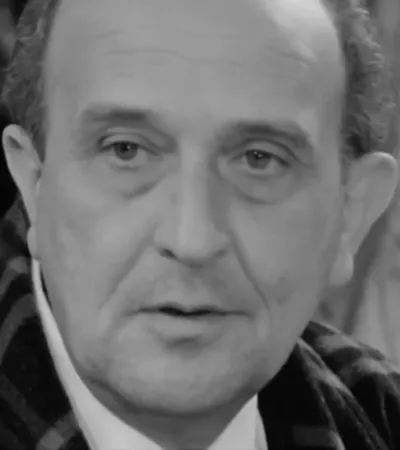
Salvo Randone
1906–1991 · Italian stage, film and television actor
Biography
Salvo Randone (Syracuse, 25 September 1906 - 6 March 1991), born Salvatore Randone, was an Italian actor who worked on stage, in films and on television. He is remembered above all for his theatre work, which made him one of the country's most respected stage performers, while his most active years on screen fell in the 1950s and 1960s.
Born in Syracuse, Sicily, he made his stage debut in his early twenties. Through the 1930s and the Second World War he worked with several theatre directors, and after the war he joined productions by Luchino Visconti, Giorgio Strehler and Luigi Squarzina. On film he worked with Federico Fellini, Francesco Rosi, Valerio Zurlini, Luigi Zampa and Carlo Lizzani, but his closest partnership was with Elio Petri, appearing in nearly all of Petri's films from The Assassin (1961) to Property Is No Longer a Theft (1973). Those performances earned him two Nastro d'Argento awards and a Grolla d'oro. His only leading film role came in a 1962 picture that brought him that Grolla. He retired from the stage in 1989 and, facing financial hardship in his last years, was granted a lifetime allowance under the Bacchelli law, which supported notable citizens in need. He was married to the actress Neda Naldi.
Key films
- Family Diary (1962): a supporting role in Valerio Zurlini's postwar family drama.
- Hands over the City (1963): appears in Francesco Rosi's portrait of property speculation in Naples.
- The 10th Victim (1965): plays a professor in Elio Petri's science-fiction satire.
- Fellini Satyricon (1969): plays Eumolpo in Fellini's vision of ancient Rome.
- Investigation of a Citizen Above Suspicion (1970): one of his best-remembered roles with Petri, in a political thriller.
Trivia
Awards with Petri
His performances in Elio Petri's films earned him two Nastro d'Argento awards and a Grolla d'oro, the latter for a 1962 film.
A lifetime allowance under the Bacchelli law
In his final years, facing financial hardship, he received a lifetime allowance under the Bacchelli law, which supported notable figures in the arts, sciences and sport who were in need.
On Cinematopedia
 Investigation of a Citizen Above Suspicion1970
 The Working Class Goes to Heaven1971
 Hands Over the City1963
 Family Diary1962
 Fellini Satyricon1969
 The 10th Victim1965In the Name of the Pope King1977In the Name of the Pope King1977
 Spirits of the Dead1968
 Indian Summer1972
 Salvatore Giuliano1962
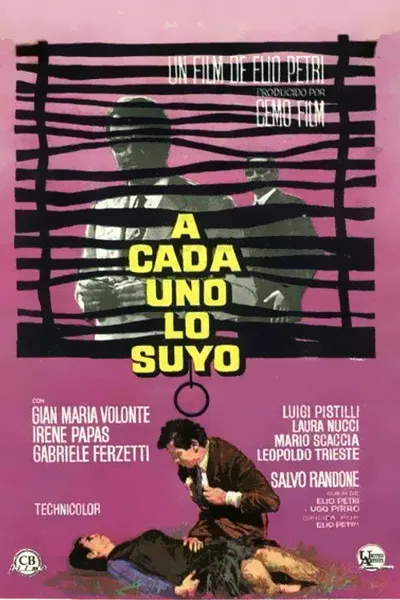 We Still Kill the Old Way1967Roaring Years1962Roaring Years1962
- Heart 1948 · cast
- Letter at Dawn 1948 · cast
- The Bigamist 1955 · cast
- South Wind 1959 · cast
- The Assassin 1961 · cast
- Black City 1961 · cast
- Family Diary 1962 · cast
- Salvatore Giuliano 1962 · cast
- Roaring Years 1962 · cast
- His Days Are Numbered 1962 · cast
- The Verona Trial 1962 · cast
- Night Train to Milan 1962 · cast
- Hands Over the City 1963 · cast
- The Girl from Parma 1963 · cast
- Castle of Blood 1964 · cast
- The Magnificent Cuckold 1964 · cast
- The 10th Victim 1965 · cast
- Me, Me, Me... and the Others 1966 · cast
- We Still Kill the Old Way 1967 · cast
- Spirits of the Dead 1968 · cast
- Fellini Satyricon 1969 · cast
- Machine Gun McCain 1969 · cast
- Investigation of a Citizen Above Suspicion 1970 · cast
- Ninì Tirabusciò: the Woman Who Invented the Move 1970 · cast
- The Swinging Confessors 1970 · cast
- The Working Class Goes to Heaven 1971 · cast
- Gang War 1971 · cast
- Indian Summer 1972 · cast
- My Dear Killer 1972 · cast
- Chronicle of a Homicide 1972 · cast
- La calandria 1972 · cast
- Property Is No Longer a Theft 1973 · cast
- Shoot First, Die Later 1974 · cast
- In the Name of the Pope King 1977 · cast
Original Cinematopedia text based on Wikipedia (en) and Wikidata.