
Sab Shimono
b. 1943 · American actor of Japanese descent known for character roles in theatre, film and television
Biography
Sab Shimono is an American actor of Japanese descent whose career has moved between Broadway musicals and supporting roles in film and television. Spanning several decades, his work has made him one of the most recognisable Asian American character actors of his generation.
He began on the stage, on Broadway and in regional theatres. In 1966 he played Ito opposite Angela Lansbury in the musical Mame, and he later appeared in Lovely Ladies, Kind Gentlemen and in Pacific Overtures, the Stephen Sondheim and Harold Prince musical, where he played Manjiro. On screen he has worked in Midway, Gung Ho, Presumed Innocent, Teenage Mutant Ninja Turtles III, The Shadow and Old Dogs, alongside John Travolta and Robin Williams. On television he has voiced characters in Jackie Chan Adventures, Samurai Jack, Avatar: The Last Airbender and The Simpsons.
He is closely associated with the East West Players and South Coast Repertory companies. His personal life has also been public: he has been in a relationship with the writer Steve Alden Nelson since 2001 and married him in 2008.
Key films
- Midway (1976), as Lt. Tomonaga in the naval battle drama
- Gung Ho (1986), as Saito, in the comedy about Japanese and American workers at a car plant
- Presumed Innocent (1990), as the coroner 'Painless' Kumagai in the courtroom thriller
- Teenage Mutant Ninja Turtles III (1993), as Lord Norinaga in the franchise's third film
- The Shadow (1994), as Dr. Tam in the pulp hero adaptation
- Old Dogs (2009), as the Japanese billionaire Yoshiro Nishamura, alongside John Travolta and Robin Williams
Trivia
Voice in Conan the Barbarian
In Conan the Barbarian (1982) he provided the voice of Subotai, dubbing the actor Gerry Lopez.
Internment during the war
During the Second World War, he and his family were interned at the Tule Lake and Granada relocation centres after Executive Order 9066.
On Cinematopedia
 Waterworld1995
 Blind Date1987
 Presumed Innocent1990
 Teenage Mutant Ninja Turtles III1993
 The Shadow1994
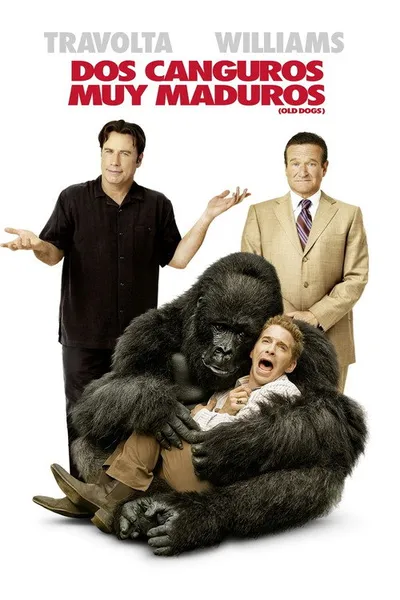 Old Dogs2009
 Southland Tales2006
 Midway1976
 Paradise Road1997
 3 Ninjas Kick Back1994
 The Big Hit1998
 Gung Ho1986
- Midway 1976 · cast
- The Challenge 1982 · cast
- Gung Ho 1986 · cast
- Blind Date 1987 · cast
- Presumed Innocent 1990 · cast
- Come See the Paradise 1990 · cast
- Teenage Mutant Ninja Turtles III 1993 · cast
- The Shadow 1994 · cast
- 3 Ninjas Kick Back 1994 · cast
- Waterworld 1995 · cast
- Paradise Road 1997 · cast
- The Big Hit 1998 · cast
- Southland Tales 2006 · cast
- Old Dogs 2009 · cast
Original Cinematopedia text based on Wikipedia (en) and Wikidata.