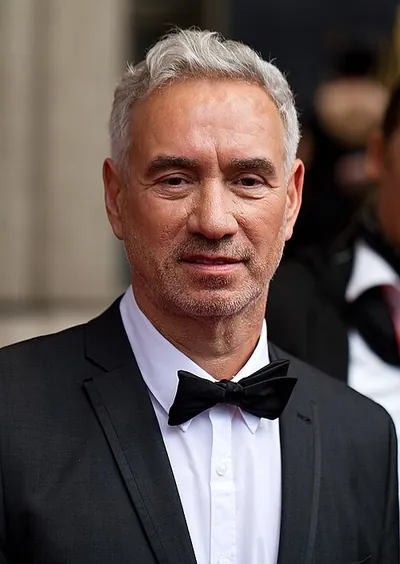
Roland Emmerich
b. 1955 · German-American director, producer and screenwriter
Biography
Roland Emmerich (born Stuttgart, 1955) is a German-American director, producer and screenwriter. He is best known for science fiction and disaster films, and within the industry he has been dubbed a "master of disaster". Most of his films are English-language Hollywood productions, and together they have grossed more than $3 billion worldwide, just over $1 billion of it in the United States. His career pairs big box-office hits with reviews that have usually been mixed or negative, and he remains one of the most recognisable names in blockbuster filmmaking from the late 1990s onward.
Emmerich grew up in Sindelfingen, near Stuttgart, in a comfortable family; his father Hans had founded a company that made garden and agricultural machinery. From 1977 to 1981 he studied at the University of Television and Film Munich, initially hoping to become a production designer, but after seeing Star Wars he switched to the directing programme. His graduation film was the feature The Noah's Ark Principle, which he wrote and directed and which opened the 1984 Berlin International Film Festival. In 1985 he co-founded Centropolis Film Productions with his sister, the producer Ute Emmerich; the company was later renamed Centropolis Entertainment.
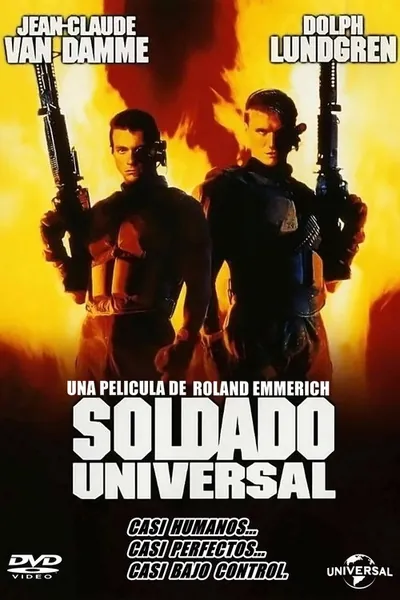
His early features, including the fantasy Joey, the comedy Hollywood Monster and the science fiction film Moon 44, were shot in English in an effort to move away from conventional German styles and reach a wider market. They were mainly shown in Germany and neighbouring countries, and in the United States they reached audiences first on home video. The producer Mario Kassar brought him to Hollywood to direct Isobar, a futuristic action project that never materialised. Emmerich instead took over Universal Soldier (1992) from Andrew Davis, and began a long partnership with the writer and producer Dean Devlin that lasted until 2000.
Together they made some of his most successful films. Stargate (1994) set a record for the biggest opening weekend of any film released in October and launched a franchise. Independence Day (1996), an alien invasion with a large ensemble cast, became the first film to take $100 million in under a week and for years ranked among the highest-grossing films ever made. They then created the television series The Visitor, which was cancelled after one season. Godzilla (1998) had a heavy marketing campaign and made money, but critics were harsh and it fell short of the expectations set for it.
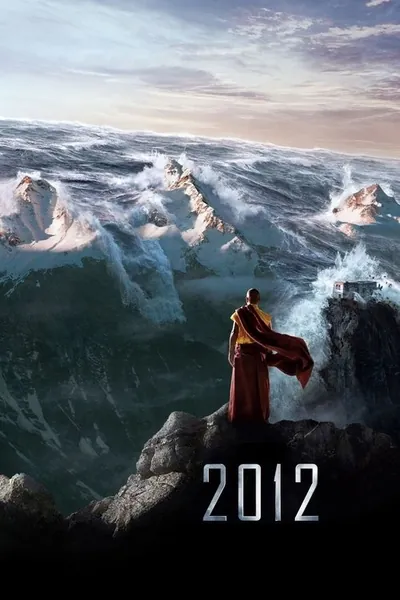
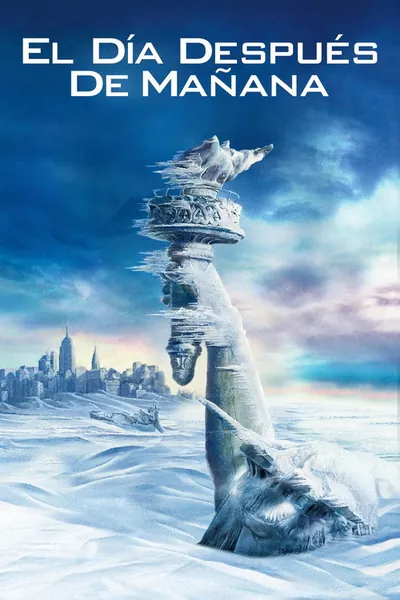
From 2000 Emmerich split from Devlin and stepped away from science fiction for a while. The Patriot (2000), a drama about the American Revolutionary War, was the second film he directed without writing the screenplay, as that job went to Robert Rodat. It was well received both commercially and critically, and is often considered his best-reviewed work. With the screenwriter Harald Kloser, who became his regular collaborator, he made The Day After Tomorrow (2004), about a new ice age caused by global warming, and soon afterwards founded Reelmachine, a production company based in Germany. 10,000 BC (2008) was a box-office success but was widely regarded as one of the worst films of its year, while 2012 (2009), built around the Mayan end-of-the-world prophecy, again combined strong takings with divided reviews. Emmerich has said he tends to finish large productions faster and on smaller budgets than many directors working at that scale.
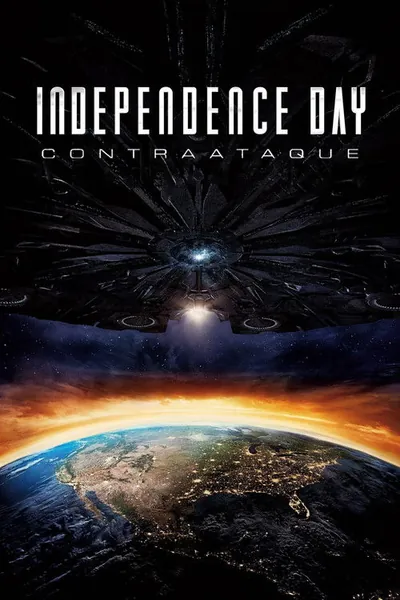
In the 2010s he directed Anonymous (2011), which argues that Edward de Vere, 17th Earl of Oxford, wrote the works attributed to William Shakespeare. Its poor box office was seen as a sign that his standing in Hollywood was slipping. He followed it with White House Down (2013), about a paramilitary attack on the White House, Stonewall (2015), about the 1969 riots often cited as the start of the LGBT rights movement, and the sequel Independence Day: Resurgence (2016). Midway (2019), about the naval battle in the Pacific, was a hit despite criticism of its historical errors. In 2022 he released Moonfall, a co-production between the United States, Germany and China shot in Montreal on a very large budget, which received mixed-to-negative reviews. In 2024 he co-directed with Marco Kreuzpaintner the series Those About to Die, created by Robert Rodat, which marked a return to television after The Visitor.
Critics often point to the heavy reliance on visual effects, stock dialogue, formulaic plots, scientific and historical inaccuracies and thin characterisation in his films. Emmerich has answered that he is a filmmaker rather than a scientist, and that he builds his stories on real science or history in order to make his messages more exciting. His recognisable tropes include fractured families, presidents who take centre stage, large ensemble casts, television sets reporting the disaster and the destruction of the White House. He is openly gay, an LGBT rights activist and a supporter of progressive causes, and he has spoken publicly about racism and homophobia he has encountered in the industry. His legacy lies in turning the disaster film into a global, large-scale commercial product, although his work continues to divide critics.
Key films
- Stargate (1994): the film that established him in Hollywood alongside Dean Devlin, with its October opening record and the start of a franchise.
- Independence Day (1996): the alien invasion that made Emmerich a byword for blockbuster spectacle.
- The Patriot (2000): his drama about the American Revolutionary War, and his best-reviewed film.
- The Day After Tomorrow (2004): the climate disaster film that was a major hit and marked his partnership with Harald Kloser.
- 2012 (2009): his apocalyptic epic inspired by the Mayan prophecy, built around a large ensemble cast.
- Stonewall (2015): his film focused on the riots that helped launch the LGBT rights movement.
Trivia
An October record
Stargate (1994) set a record for the biggest opening weekend of any film released in October. It outperformed what much of the industry had predicted and launched a franchise.
A hundred million in under a week
Independence Day (1996) became the first film to gross $100 million in less than a week.
No interest in comics
Emmerich has said he turned down the chance to direct Spider-Man because he had never been drawn to comic books or superhero stories.
On Cinematopedia
 Independence Day1996
 20122009
 The Day After Tomorrow2004
 The Patriot2000
 Stargate1994
 Godzilla1998
 10,000 BC2008
 White House Down2013
 Universal Soldier1992
 Independence Day: Resurgence2016
 Moonfall2022
 Midway2019
- The Noah's Ark Principle 1984 · director, screenplay
- Moon 44 1990 · director, screenplay, producer
- Universal Soldier 1992 · director
- Stargate 1994 · director, screenplay
- Independence Day 1996 · director, screenplay, producer
- Godzilla 1998 · director, screenplay
- The Thirteenth Floor 1999 · producer
- The Patriot 2000 · director
- Eight Legged Freaks 2002 · producer
- The Day After Tomorrow 2004 · director, screenplay, producer
- Trade 2007 · producer
- 10,000 BC 2008 · director, screenplay, producer
- 2012 2009 · director, screenplay, producer
- Anonymous 2011 · director, producer
- Hell 2011 · producer
- White House Down 2013 · director, producer
- Stonewall 2015 · director, producer
- Independence Day: Resurgence 2016 · director, screenplay, producer
- Midway 2019 · director, producer
- Moonfall 2022 · director, screenplay, producer
Original Cinematopedia text based on Wikipedia (es) and Wikipedia (en) and Wikidata.