
Roger Barton
b. 1965 · American film editor and producer
Biography
Roger Barton is an American film editor and producer who has worked on big-budget films since the early 2000s. His career centres on editing large-scale action and science fiction productions, a craft that shapes the pacing and clarity of major set pieces. Sources do not agree on his year of birth, which is given as either 1965 or 1966.
Among his best-known credits are Pearl Harbor, Star Wars: Episode III – Revenge of the Sith, the Transformers series and World War Z, as well as Pirates of the Caribbean: Dead Men Tell No Tales. He is also linked to Titanic and Armageddon. These are large productions, with heavy visual effects work and coordination among big crews.
Beyond editing, he co-founded Evercast, a secure remote collaboration platform that became important during the COVID-19 pandemic, when filming and post-production stalled. The tool earned an Engineering Emmy in 2020. Since 2019 he has also worked with Walt Disney Pictures as an editorial creative consultant, after a period as a freelance professional. He is currently developing a script about William J. Crawford, a Medal of Honor recipient.
Key films
- Pearl Harbor (2001), a big-budget war drama in which editing carries the long attack sequence.
- Star Wars: Episode III – Revenge of the Sith (2005), a saga entry with substantial post-production work on its space battles.
- Transformers: Revenge of the Fallen (2009), a sequel in Michael Bay's franchise known for its complex urban battles.
- World War Z (2013), a global zombie outbreak film whose editing keeps its chase scenes coherent.
- Pirates of the Caribbean: Dead Men Tell No Tales (2017), a pirate adventure built around large-scale action.
Trivia
A son in the saga
His son Aidan played baby versions of Luke Skywalker and Princess Leia in Star Wars: Episode III – Revenge of the Sith.
An Engineering Emmy
Evercast, the platform he co-founded, received an Engineering Emmy in 2020 for enabling remote work during the pandemic.
On Cinematopedia
 Star Wars: Episode III – Revenge of the Sith2005
 Transformers: Dark of the Moon2011
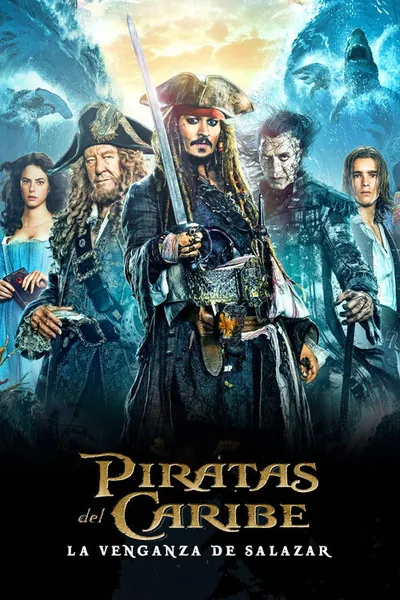 Pirates of the Caribbean: Dead Men Tell No Tales2017
 Pearl Harbor2001
 Transformers: Revenge of the Fallen2009
 World War Z2013
 Terminator Genisys2015
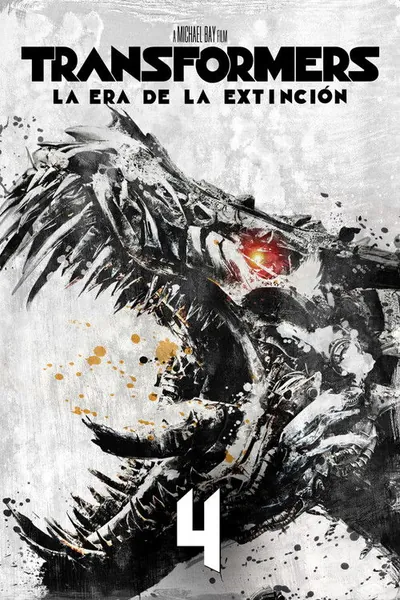 Transformers: Age of Extinction2014
 Transformers: The Last Knight2017
 Eragon2006
 Godzilla: King of the Monsters2019
 Gone in 60 Seconds2000
- Gone in 60 Seconds 2000 · editing
- Pearl Harbor 2001 · editing
- Ghost Ship 2002 · editing
- Bad Boys II 2003 · editing
- Star Wars: Episode III – Revenge of the Sith 2005 · editing
- The Amityville Horror 2005 · editing
- Get Rich or Die Tryin' 2005 · editing
- Eragon 2006 · producer
- Speed Racer 2008 · editing
- Transformers: Revenge of the Fallen 2009 · editing
- The A-Team 2010 · editing
- Transformers: Dark of the Moon 2011 · editing
- The Grey 2011 · editing
- World War Z 2013 · editing
- G.I. Joe: Retaliation 2013 · editing
- Transformers: Age of Extinction 2014 · editing
- Terminator Genisys 2015 · editing
- Pirates of the Caribbean: Dead Men Tell No Tales 2017 · editing
- Transformers: The Last Knight 2017 · editing
- Godzilla: King of the Monsters 2019 · editing
- 6 Underground 2019 · editing
- The Tomorrow War 2021 · editing
Original Cinematopedia text based on Wikipedia (en) and Wikidata.