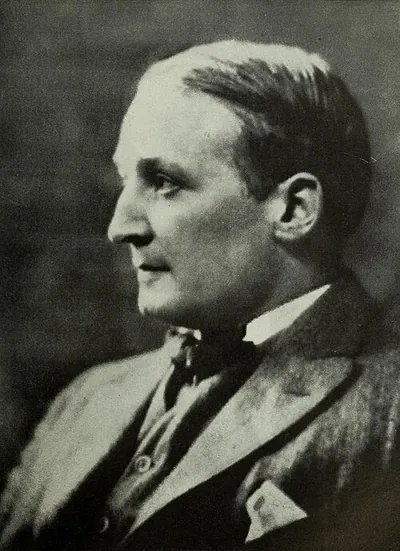
Robert J. Flaherty
1884–1951 · American filmmaker, considered one of the fathers of documentary
Biography
Robert J. Flaherty (born in Iron Mountain, Michigan, in 1884; died in Dummerston, Vermont, in 1951) was an American filmmaker who directed, produced, wrote and photographed films across the first decades of cinema. His name is tied to the emergence of a kind of cinema that records real people and places, often with scenes arranged in advance. For this reason he is regarded as one of the fathers of documentary and of ethnographic film.
Before turning to film he studied mining engineering and worked as an iron ore prospector for a railway company on Hudson Bay, in Canada. In 1913, during one of those expeditions, his boss, Sir William Mackenzie, suggested he take a motion picture camera along. Flaherty became fascinated by the lives of the Inuit and filmed them for so long that he neglected his main job. A cigarette started a fire that destroyed much of that footage and forced him to start again. Out of that experience came Nanook of the North (1922), shot from 1920 in northern Quebec. The film mixed spontaneous moments with staged ones, and it was a popular hit that made his reputation.
That success brought a contract with Paramount to repeat the formula. He went to Samoa to make Moana (1926), following his method of living with a community for a long time before devising a story, which stretched the shoot over more than a year. In the United States the film made less of an impact than Nanook, but it was warmly received in Europe, and it was in response to it that John Grierson coined the word "documentary". Flaherty later worked in Hollywood with less luck. He collaborated with W. S. Van Dyke on White Shadows in the South Seas (1928), left a project at Fox, and took part in Tabu (1931) with F. W. Murnau, where his contribution to the story was overshadowed by the German director's control of the final film.
In Britain, Grierson assigned him Industrial Britain (1931), but his habit of shooting large amounts of footage caused cost overruns that led to his removal from the project. He later directed Man of Aran (1934), shot in the Aran Islands off the west coast of Ireland, which won warm critical praise. His wife, the writer Frances H. Flaherty, whom he married in 1914, worked on several of his films and received an Academy Award nomination for the story of Louisiana Story (1948). Flaherty died in 1951.
His legacy is associated with a style of documentary built on long observation and staging, an approach that has prompted debate about the reliability of his images. Themes such as the struggle between humans and nature, the beauty of landscape and the persistence of old traditions run through his work, and his name remains central in studies of documentary.
Key films
- Nanook of the North (1922)
- Moana (1926)
- White Shadows in the South Seas (1928)
- Tabu (1931)
- Man of Aran (1934)
- Louisiana Story (1948)
Trivia
A fire in the editing room
Flaherty's first footage was destroyed in a fire started by a cigarette in his editing room. According to the sources, this forced him to reshoot much of the material.
A word born from Moana
According to the sources, it was the European reception of Moana that led John Grierson to coin the term "documentary".
On Cinematopedia
 Nanook of the North
 Tabu: A Story of the South Seas
 White Shadows in the South Seas
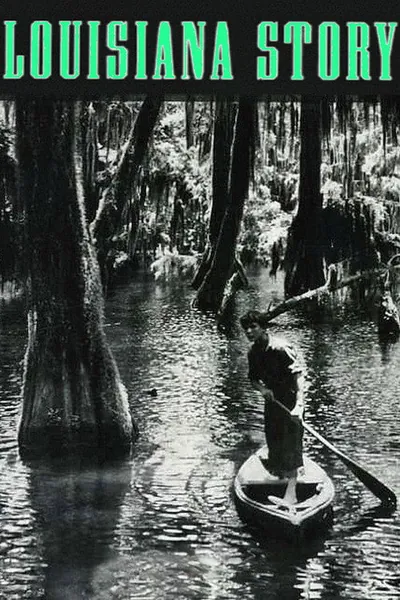 Louisiana Story
 Moana
 Man of Aran
 Elephant Boy
 The Battle of China
 The Battle of Russia
Original Cinematopedia text based on Wikipedia (es) and Wikipedia (en) and Wikidata.