
Robert Duvall
1931–2026 · American actor, director and producer
Biography
Robert Duvall (San Diego, California, January 5, 1931 – Middleburg, Virginia, February 15, 2026) was an American actor who also worked as a director, screenwriter and producer, and who ranks among the most respected screen performers of the later twentieth century. He won the Academy Award for Best Actor for playing a fading country singer in Tender Mercies (1983), and he also received a BAFTA Award, four Golden Globes and two Primetime Emmys. When he died, he was among the last surviving actors of Hollywood's classic era. Critics often pointed to his ability to disappear into a role, a quality that led to the label "the American Olivier."
Duvall was born in San Diego into a military family. His father was an officer in the United States Navy, and the family spent much of his childhood in Annapolis, Maryland, near the Naval Academy. His mother was an amateur actress. He attended schools in Maryland and Missouri and graduated in drama from Principia College in Illinois in 1953. His father had hoped he would follow a naval career, but acting drew him in. Before he committed to the stage, he served in the Army from 1953 to 1954, mostly stationed in Georgia, where he took part in an amateur production of the comedy Room Service. He then studied at the Neighborhood Playhouse in New York under Sanford Meisner, sharing classes with Gene Hackman and James Caan. He also shared apartments with Dustin Hoffman and Hackman during those lean years, and the three stayed close friends for life.
His professional career began in summer theater. From 1952 he acted with the Gateway Playhouse in Bellport, on Long Island, taking a wide range of parts across several seasons. That apprenticeship gave him a solid technical foundation. The turning point came in 1957, when he played Eddie Carbone in Arthur Miller's A View from the Bridge. He later called this role the catalyst of his career, and Miller himself attended one of the performances. Soon afterward he landed a lead role in the television series Naked City. He returned to the same part off-Broadway in 1965 and won an Obie Award for it. On Broadway he made his debut in 1966 in Frederick Knott's Wait Until Dark, and in 1977 he came back to the stage in David Mamet's American Buffalo, earning a Drama Desk nomination.
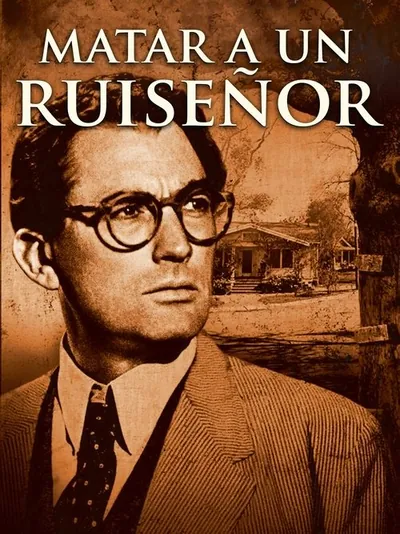
His television work began in 1959 with an episode of Armstrong Circle Theater. Through the 1960s he was a busy guest actor in action, suspense and crime series, including Alfred Hitchcock Presents, The Untouchables, Route 66, The Fugitive and The F.B.I.. His film career took off thanks to the screenwriter Horton Foote, who recommended him for the role of Boo Radley in To Kill a Mockingbird (1962), directed by Robert Mulligan. The part was brief, yet it made a lasting impression, and Foote went on to write several more roles for him. During the 1960s and early 1970s he appeared in notable films such as Captain Newman, M.D. (1963), Bullitt (1968), in which he plays the cab driver who ferries Steve McQueen just before the chase, and True Grit (1969), where he faced John Wayne in a climactic shootout as the outlaw Ned Pepper. MASH* (1970) followed, with his portrayal of the sour Major Frank Burns drawing considerable attention.
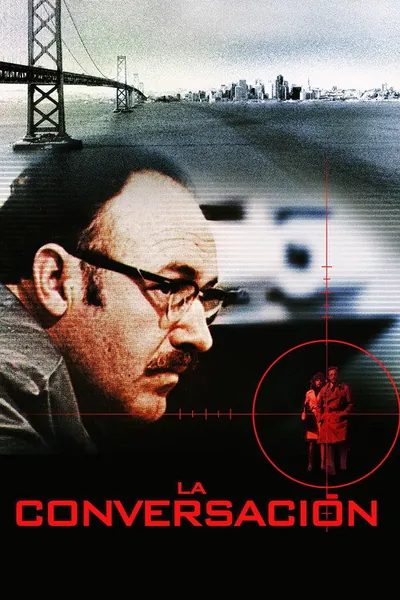
His breakthrough came in 1972 with Francis Ford Coppola's The Godfather, in which he played Tom Hagen, the family lawyer of the Corleone clan. He reprised the role in The Godfather Part II (1974). The first film earned him an Oscar nomination for Best Supporting Actor, and from then on he was in constant demand for both leading and supporting parts. In 1974 he appeared, uncredited, as a corporate director in Coppola's The Conversation. In 1976 he played a detestable television executive in Network, a role that brought him a BAFTA nomination. Coppola praised him as one of the four or five best actors in the world, and his reputation as a character actor of rare precision was firmly established.
The 1970s closed with Apocalypse Now (1979), where he played Lieutenant Colonel Kilgore, an officer obsessed with surfing in the middle of a war. His line about loving the smell of napalm in the morning became one of the most quoted lines in war cinema. For this role he won a BAFTA and a Golden Globe and was again nominated for the Oscar. The same year he starred in The Great Santini, playing a hard-edged Marine lieutenant colonel, which earned him his first Best Actor nomination. The 1980s and 1990s were more uneven at the box office, with notable titles such as The Natural (1984) and Colors (1988), but his great achievement of the decade was Tender Mercies (1983). Duvall wrote his own songs and sang them himself, and he insisted this be written into his contract. The film gave him the Oscar, although collaborators said that the following years did not bring him better offers. In 1989 he appeared in the miniseries Lonesome Dove as Captain Augustus McCrae, a role he considered among his favorites.
The 1990s were very active. In 1992 he founded his own production company, Butcher's Run Films, and at times he appeared in three or four films in a single year. He moved between commercial work such as Days of Thunder (1990) and Falling Down (1993) and more intimate projects. In 1997 he wrote, directed and starred in The Apostle, in which he played an evangelical preacher on the run from the law. After several studios turned the project down, he financed a large part of it himself, and the performance earned him another Oscar nomination. The following year he was nominated for Best Actor in a Supporting Role for A Civil Action. On television he won a Golden Globe and received an Emmy nomination for playing Stalin in the television film Stalin (1992), and another Emmy nomination in 1997 for portraying Adolf Eichmann.
In the 2000s he appeared less often on screen and directed a second film, Assassination Tango (2002), a thriller inspired by his long-standing love of tango and shot in Buenos Aires. He received a star on the Hollywood Walk of Fame in 2003, and in 2005 President George W. Bush presented him with the National Medal of Arts. His role in The Judge (2014), opposite Robert Downey Jr., brought him a further Oscar nomination for Best Supporting Actor at the age of 84, making him the oldest actor nominated in that category, a record later surpassed by Christopher Plummer. His final films include Widows (2018), directed by Steve McQueen, and two titles released in 2022, when he was in his nineties.
His personal life was also eventful. He married four times and had no children. His first wife was the dancer Barbara Benjamin, whom he met during the filming of To Kill a Mockingbird. He later married Gail Youngs and Sharon Brophy. In 2005 he married the Argentine actress Luciana Pedraza, with whom he had been living since the late 1990s. Duvall spoke fluent Spanish, was a skilled tango dancer, and ran tango studios in both the United States and Argentina. Politically, his views were described as libertarian or conservative, he backed several Republican candidates, and in 2014 he said he was considering leaving the party. In 2001 he and Pedraza founded a children's fund to help families in northern Argentina.
His legacy is that of an actor who worked across almost every genre for seven decades and who left a body of work of unusual range. His method rested on careful preparation and a chameleon-like ability to change voice, gesture and bearing from one film to the next. Beyond the emblematic roles, his name remains central for those who look to American cinema's great character actors, and his films with Coppola, Hoffman or Pacino are still essential reference points.
Key films
- The Godfather (1972): Tom Hagen, the Corleone family lawyer, a role that brought him fame and returned in the sequel.
- Apocalypse Now (1979): Lieutenant Colonel Kilgore, one of the most memorable figures in Coppola's film.
- To Kill a Mockingbird (1962): Boo Radley, his film debut, in a brief but unforgettable part.
- Tender Mercies (1983): Mac Sledge, a country singer, the role that won him the Academy Award for Best Actor.
- The Judge (2014): opposite Robert Downey Jr., earning him a Supporting Actor nomination.
Trivia
An Oscar after singing himself
Duvall wrote his own songs for Tender Mercies and insisted that his contract state he would sing them. His co-star Tess Harper said she came to know the character of Mac Sledge far better than the man playing him.
A role turned down over pay
For The Godfather Part III (1990) he declined to return as Tom Hagen unless he was paid a salary comparable to Al Pacino's. Years later he explained that he would accept Pacino being paid twice what he was paid, but not three or four times as much.
Training with revolvers
For his role in Lonesome Dove, Duvall was trained in the use of Walker revolvers by the Texas marksman Joe Bowman. The actor considered it one of his personal favorites.
On Cinematopedia
 The Godfather1972
 The Godfather Part II1974
 Apocalypse Now1979
 MASH1970
 The Conversation1974
 Network1976
 To Kill a Mockingbird1962
 Tender Mercies1983
 True Grit1969
 Bullitt1968
 Deep Impact1998
 Jack Reacher2012
- To Kill a Mockingbird 1962 · cast
- Captain Newman, M.D. 1963 · cast
- The Chase 1966 · cast
- Countdown 1967 · cast
- Bullitt 1968 · cast
- The Detective 1968 · cast
- True Grit 1969 · cast
- The Rain People 1969 · cast
- MASH 1970 · cast
- THX 1138 1971 · cast
- Lawman 1971 · director, cast
- The Godfather 1972 · cast
- Joe Kidd 1972 · cast
- The Outfit 1973 · cast
- The Godfather Part II 1974 · cast
- The Conversation 1974 · cast
- The Killer Elite 1975 · cast
- Breakout 1975 · cast
- Network 1976 · cast
- The Eagle Has Landed 1976 · cast
- The Seven-Per-Cent Solution 1976 · cast
- The Greatest 1977 · cast
- Invasion of the Body Snatchers 1978 · cast
- Apocalypse Now 1979 · cast
- The Great Santini 1979 · cast
- True Confessions 1981 · cast
- Tender Mercies 1983 · producer, cast
- The Terry Fox Story 1983 · cast
- The Natural 1984 · cast
- Colors 1988 · cast
- Days of Thunder 1990 · cast
- The Handmaid's Tale 1990 · cast
- Rambling Rose 1991 · cast
- Newsies 1992 · cast
- The Plague 1992 · cast
- Falling Down 1993 · cast
- Geronimo: An American Legend 1993 · cast
- Wrestling Ernest Hemingway 1993 · cast
- The Paper 1994 · cast
- Something to Talk About 1995 · cast
- The Scarlet Letter 1995 · cast
- Sling Blade 1996 · cast
- Phenomenon 1996 · cast
- The Apostle 1997 · director, screenplay, cast
- Deep Impact 1998 · cast
- A Civil Action 1998 · cast
- The Gingerbread Man 1998 · cast
- Gone in 60 Seconds 2000 · cast
- The 6th Day 2000 · cast
- John Q 2002 · cast
- Open Range 2003 · cast
- Secondhand Lions 2003 · cast
- Gods and Generals 2003 · cast
- Thank You for Smoking 2005 · cast
- Kicking & Screaming 2005 · cast
- We Own the Night 2007 · cast
- Lucky You 2007 · cast
- Four Christmases 2008 · cast
- Crazy Heart 2009 · producer, cast
- The Road 2009 · cast
- Jack Reacher 2012 · cast
- A Night in Old Mexico 2013 · producer, cast
- The Judge 2014 · cast
- In Dubious Battle 2016 · cast
- Widows 2018 · cast
- The Pale Blue Eye 2022 · cast
- Hustle 2022 · cast
Original Cinematopedia text based on Wikipedia (es) and Wikipedia (en) and Wikidata.