
Robby Müller
1940–2018 · Dutch cinematographer born in the Netherlands Antilles
Biography
Robby Müller (Willemstad, Curaçao, 4 April 1940 – Amsterdam, 3 July 2018) was a Dutch cinematographer born in the Netherlands Antilles whose work shaped a large part of European and American auteur cinema from the 1970s to the 2000s. Trained at the Netherlands Film Academy, he first came to prominence through his collaborations with Wim Wenders, closely associated with the West German New Wave.
Müller moved to Amsterdam in 1953 and studied at the Netherlands Film Academy between 1962 and 1964. After working on a number of short films, he shot Alabama: 2000 Light Years from Home (1969), the first film he worked on and also Wenders's debut feature. The two went on to make Summer in the City, Alice in the Cities, Kings of the Road, The American Friend and Paris, Texas. His style, built on natural light and restrained, minimalist framing, became one of the defining looks of that period.
Outside Germany, Müller worked on both mainstream American productions and independent features. For William Friedkin he shot To Live and Die in L.A., with its hazy, yellow-tinted images, and he also worked with Peter Bogdanovich, Barbet Schroeder and Sally Potter. With Jim Jarmusch he shot Down by Law, Mystery Train, Dead Man and Ghost Dog, where his gritty, rough-edged imagery suited the director's spare approach. With Lars von Trier he made Breaking the Waves and Dancer in the Dark, and he pioneered digital cinematography alongside him.
Müller earned wide admiration from his peers. He had suffered from vascular dementia for several years before dying in Amsterdam in 2018, aged 78. His legacy lives on in the work of later cinematographers. In 2018 the documentary Living the Light - Robby Müller, by Claire Pijman, a visual essay on his life and work, premiered at the Venice Film Festival, and since 2020 the Netherlands Society of Cinematographers has presented an annual award in his name.
Key films
- Paris, Texas (1984), directed by Wim Wenders
- Breaking the Waves (1996), directed by Lars von Trier
- Dancer in the Dark (2000), directed by Lars von Trier
- Dead Man (1995), directed by Jim Jarmusch
- Down by Law (1986), directed by Jim Jarmusch
- Alice in the Cities (1974), directed by Wim Wenders
On Cinematopedia
 Dancer in the Dark2000
 Paris, Texas1984
 Breaking the Waves1996
 Dead Man1995
 Down by Law1986
 Ghost Dog: The Way of the Samurai1999
 Coffee and Cigarettes2003
 Alice in the Cities1974
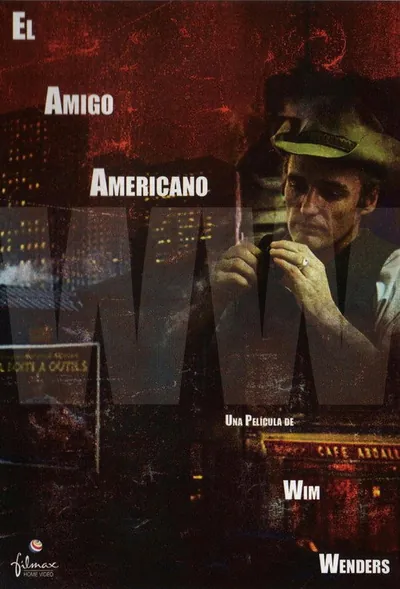 The American Friend1977
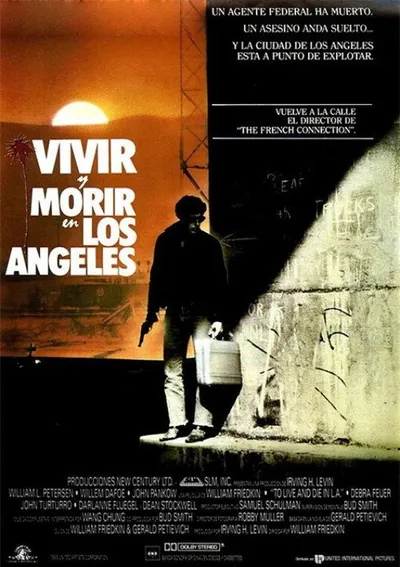 To Live and Die in L.A.1985
 Mad Dog and Glory1993
 Barfly1987
- Summer in the City 1970 · cinematography
- The Goalkeeper's Fear of the Penalty 1972 · cinematography
- The Scarlet Letter 1973 · cinematography
- Trip to Vienna 1973 · cinematography
- Alice in the Cities 1974 · cinematography
- Wrong Move 1975 · cinematography
- Kings of the Road 1976 · cinematography
- The Wild Duck 1976 · cinematography
- The American Friend 1977 · cinematography
- The Left-Handed Woman 1977 · cinematography
- The Glass Cell 1978 · cinematography
- Saint Jack 1979 · cinematography
- In for Treatment 1979 · cinematography
- Honeysuckle Rose 1980 · cinematography
- They All Laughed 1981 · cinematography
- Paris, Texas 1984 · cinematography
- Repo Man 1984 · cinematography
- Cheaters 1984 · cinematography, cast
- To Live and Die in L.A. 1985 · cinematography
- Down by Law 1986 · cinematography
- Barfly 1987 · cinematography
- The Believers 1987 · cinematography
- The Little Devil 1988 · cinematography
- Mystery Train 1989 · cinematography
- Korczak 1990 · cinematography
- Until the End of the World 1991 · cinematography
- Mad Dog and Glory 1993 · cinematography
- Dead Man 1995 · cinematography
- Beyond the Clouds 1995 · cinematography
- Breaking the Waves 1996 · cinematography
- The Tango Lesson 1997 · cinematography
- Ghost Dog: The Way of the Samurai 1999 · cinematography
- Dancer in the Dark 2000 · cinematography
- 24 Hour Party People 2002 · cinematography
- Coffee and Cigarettes 2003 · cinematography
- Visions of Europe 2004 · cinematography
Original Cinematopedia text based on Wikipedia (es) and Wikipedia (en) and Wikidata.