
Ritwik Ghatak
1925–1976 · Indian film director, screenwriter, actor and playwright
Biography
Ritwik Kumar Ghatak (1925–1976) was an Indian film director, screenwriter, actor and playwright from Bengal. Widely regarded today as one of the great filmmakers of his country, he was largely overlooked during his lifetime. Working alongside Satyajit Ray, Tapan Sinha and Mrinal Sen, he is remembered for his close portrayal of social life, for his treatment of the partition of Bengal and for his interest in the position of women.
Before he turned to cinema, Ghatak wrote for the stage and took part in the revival of leftist theatre. He belonged to the Communist Party of India until he was expelled in 1955, and he was among the leaders of the party's cultural wing, the Indian People's Theatre Association. He entered films as an actor and assistant director on Nimai Ghosh's Chinnamul (1950). His first completed film, Nagarik (1952), was not released until after his death, while his first commercial release, Ajantrik (1955), gave a car a central role.
His only major commercial success was Madhumati (1958), a Hindi film for which he wrote the screenplay and which deals with reincarnation. His reputation rests chiefly on the partition trilogy: Meghe Dhaka Tara (1960), Komal Gandhar (1961) and Subarnarekha (1965). His style combines documentary realism, stylised performance drawn from folk theatre and a Brechtian distance. In 1966 he taught briefly at the Film and Television Institute of India in Pune, where his students included Mani Kaul, Kumar Shahani and Adoor Gopalakrishnan.
His international reputation grew late, from the 1990s, through restorations of his films and screenings at festivals. His son Ritaban Ghatak keeps his work alive through the Ritwik Memorial Trust. Today he is seen as a central figure of Indian art cinema, and his influence is most visible in his former students and in later generations of filmmakers.
Key films
- Nagarik (1952), Ghatak's first completed film, not released until after his death.
- Madhumati (1958), his biggest commercial success, with a screenplay by him about reincarnation.
- The Cloud-Capped Star (1960), the first part of his partition trilogy.
- The Golden Thread (1965), the closing part of the trilogy and highly regarded by critics.
- A River Called Titas (1973), a choral story about a fishing community built from interlocking tales.
Trivia
A car as a character
His first commercial release, Ajantrik (1955), is one of the early Indian films to make an automobile a character in its story.
Influence on Om Shanti Om
Madhumati is regarded as an inspiration for many later works about reincarnation, including the Bollywood hit Om Shanti Om (2007).
On Cinematopedia
 The Cloud-Capped Star
 Subarnarekha (also released as The Golden Thread)
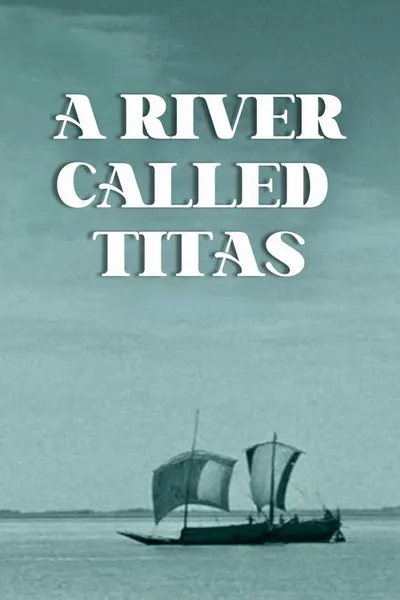 A River Called Titas
Original Cinematopedia text based on Wikipedia (en) and Wikidata.