
Ridley Scott
b. 1937 · British film director, producer and screenwriter
Biography
Sir Ridley Scott (born 30 November 1937 in South Shields, England) is a British film director, producer and screenwriter, and one of the most recognisable names in genre cinema and large-scale historical spectacle over the past four decades. He reached feature films after a long career in advertising, and his name is tied to works such as Alien, Blade Runner, Thelma & Louise and Gladiator. His importance lies in combining a carefully built visual style, dense with atmosphere, with productions of great scale, a mix that has shaped several generations of filmmakers.
Scott grew up in a military family, moving between Cumberland, Wales and Germany, while his father, a Royal Engineers officer, was away for much of his early childhood. His interest in science fiction began with the novels of H. G. Wells and with films from the genre. By his own account, it was Stanley Kubrick's 2001: A Space Odyssey that made him realise what he could do. He studied design at West Hartlepool and then at the Royal College of Art in London, where he helped set up the college's film department. His final-year short, Boy and Bicycle, starring his younger brother Tony and their father, was later released as an extra on the DVD of The Duellists.
After graduating he worked as a trainee set designer for the BBC, on series such as Z-Cars and Out of the Unknown. He was first assigned to design the Daleks for Doctor Who, but a scheduling clash meant he was replaced by Raymond Cusick. In 1965 he began directing episodes of television series. In 1968 he and his brother Tony founded Ridley Scott Associates (RSA), a company making commercials and films. Working alongside Alan Parker and Hugh Hudson, he made many advertisements during the 1970s, among them the 1973 Hovis bread spot "Bike Round", which was later voted the UK's favourite commercial in a 2006 poll. For Chanel No. 5 he directed surreal, seductive mini-films in which the bottle's silhouette was the constant element. Scott is usually grouped with Hudson, Adrian Lyne, Alan Parker and his brother Tony as the "Adland Five", British advertising directors who went on to Hollywood careers.
His first feature was The Duellists (1977), based on a Joseph Conrad story and set during the Napoleonic Wars. Its commercial impact was limited, but it was nominated for the main prize at Cannes and won the award for best debut film. Two years later came Alien (1979). Scott decided that Ellen Ripley, played by Sigourney Weaver, would not be the standard male action hero, and the film became an international hit and the start of a franchise. He then made Blade Runner (1982), an adaptation of Philip K. Dick's novel, which disappointed at the box office before becoming a classic. Scott returned to it repeatedly: after a rushed cut prepared by Warner Bros. in 1991, he supervised a digital restoration and approved the version known as The Final Cut, released in 2007.
The 1980s and 1990s brought very different projects. Legend (1985), a fantasy with Tom Cruise and Tim Curry, was a major commercial failure that later became a cult favourite. Black Rain (1989), starring Michael Douglas, was the first of his six collaborations with composer Hans Zimmer. Thelma & Louise (1991), with Susan Sarandon and Geena Davis, was a critical and popular success, earned him his first Academy Award nomination for Best Director, and featured a young Brad Pitt in a brief but memorable role. In 1992 he released 1492: Conquest of Paradise, which failed at the box office despite Vangelis's score, now highly regarded. In 1995 he and Tony formed Scott Free Productions, the banner under which most of his later films were made, and the same year the brothers bought a controlling stake in Shepperton Studios. Together they also received a BAFTA for Outstanding British Contribution to Cinema.
His return to major success came with Gladiator (2000), starring Russell Crowe, which won five Academy Awards, including Best Picture and Best Actor. He then directed Hannibal (2001), a sequel to The Silence of the Lambs with Anthony Hopkins, and Black Hawk Down (2001), which brought him a third Best Director nomination after Thelma & Louise and Gladiator. He followed with the caper comedy Matchstick Men and with Kingdom of Heaven (2005), whose director's cut restored around 45 minutes the studio had removed. American Gangster (2007), again with Denzel Washington and Russell Crowe, was warmly received by critics. Robin Hood (2010) was cooler in its reception. Prometheus (2012) returned him to the Alien universe, and The Martian (2015), with Matt Damon, became at that point his highest-grossing film, taking more than $630 million worldwide.
In the years that followed he directed Exodus: Gods and Kings (2014), Alien: Covenant (2017) and All the Money in the World (2017), in which he replaced Kevin Spacey with Christopher Plummer after allegations against the actor. His more recent films as director include The Last Duel (2021), House of Gucci (2021) and Napoleon (2023), and Gladiator II was released in 2024. In 2018 he received the BAFTA Fellowship for lifetime achievement. His legacy combines an almost obsessive attention to image and atmosphere with a wide range of genres, from science fiction to the historical epic and the black comedy. He remains active, and although some projects linked to his name, such as the Blade Runner sequel, have passed to other directors, his work continues to serve as a reference for spectacle cinema.
Key films
- Alien (1979): the science fiction horror that brought him international success and made Ellen Ripley an icon.
- Blade Runner (1982): an adaptation of Philip K. Dick that failed at first and became a landmark of urban science fiction.
- Thelma & Louise (1991): a road movie with Susan Sarandon and Geena Davis that earned him his first Best Director nomination.
- Gladiator (2000): a Russell Crowe epic that revived the historical genre and won the Academy Award for Best Picture.
- Black Hawk Down (2001): an account of a rescue mission in Mogadishu that brought him his third Best Director nomination.
- The Martian (2015): a Matt Damon survival story and his biggest box-office hit up to that point.
Trivia
A big-budget commercial
In 1984 he directed the commercial "1984" to launch Apple's Macintosh, with a budget of around $900,000. It aired during Super Bowl XVIII, and the shoot in England cost roughly $370,000.
A digital double for Oliver Reed
Oliver Reed died during the shoot of Gladiator, and the film is dedicated to him. The visual effects company The Mill created a digital body double to complete his remaining scenes.
On Cinematopedia
 Gladiator2000
 Alien1979
 Blade Runner1982
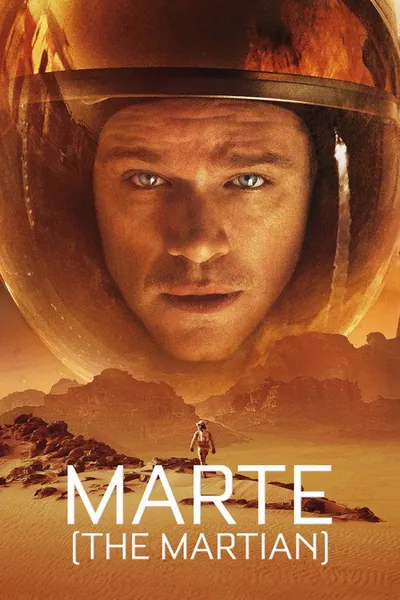 The Martian2015
 Black Hawk Down2001
 Thelma & Louise1991
 Kingdom of Heaven2005
 Prometheus2012
 American Gangster2007
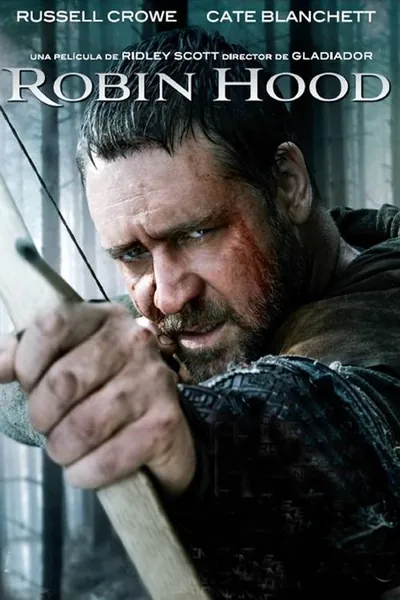 Robin Hood2010
 Gladiator II2024
 Hannibal2001
- The Duellists 1977 · director
- Alien 1979 · director
- Blade Runner 1982 · director
- Legend 1985 · director
- Someone to Watch Over Me 1987 · director
- Black Rain 1989 · director
- Thelma & Louise 1991 · director, producer
- 1492: Conquest of Paradise 1992 · director, producer
- The Browning Version 1994 · producer
- White Squall 1996 · director
- G.I. Jane 1997 · director, producer
- Gladiator 2000 · director
- Black Hawk Down 2001 · director, producer
- Hannibal 2001 · director, producer
- Cats & Dogs 2001 · producer
- Matchstick Men 2003 · director, producer
- Kingdom of Heaven 2005 · director, producer
- In Her Shoes 2005 · producer
- All the Invisible Children 2005 · director
- A Good Year 2006 · director, producer
- Tristan & Isolde 2006 · producer
- American Gangster 2007 · director, producer
- The Assassination of Jesse James by the Coward Robert Ford 2007 · producer
- Body of Lies 2008 · director, producer
- Robin Hood 2010 · director, producer
- The A-Team 2010 · producer
- Welcome to the Rileys 2010 · producer
- The Grey 2011 · producer
- Life in a Day 2011 · producer
- Prometheus 2012 · director, producer
- Stoker 2013 · producer
- The Counselor 2013 · director, producer
- Out of the Furnace 2013 · producer
- The East 2013 · producer
- Exodus: Gods and Kings 2014 · director, producer
- Before I Go to Sleep 2014 · producer
- The Martian 2015 · director, producer
- Child 44 2015 · producer
- Concussion 2015 · producer
- Morgan 2016 · producer
- Alien: Covenant 2017 · director, producer
- Murder on the Orient Express 2017 · producer
- All the Money in the World 2017 · director
- Mark Felt: The Man Who Brought Down the White House 2017 · producer
- The Aftermath 2019 · producer
- House of Gucci 2021 · director, producer
- The Last Duel 2021 · director, producer
- Death on the Nile 2022 · producer
- Napoleon 2023 · director, producer
- A Haunting in Venice 2023 · producer
- Boston Strangler 2023 · producer
- Gladiator II 2024 · director, producer
- Alien: Romulus 2024 · producer
- Echo Valley 2025 · producer
- The Dog Stars 2026 · director
Original Cinematopedia text based on Wikipedia (es) and Wikipedia (en) and Wikidata.