
Richard Eichberg
1888–1953 · German film director and producer
Biography
Richard Eichberg (Berlin, 1888 – Munich, 1953) was a German film director and producer who worked through the Weimar era and the early sound years. He was mainly a director and producer, with some work as a screenwriter, and his career stretches from silent cinema into the 1940s.
According to the available sources, he directed around 87 films between 1915 and 1949 and produced about 77 between 1915 and 1950. His 1920s output includes melodramas, comedies and sensational titles such as Hypnose and Ihre Hoheit die Tänzerin. With the arrival of sound he shot films in several languages, sometimes making parallel English, French and German versions of the same story. In the 1930s and 1940s he also turned to adventure films and adaptations of popular tales, including Michel Strogoff and two versions of the Indian tomb story. Much of his work is little known outside Germany.
Eichberg died in Munich in 1953. His legacy is tied more to his work as a producer and director in an industry in transition than to any single authorial achievement that is widely recognised.
Key films
- The Tiger of Eschnapur (1938): the German version of the Indian adventure story that became one of the period's popular spectacles.
- The Indian Tomb (1938): the second part of the same story, shot in German with French-language parallel versions.
- Michel Strogoff (1936): a French-language adaptation of the Jules Verne novel, a travel adventure.
- Night Birds (1930): the English-language version of one of his early sound-era titles, made alongside other language versions.
On Cinematopedia
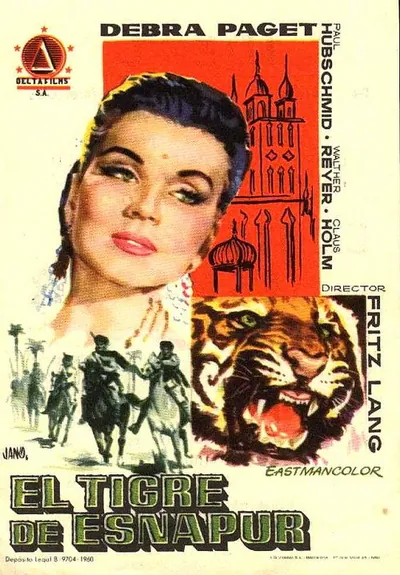 The Tiger of Eschnapur
 Hypnosis
 Monna Vanna
 The Tiger of Eschnapur
 Song
 The Road to Dishonour
 Pavement Butterfly
Original Cinematopedia text based on Wikipedia (es) and Wikipedia (en) and Wikidata.