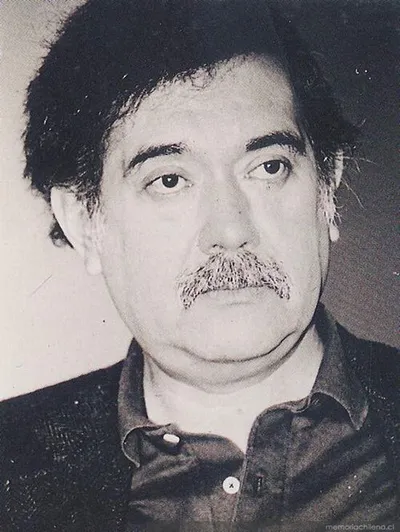
Raúl Ruiz
1941–2011 · Chilean-French filmmaker, director, screenwriter and film theorist
Biography
Raúl Ruiz Pino (Puerto Montt, 1941 – Paris, 2011) was a Chilean filmmaker who spent more than three decades in France after the 1973 military coup in his homeland. A director, screenwriter and theorist, he is regarded as the most important Chilean filmmaker in history. His enormous output spans low-budget art films, television movies, miniseries and large productions, and his work is marked by originality, irony and a dreamlike, experimental sensibility.
The son of a ship's captain and a schoolteacher, he moved with his family from Puerto Montt to Santiago, where he joined experimental theatre groups as a teenager and wrote dozens of avant-garde plays before studying film in Argentina. His feature debut, Three Sad Tigers (1968), based on a play by Alejandro Sieveking, drew little commercial attention at the time, though critics admired it and it later came to be seen as one of his finest Chilean works. After the coup he settled in Paris, where he built a prolific career with films drawing on texts by Pierre Klossowski, Kafka and Balzac.
Unlike many of his politically committed Chilean contemporaries, Ruiz moved away from overtly militant cinema and developed an ironic, surreal and highly literary style. He gained international attention with Treasure Island and Three Crowns of the Sailor, and in the 1990s he worked with major stars such as Catherine Deneuve, John Malkovich and Marcello Mastroianni, on films including Genealogies of a Crime, which won the Silver Bear in Berlin. His Proust adaptation, Time Regained, and the epic Mysteries of Lisbon, running over four hours, showed his gift for turning sprawling novels into cinema.
In his final years he faced liver cancer and underwent a transplant in 2010. He died in Paris in August 2011 while preparing Lines of Wellington, which was completed by his widow and longtime collaborator, Valeria Sarmiento. His legacy endures through international retrospectives and the Ruiz-Sarmiento Archive in Valparaíso, and his work continues to attract study for its formal rigour and inventiveness.
Key films
- Three Sad Tigers (1968): his feature debut, a nocturnal journey through Santiago that anticipates many traits of his later style.
- Treasure Island (1985): a Stevenson adaptation that brought him wider international recognition.
- Genealogies of a Crime (1997): with Catherine Deneuve, winner of the Silver Bear in Berlin.
- Time Regained (1999): an adaptation of the final part of Proust's In Search of Lost Time, with John Malkovich.
- Mysteries of Lisbon (2010): his most ambitious film, based on the novel by Camilo Castelo Branco.
- Lines of Wellington (2012): completed by Valeria Sarmiento from the project Ruiz left in preparation.
Trivia
A late premiere
Palomita Blanca, shot in 1973, could not be released at the time and was smuggled out of the country with difficulty; it premiered in Chile in 1992.
Berlin recognition
Genealogies of a Crime won the Silver Bear at the 1997 Berlin International Film Festival.
On Cinematopedia
 To Each His Own Cinema2007
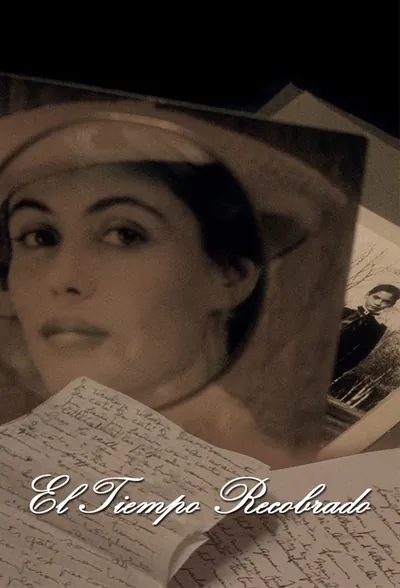 Time Regained1998Mysteries of Lisbon2010Mysteries of Lisbon2010
 Lines of Wellington2012
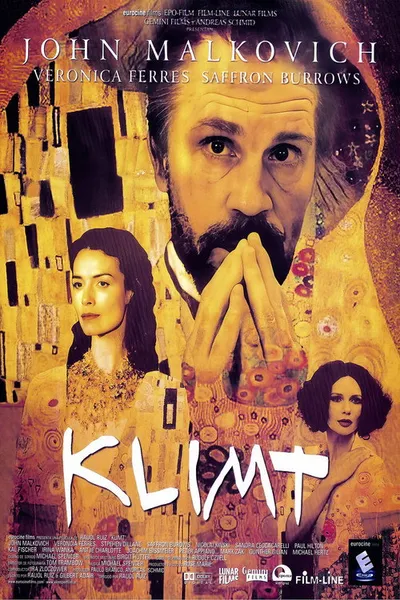 Klimt2006
 Three Sad Tigers1968
 Red Wood Pigeon1989
 Three Lives and Only One Death1996
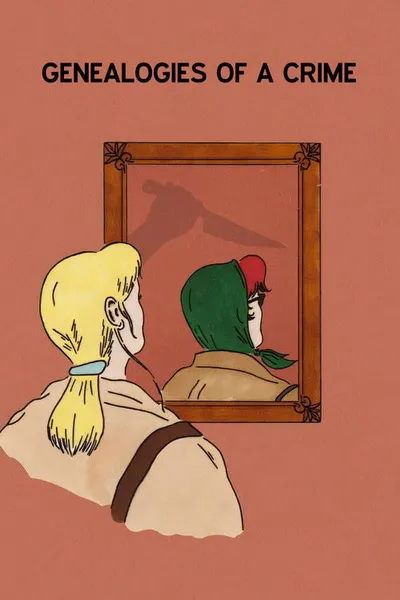 Genealogies of a Crime1997
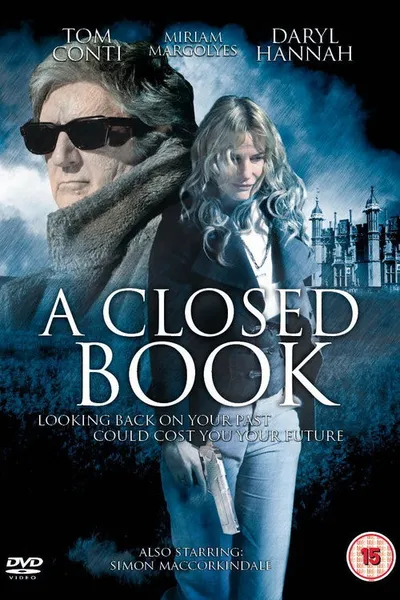 A Closed Book2010
 Cinématon1978
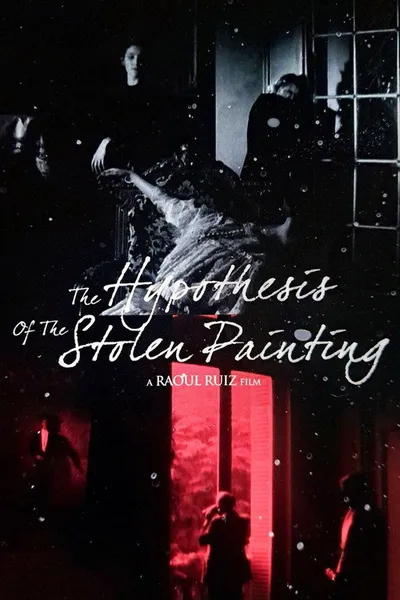 The Hypothesis of the Stolen Painting1979
- Three Sad Tigers 1968 · director, screenplay
- Cinématon 1978 · cast
- The Hypothesis of the Stolen Painting 1979 · director, screenplay
- On Top of the Whale 1982 · director, screenplay
- City of Pirates 1983 · director, screenplay
- Three Crowns of the Sailor 1983 · director, screenplay
- Red Wood Pigeon 1989 · cast
- Three Lives and Only One Death 1996 · director, screenplay
- Genealogies of a Crime 1997 · director, screenplay
- Time Regained 1998 · director, screenplay
- Comedy of Innocence 2000 · director, screenplay
- Savage Souls 2001 · director
- That Day 2003 · director, screenplay
- Klimt 2006 · director, screenplay
- To Each His Own Cinema 2007 · director
- Nucingen House 2008 · director, screenplay
- Mysteries of Lisbon 2010 · director
- A Closed Book 2010 · director
- Lines of Wellington 2012 · director
- Night Across the Street 2012 · director, screenplay
Original Cinematopedia text based on Wikipedia (es) and Wikipedia (en) and Wikidata.