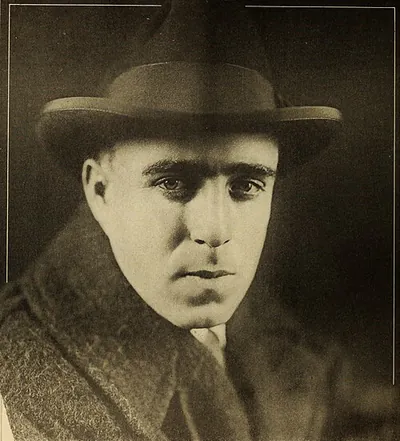
Raoul Walsh
1887–1980 · American film director, actor and screenwriter
Biography
Raoul Walsh (born Albert Edward Walsh in New York, March 11, 1887; died in Simi Valley, California, December 31, 1980) was an American film director, actor and screenwriter who worked through nearly the whole history of classic Hollywood, from the early silent years to the mid-1960s. He directed more than a hundred films across a wide range of genres, though he became best known for adventure pictures, westerns and gangster films. He was also one of the 36 founding members of the Academy of Motion Picture Arts and Sciences in 1927, a sign of the standing he held among his peers.
His early years are best approached with some caution. In his autobiography, Walsh painted a picture of a restless youth: sailor in Cuba, cowboy, circus hand, and, according to his own account, the son of an Irish émigré who had supposedly escaped from a British prison. Critics tend not to take those stories literally and place them alongside the origin legends that many Hollywood figures of the period liked to tell about themselves. What seems better documented is a happy childhood in New York, a friendship with the Barrymore family, whose member John Barrymore recalled spending long afternoons reading in the Walsh family library, and studies at Seton Hall College, a Catholic university in the city. Around 1909 he began acting on the stage, encouraged by his brother George Walsh, also an actor, and he trained in dramatic art with Paul Armstrong. He was known as a serious reader of Shakespeare.
His move into film came quickly. He joined the Biograph Company, where he made his debut as an actor under D. W. Griffith. In 1912 he directed his first film, Life of Villa, in which the Mexican revolutionary Pancho Villa played himself. Soon afterwards he directed a sequence in a similar film, The Life of General Villa, in which the role of Villa went to Walsh himself. Between 1914 and 1915 he worked as Griffith's assistant and had a notable role in The Birth of a Nation (1915), playing John Wilkes Booth, Lincoln's assassin. That same year he made Regeneration, regarded as one of the earliest gangster films, shot in the Bowery district of Manhattan. In 1916 he released his first film as a director, His Return, and the Fox Film Company signed him that year.
During the silent period he usually wrote the scripts for his films and often starred in them. He served as an officer in the United States Army during the First World War. In 1916 he married Miriam Cooper, a regular in Griffith's company, and they adopted two children before divorcing a decade later. Among his silent works, The Thief of Bagdad (1924), produced and starred in by Douglas Fairbanks with Anna May Wong, stands out. It is a fantasy spectacle with imaginative sets, at times close to German expressionism, and some scenes were tinted in color. It was a considerable hit. Evangeline (1919), based on a Longfellow poem, is an unusual entry in his output, with artistic pretensions, and it did not find much of an audience. By contrast, What Price Glory? (1926), a romantic comedy set in wartime, was one of his great successes. Sadie Thompson (1928), with Gloria Swanson, brought him briefly back in front of the camera, this time as the heroine's boyfriend. Much of his silent work has unfortunately been lost.
His transition to sound was a difficult stretch. His first talkie was The Cock-Eyed World (1929), a musical comedy starring Victor McLaglen. For Fox he then made In Old Arizona (1929), usually described as the first sound western. During filming, while driving through California looking for locations, a jackrabbit crashed through his windshield and Walsh lost an eye. Irving Cummings finished the picture. The accident ended his acting career, and from then on he concentrated on directing and writing. Shortly afterwards he directed The Big Trail (1930), a wagon-train epic shot in widescreen that launched a young Marion Morrison, whom Walsh renamed John Wayne. He stayed at Fox until 1935, spent a brief period at Paramount, and in 1939 joined Warner Brothers, where he remained until 1953.
The Warner years are the ones most often remembered. There he made several classics of the gangster genre, among them The Roaring Twenties (1939), with James Cagney and Humphrey Bogart; High Sierra (1941), with Ida Lupino and Bogart; and White Heat (1949), again with Cagney. He also made respected westerns such as Pursued (1947), Colorado Territory (1949) and Distant Drums (1951), starring Gary Cooper. Among them all, They Died with Their Boots On (1941), with Errol Flynn, stands out. It looks like an adventure film but works as a debunking account of General Custer. At sea he worked with Gregory Peck on Captain Horatio Hornblower (1951) and The World in His Arms (1952). His best-known war film was Objective, Burma! (1945), also starring Flynn. After his Warner contract expired he directed three films with Clark Gable: The Tall Men (1955), The King and Four Queens (1956) and Band of Angels (1957). Later he adapted Norman Mailer's novel in The Naked and the Dead (1958).
His style is marked by economy. He knew how to handle action and could set out the possibilities of a situation in very few shots and sequences. He shot few takes so that studios could not alter his cuts. He also contributed regularly to the scripts he directed. He launched the careers of John Wayne and Rock Hudson, whom he cast in Combat Squad (1948). Outside film he enjoyed music and painting, bred racehorses, and by most accounts combined a lifelong loyalty to the Republican Party with a broad tolerance toward the people around him.
He retired in 1964 after making A Distant Trumpet (1964). He then wrote the picaresque novel La cólera de los justos (1972) and the memoir Each Man in His Time (1974), a book of recollections in which fact and invention mix freely. His legacy rests largely on critical appreciation of his narrative efficiency and his ability to renew classic genres. Part of his papers and film material is held at the Wesleyan University Cinema Archives. He died in California in 1980, leaving a large body of work that remains a reference point for fans of adventure and gangster films.
Key films
- The Birth of a Nation (1915), in which he played John Wilkes Booth, Lincoln's assassin, in one of his earliest screen appearances.
- The Thief of Bagdad (1924), a fantasy spectacle produced and starred in by Douglas Fairbanks, notable for its imaginative sets.
- In Old Arizona (1929), Walsh's first western for Fox and the first sound western, made during the transition to talkies.
- The Roaring Twenties (1939), a gangster classic starring James Cagney and Humphrey Bogart.
- High Sierra (1941), a gangster drama with Ida Lupino and Humphrey Bogart that Walsh later remade as Colorado Territory.
- White Heat (1949), one of Walsh's most celebrated films, starring James Cagney.
Trivia
An accident that cost him an eye
While shooting In Old Arizona, a jackrabbit smashed through the windshield of the car Walsh was driving and he lost an eye. The accident ended his acting career, and Irving Cummings completed the film.
How John Wayne got his name
Walsh discovered Marion Morrison, a young prop man, and cast him in The Big Trail (1930). Walsh renamed him John Wayne after the Revolutionary War general Mad Anthony Wayne, whose biography he happened to be reading at the time.
Among the Academy's 36 founders
In 1927 Walsh was one of the 36 film professionals who founded the Academy of Motion Picture Arts and Sciences in Hollywood, alongside names such as Cecil B. DeMille, Mary Pickford and Harold Lloyd.
On Cinematopedia
 The Birth of a Nation1915
 In Old Arizona1928
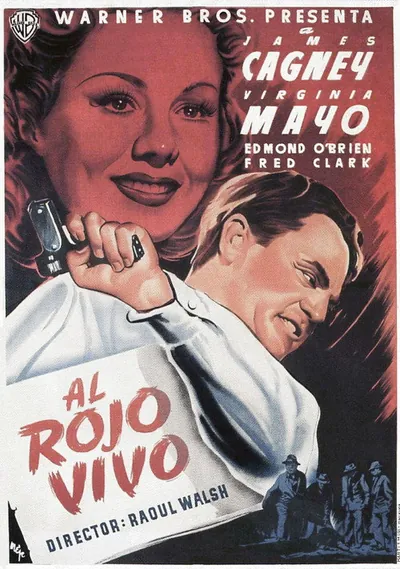 White Heat1949
 The Thief of Bagdad1924
 High Sierra1941
 The Roaring Twenties1939
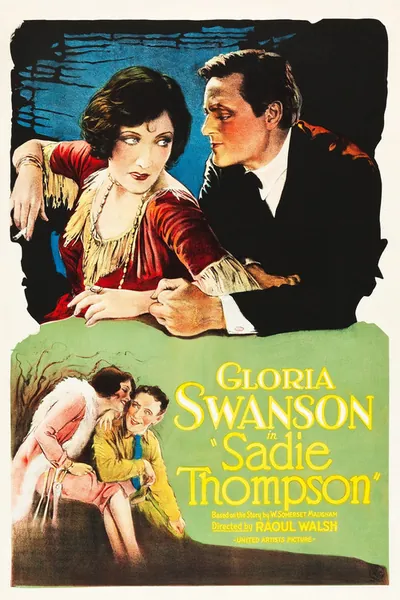 Sadie Thompson1928
 Captain Horatio Hornblower R.N.1951
 The Big Trail1930
 The Tall Men1955
 Objective, Burma!1945
 The World in His Arms1952
- The Life of General Villa 1914 · director, cinematography, cast
- The Birth of a Nation 1915 · cast
- Regeneration 1915 · director, screenplay
- Carmen 1915 · director, screenplay
- The Outlaw's Revenge 1915 · cast
- The Serpent 1916 · director, screenplay
- Blue Blood and Red 1916 · director, screenplay
- The Conqueror 1917 · director
- The Honor System 1917 · director, screenplay
- The Pride of New York 1917 · director, screenplay
- The Prussian Cur 1918 · director, screenplay
- On the Jump 1918 · director
- Evangeline 1919 · director, screenplay
- The Deep Purple 1920 · director, producer
- Rosita 1923 · director
- Lost and Found on a South Sea Island 1923 · director
- The Thief of Bagdad 1924 · director
- The Wanderer 1925 · director
- East of Suez 1925 · director
- The Spaniard 1925 · director
- What Price Glory? 1926 · director
- The Lady of the Harem 1926 · director
- The Loves of Carmen 1927 · director
- In Old Arizona 1928 · director
- Sadie Thompson 1928 · director, screenplay, producer, cast
- The Red Dance 1928 · director, producer
- The Cock-Eyed World 1929 · director
- The Big Trail 1930 · director
- The Yellow Ticket 1931 · director, producer
- Women of All Nations 1931 · director
- Me and My Gal 1932 · director
- The Bowery 1933 · director
- Going Hollywood 1933 · director
- Hello, Sister! 1933 · director
- Every Night at Eight 1935 · director
- Klondike Annie 1936 · director
- Big Brown Eyes 1936 · director, screenplay
- Hitting a New High 1937 · director
- Artists and Models 1937 · director
- Jump for Glory 1937 · director
- O.H.M.S. 1937 · director
- College Swing 1938 · director
- The Roaring Twenties 1939 · director
- They Drive by Night 1940 · director
- Dark Command 1940 · director
- High Sierra 1941 · director
- They Died with Their Boots On 1941 · director
- The Strawberry Blonde 1941 · director
- Manpower 1941 · director
- Gentleman Jim 1942 · director
- Desperate Journey 1942 · director
- Northern Pursuit 1943 · director
- Uncertain Glory 1944 · director
- Objective, Burma! 1945 · director
- San Antonio 1945 · director
- Salty O'Rourke 1945 · director
- Pursued 1947 · director
- The Man I Love 1947 · director
- Fighter Squadron 1948 · director
- Silver River 1948 · director
- White Heat 1949 · director
- Colorado Territory 1949 · director
- It's a Great Feeling 1949 · cast
- Montana 1950 · director
- Captain Horatio Hornblower R.N. 1951 · director, producer
- Distant Drums 1951 · director
- The Enforcer 1951 · director
- Along the Great Divide 1951 · director
- The World in His Arms 1952 · director
- Blackbeard the Pirate 1952 · director
- The Lawless Breed 1953 · director, producer
- Gun Fury 1953 · director
- Sea Devils 1953 · director
- Saskatchewan 1954 · director
- The Tall Men 1955 · director
- Battle Cry 1955 · director
- The King and Four Queens 1956 · director
- The Revolt of Mamie Stover 1956 · director
- Band of Angels 1957 · director
- The Naked and the Dead 1958 · director
- The Sheriff of Fractured Jaw 1958 · director
- Esther and the King 1960 · director, screenplay, producer
- Come September 1961 · producer
- A Distant Trumpet 1964 · director, producer
Original Cinematopedia text based on Wikipedia (es) and Wikipedia (en) and Wikidata.