
Pierre Richard
b. 1934 · French actor, film director and screenwriter
Biography
Pierre Richard (born in Valenciennes in 1934) is a French actor, director and screenwriter best known for comedies in which he plays clumsy, dreamy misfits. Alongside Louis de Funès and Gérard Depardieu, he is often counted among the most gifted comedians in French cinema of the past several decades. He has also recorded occasional songs and built a business life outside the screen, running a Parisian restaurant and a vineyard in southern France.
He came to film from the stage. Before committing fully to acting, he trained as a kinesiotherapist as a fallback and even ran a short-lived practice. After a brief spell as an extra at the Théâtre National Populaire, he formed a comedy duo with Victor Lanoux, performing sketches in Paris cabarets and music halls. His first significant film role came in 1968 with Yves Robert's Alexandre le Bienheureux, where Robert told him he was not an actor but a character. That remark pushed him toward writing and directing his own material.
His breakthrough was Le Distrait (1970), which he directed and starred in, built on a lanky, jerky physical style drawn from Jacques Tati, Jerry Lewis and the Marx Brothers. That same year began his partnership with Yves Robert, and The Tall Blond Man with One Black Shoe (1972) became an international hit that made him France's new comic star. The Return of the Tall Blond Man followed in 1974, along with a run of comedies that leaned into his image as a blunderer. In 1976 he starred in The Toy, the directing debut of Francis Veber, who had written both Robert films. Veber gave Richard's hapless characters names like François Pignon or François Perrin.
In the 1980s he teamed with Gérard Depardieu in three Veber comedies: La Chèvre (1981), Les Compères (1983) and Les Fugitifs (1986). He also tried to break type, notably in The Twin (1984). His box-office standing in France declined in the 1990s, when he moved toward more dramatic roles and a lower profile. He returned to directing with On peut toujours rêver (1991) and Droit dans le mur (1997), and in 2006 the Académie des Arts et Techniques du Cinéma gave him a César for lifetime achievement.
His legacy is tied to French physical comedy and to his work with Veber and Depardieu, whose films were remade in America. He still appears on screen regularly, with recent credits including Asterix and Obelix: The Middle Kingdom and Jeanne du Barry, both from 2023.
Key films
- The Tall Blond Man with One Black Shoe (1972): his international breakthrough with Yves Robert, which made him a star.
- The Toy (1976): Francis Veber's directing debut, with Richard in the lead.
- La Chèvre (1981): the first of three Veber comedies with Gérard Depardieu.
- Les Compères (1983): a Veber comedy that reunites him with Depardieu.
- Les Fugitifs (1986): the closing chapter of the trilogy, popular in its day.
Trivia
American remake
The Toy was remade in 1982 under the same title, starring Richard Pryor.
A calling sparked by a film
According to his biography, Danny Kaye in Up in Arms awakened his interest in acting, though his family greeted the idea with only moderate enthusiasm.
Success in the Soviet Union
He was especially popular in the Soviet Union, where his films drew a combined total of around 261 million admissions.
On Cinematopedia
 The Tall Blond Man with One Black Shoe1972
 Asterix & Obelix: The Middle Kingdom2023
 Montparnasse 191958
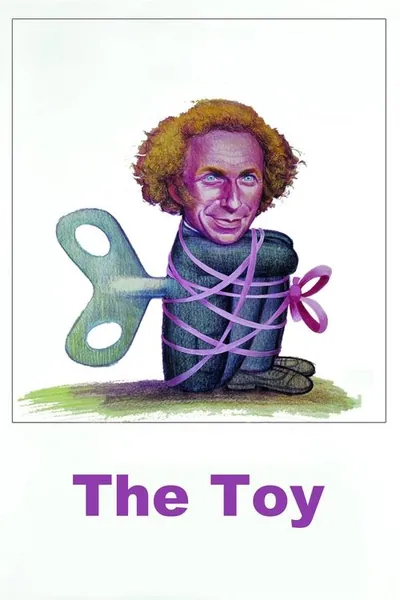 The Toy1976
 Jeanne du Barry2023
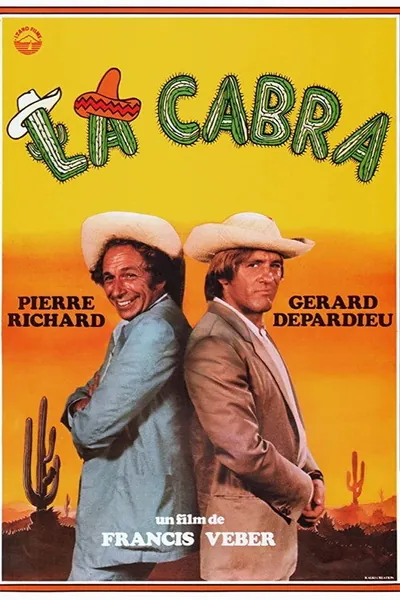 Knock on Wood1981
 The Fugitives1986
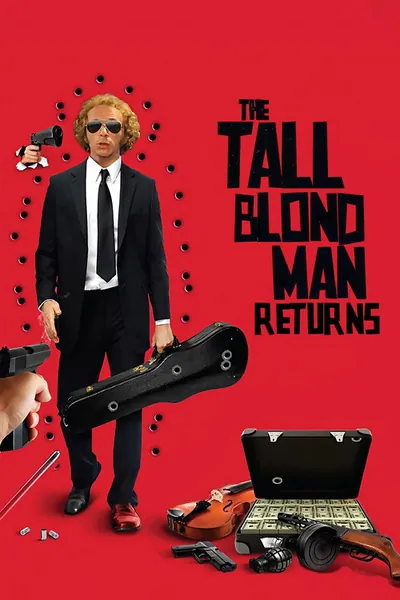 The Return of the Tall Blond Man with One Black Shoe1974
 Les Compères1983
 Paris 362008
 A Chef in Love1996
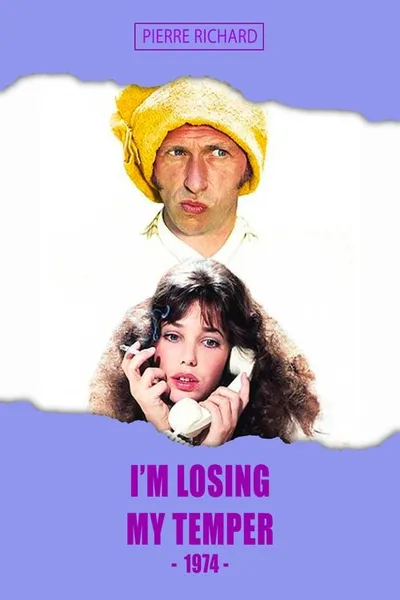 Lucky Pierre1974
- Montparnasse 19 1958 · cast
- Wasteland 1960 · cast
- Tip Not Included 1966 · cast
- Very Happy Alexander 1968 · cast
- Woman in Chains 1968 · cast
- The Daydreamer 1970 · director, screenplay, cast
- Perched on a Tree 1971 · cast
- The Tall Blond Man with One Black Shoe 1972 · cast
- The Troubles of Alfred 1972 · director, screenplay, cast
- I Don't Know Much 1973 · director, screenplay, cast
- The Return of the Tall Blond Man with One Black Shoe 1974 · cast
- Lucky Pierre 1974 · screenplay, cast
- Juliette and Juliette 1974 · cast
- The Wild Goose Chase 1975 · cast
- The Toy 1976 · cast
- On aura tout vu 1976 · cast
- The Castaways of Turtle Island 1976 · cast
- Je suis timide mais je me soigne 1978 · director, screenplay, cast
- La Carapate 1978 · cast
- The Umbrella Coup 1980 · cast
- It's Not Me, It's Him 1980 · director, screenplay, cast
- Knock on Wood 1981 · cast
- Les Compères 1983 · cast
- The Twin 1984 · cast
- Les Rois du gag 1985 · cast
- Slices of Life 1985 · cast
- The Fugitives 1986 · cast
- Door on the Left as You Leave the Elevator 1988 · cast
- Promotion Canapé 1990 · cast
- A Chef in Love 1996 · cast
- 27 Missing Kisses 2000 · cast
- The Car Keys 2003 · cast
- The Very Merry Widows 2003 · cast
- The Serpent 2006 · cast
- Paris 36 2008 · cast
- King Guillaume 2009 · cast
- All Together 2011 · cast
- Mes héros 2012 · cast
- Lost in Paris 2016 · cast
- Mr. Stein Goes Online 2017 · cast
- Mrs. Mills 2018 · cast
- Asterix & Obelix: The Middle Kingdom 2023 · cast
- Jeanne du Barry 2023 · cast
Original Cinematopedia text based on Wikipedia (es) and Wikipedia (en) and Wikidata.